The Ghost of Wild Bill Shannon

Photo by Helen Hegener/Northern Light Media

[Photo by Helen Hegener/Northern Light Media]

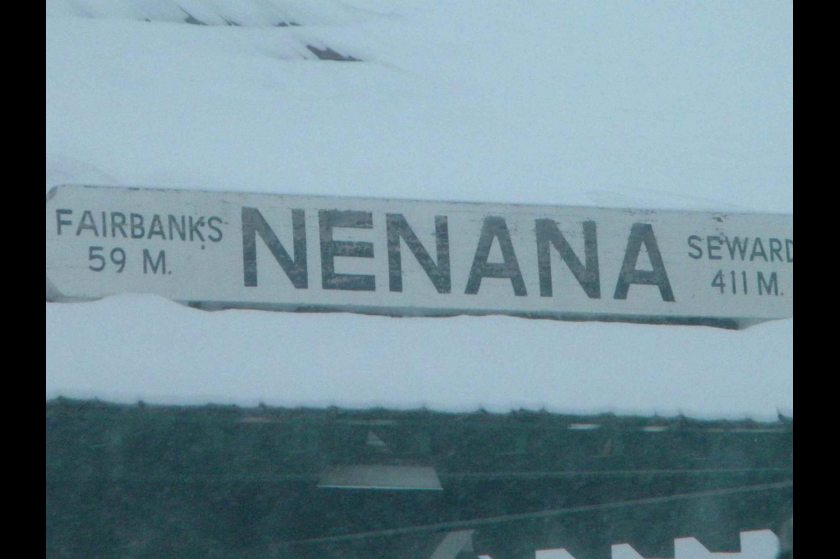
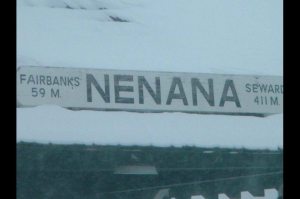
It had been a long evening’s presentation as the mushers, snowmachiners, support crews and others gathered in the Nenana community center listened intently. The trail boss, musher coordinator and others explained the final preparations and outlined their trip across the middle of Alaska, almost 800 miles from the small community of Nenana to the historic coastal mining town of Nome. The 2011 Norman Vaughan ’25 Serum Run would be a dog team journey, with snowmachine support, to commemorate the 20 mushers and over 120 dogs who relayed crucial diphtheria antitoxin across the Territory of Alaska in the original Serum Run in 1925. More importantly, the trip would help to broaden awareness of critical health issues through the trek’s unique “medical mission.”
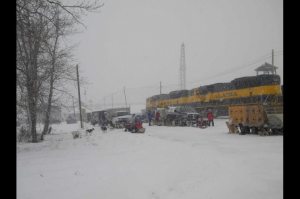
Photo by Helen Hegener/Northern Light Media

[Photo by Helen Hegener/Northern Light Media]

After a much-appreciated spaghetti dinner provided by the village of Nenana’s senior citizens, everyone had gathered in the community center to hear the last-minute details, from a rundown of the expenses to the protocols and etiquette of traveling through the Bush country and the remote villages by dogteam and snowmachine. Fellow musher and Alaska State Trooper Terrence Shanigan had detailed the “medical mission” of this year’s trip, suicide prevention, explaining that as mushers their goal was simply to make connections and introduce or open a dialogue about suicide prevention in each village they passed through. He stressed that they were not there to educate but to learn, and to open the doors for the villagers to discover more about the services and resources available for suicide prevention.

Musher Jan Steves readies her team. [Photo by Helen Hegener/Northern Light Media]

Musher Jan Steves readies her team. [Photo by Helen Hegener/Northern Light Media]

Musher Coordinator Erin McLarnon wanted to leave the group with a bit of history about the journey they were about to embark on, and with The Cruelest Miles, the epic tale of the first Serum Run, in hand, she explained that the first musher to leave Nenana with the serum package in 1925 was “Wild Bill” Shannon, “a lanky and fair-haired jack-of-all-trades…” and “…a fearless dog driver, who was known to have the fastest team in the area.” Erin then shared that she’d learned over dinner that evening that Wild Bill Shannon may have been murdered by his wife, perhaps for his philandering ways on the mail trails, and as that chilling thought sank in, the whistle of an approaching freight train sounded eerily through the night. People shuffled in their seats as comments were made about “the ghost of Wild Bill…” and then the group turned to drawing the start order and another drawing for the trail sweeps positions.

Alaska State Trooper and Serum Run musher Terrence Shanigan ready for the trail. [Photo by Helen Hegener/Northern Light Media]

Alaska State Trooper and Serum Run musher Terrence Shanigan ready for the trail. [Photo by Helen Hegener/Northern Light Media]

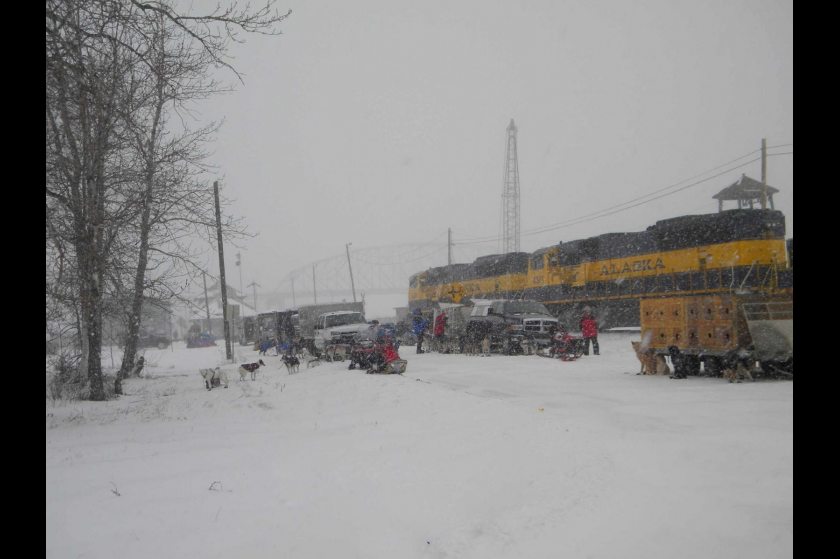
The Norman Vaughan ’25 Serum Run website explained the journey and the mission in detail, and provided maps of the trail, biographical sketches of the mushers, weather details for several checkpoints, a page of Serum Run-related kids’ activities, and video clips relating to the 1925 Serum Run. The 10 dog teams and their accompanying snowmachine support teams gathered on Front Street in Nenana on a blizzardy sub-zero Sunday morning, Feb. 20, to await the arrival of the serum package on the Alaska Railroad, just as it had arrived in 1925, as described in The Cruelest Miles, by Gay and Laney Salisbury (W.W.Norton & Co., 2003):

Musher Don Duncan's team of purebred Samoyeds. [Photo by Helen Hegener/Northern Light Media]

Don Duncan’s team of purebred Samoyeds. [Photo by Helen Hegener/Northern Light Media]

“The distant chugging of the steam locomotive could be heard well before Shannon and the dogs saw the train. In this temperature, every sound reverberated through a tunnel formed between the warm air above and the heavier cold air below, traveling twice as far. Although Shannon could not see anything, the train sounded as if it was just around the corner.

“The crowd’s excitement was infectious, and the dogs strained and leapt in their padded leather harnesses, tugging at the sled. Even before the train came to a complete stop, conductor Frank Knight jumped onto the platform with the 20-pound package of serum and ran over to Shannon.”

Serum Run '25 leader Erin McLarnon disappears. [Photo by Helen Hegener/Northern Light Media]

Serum Run ’25 leader Erin McLarnon disappears. [Photo by Helen Hegener/Northern Light Media]

With the serum package secured in musher Jan Steves’ leading sled, team after team started down Front Street, turned and made their way down onto the Nenana River, then ran under the big highway bridge and disappeared toward Nome. As the teams dissolved into the blowing snow one spectator commented that they looked like ghost teams… And as the last team departed for Nome a light-colored pickup truck pulled down A Street in Nenana, toward the train depot, and its license plate read WLD BIL.

~ ~ ~ ~ ~ ~ ~ ~ ~ ~ ~ ~ ~ ~ ~ ~ ~ ~ ~ ~

The Mysterious Disappearance of Wild Bill Shannon is an interesting account of what happened after the 1925 Serum Run was written for the Jan/Feb 2008 issue of Mushing Magazine by author Tom Walker: “Willard J. “Wild Bill” Shannon came to Alaska as a sergeant with the Fourteenth Infantry and after mustering out, he became manager of the N.C. Co. store in Nenana. Gold fever drew him into the Kantishna district where he became a well-known prospector and miner.”

BookCoverPreview_1_498x621 A Long Way to Nome, The Serum Run ’25 Expedition, by Von Martin, tells the story of how Washington state musher Von Martin meticulously assembled 1,200 lbs of supplies, trained his team of twelve huskies for hundreds of miles, and made the long midwinter drive to Alaska to participate in the 2009 Serum Run. What he did not anticipate was the worst Alaskan winter in decades.
Leonhard Seppala's leader, Togo

Togo, Leonhard Seppala’s intrepid leader

 The Serum Run of 1925, by Jennifer Houdek for LitSite Alaska, details the story of the 1925 Serum Run to Nome, with accompanying photos, related articles, links to more information and a table of the mileages run by each musher. Available to read online or as an audio file. “With Togo in lead, Seppala grabbed the bundle and headed back across Norton Sound. They did not rest, but pressed on into the darkness. Togo was an exceptional leader already famous throughout the region for numerous wins in the All-Alaska Sweepstakes and other Nome Kennel Club races. Togo took Seppala in a straight line across the Sound, in the dark and across ice floes…”
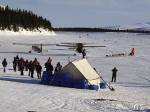
 Photos of the 2000 Serum Run by Ron Rinker. “This is Doug Swingly coming into the White Mountain checkpoint. Doug won the Iditarod sled dog race, and set a new record this year. While we were at White Mountain the lead runners in the Iditarod race, caught up to us and passed us, going on to Nome.”

Posted in Alaska History | Tagged , , , , , , , , , , , , , , , , , | 1 Comment

Alaskan Wildflowers

The Matanuska Valley is home to an incredible array of wildflowers, from tall stately fireweed and lupine blooms to the tiniest alpine flowers on high mountain slopes. These photos are from my 2014 book, The Beautiful Matanuska Valley:

The Lupine is known by many names, including Blue Bonnet, and is a legume, or a member of the pea family.

The Lupine is known by many names, including Blue Bonnet, and is a legume, or a member of the pea family. Parts are toxic.

Sitka roses, which produce delicious rose hips in the fall.

Sitka roses, which produce delicious rose hips in the fall.

The wild geranium, long known as a useful medicinal plant, derives its name from a Greek word meaning ‘crane.’

The wild geranium, long known as a useful medicinal plant, derives its name from a Greek word meaning ‘crane.’

Fireweed is common along roads and trails, especially where recent fires or clearing has taken place. Several parts of the plant are edible.

Fireweed is common along roads and trails, especially where recent fires or clearing has taken place. Several parts of the plant are edible. Arctic or Dwarf Fireweed is much shorter than the standard variety.

Siberian Iris. According to Wikipedia, the SIberian Iris is native to north east Turkey, Russia, eastern and central Europe.

Siberian Iris are found in swampy lowlands in many parts of Alaska. According to Wikipedia, the SIberian Iris is native to north east Turkey, Russia, eastern and central Europe.

Tiny Forget-me-nots, chosen as the Alaska State Flower in 1949, are actually native to England.

Tiny Forget-me-nots, chosen as the Alaska State Flower in 1949, are actually native to England.

The Monkshood (Aconitum delphinifolium) which blooms in June and early July, is one of the most toxic plants known to man. Attaining a height of three feet, with intensely blueish purple or indigo blooms, its powerful poisons were used by the Aleuts to hunt whales with poison-tipped spears. Also known as wolf’s bane as its toxins were used to kill wolves. Handle with care.

The Monkshood (Aconitum delphinifolium) which blooms in June and early July, is one of the most toxic plants known to man. Attaining a height of three feet, with intensely blueish purple or indigo blooms, its powerful poisons were used by the Aleuts to hunt whales with poison-tipped spears. Also known as wolf’s bane as its toxins were used to kill wolves. Handle with care.

Posted in Uncategorized | Leave a comment

The WPA Federal Writers Project

WPACAThe Federal Writers’ Project was created in 1935 by President Franklin D. Roosevelt, as part of the United States Work Progress Administration (WPA), a New Deal jobs program, to provide employment for historians, teachers, writers, librarians, and other white-collar workers. Originally, the purpose of the project was to produce a series of sectional guide books, focusing on the scenic, historical, cultural, and economic resources of the United States (including the territory of Alaska, Puerto Rico and Washington, D.C.). The project was expanded to include local histories, oral histories, ethnographies, children’s books and other works.

WPANDThe American Guide Series books were written and compiled by the Federal Writers’ Project, but printed by individual states, and contained detailed histories of each state with descriptions of every city and town. The format was uniform, comprising essays on the state’s history and culture, descriptions of its major cities, automobile tours were one of the important attractions, and a portfolio of photographs.

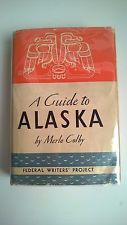
m7cEAnxa5C9XwK15ggTnnvwA Guide to Alaska: Last American Frontier, was written by Merle Colby, includes a foreword by John W. Troy, then-Governor of the territory of Alaska. Troy wrote, “Scarcely more than a generation ago, well within the memory of many living Alaskans, the news was flashed in 1897 over telegraph wires that the steamer Portland had arrived in Seattle with ‘a ton of gold.'”

Troy continues: “Even more important, and certainly no less dramatic, is the less-known Alaska of today — the Alaska of graveled automobile roads, of airplanes, used as casually by Alaskans as are taxis in continental United States, of giant gold dredges, of great fishing fleets, of farms with the latest in modern equipment, of homes set in frames of flowers and surrounded with vegetable gardens, of large shops, theaters, churches, schools, clubs, newspapers, and America’s farthest-north university.”

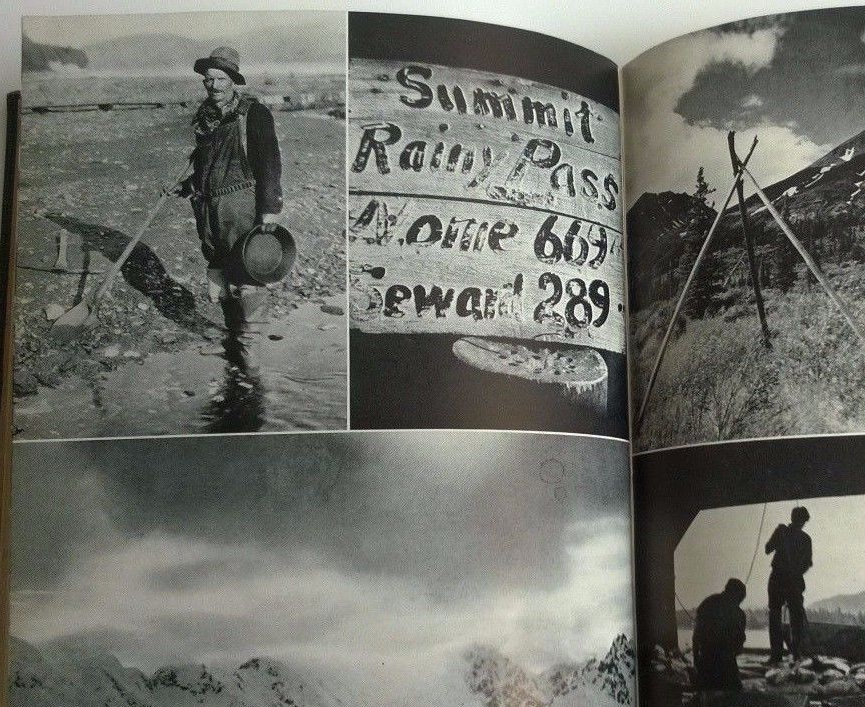
Screen Shot 2015-08-09 at 11.52.08 AMThere are interesting details throughout the 1939 guidebook, such as this advice regarding money: “The 5-cent piece is the lowest monetary unit in Alaska; in the remote interior, the 25<ent piece (two bits). In the latter case, this does not mean that the lowest price of any article is 25 cents, but merely that a total purchase must amount to a multiple of 25 cents. Pennies are almost unknown, and in post offices the clerk will usually make change in one-cent stamps. Prices such as 39 cents and $1.98 are unheard of.”

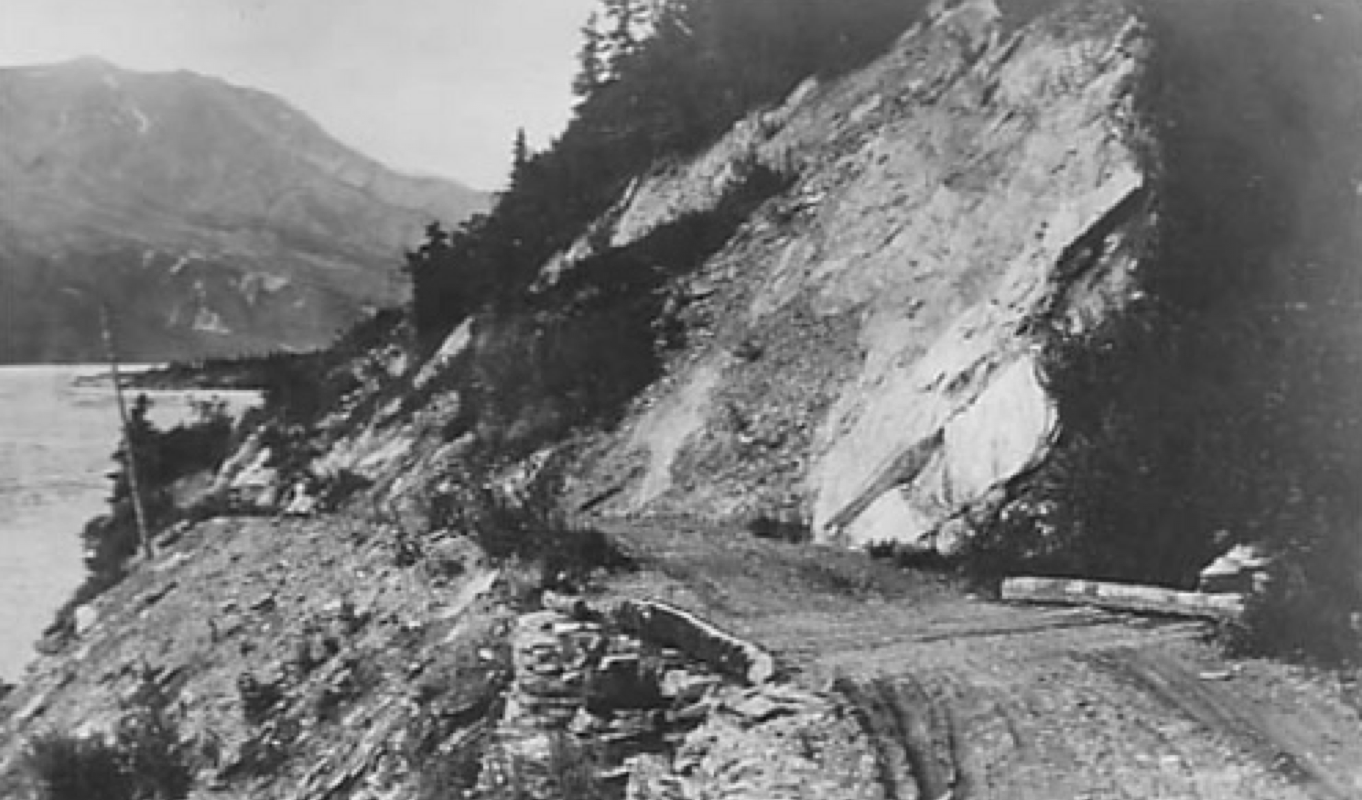
Screen Shot 2015-08-08 at 8.17.01 AMThe guidebook’s description of roads in Alaska is notably brief: “Automobile Highways. The Richardson Highway (open in summer only), 371 miles long, begins at the port of Valdez, on Prince William Sound, and ends at Fairbanks, paralleling the Alaska Railroad. Frequent bus and truck service connect with steamship arrivals; good accommodations are available along the route.”

Note that the Alaska Railroad, which reportedly ‘parallels’ the Richardson Highway, does so at a distance of well over 100 miles.

Delta River, Richardson Hwy circa 1922“The Steese Highway (open in summer only) extends 163 miles from Fairbanks to Circle. Bus and truck service connect with train arrivals; there are accommodations along the route.

“Other major summer highways, all with bus or truck service, are:
• Gulkana to Slate Creek, 60 miles
• Anchorage to Palmer and Matanuska Valley, 50 miles
• Fairbanks to Livengood, 85 miles
• Nome to Council, 57 miles”

Screen Shot 2015-08-08 at 8.29.37 AMA few local roads between 5 and 39 miles in length are listed, along with the 80-mile Mt. McKinley National Park road.

A Guide to Alaska is an interesting in-depth look at the territory in the first half of the twentieth century, divided into six distinct regions and described in terms which would do justice to any modern travel guide, such as this depiction of southcentral Alaska: “A number of large rivers, as well as Cook Inlet, break through the mountains fronting the coast and open up inland valleys having a light forest cover, moderate precipitation, short but rather warm summers, and winter temperatures not unlike those found in the northern tier of prairie States. The level and rolling lands afford excellent opportunities for agriculture. The Matanuska agricultural area is located in one of these valleys in the vicinity of Anchorage. Additional and even more extensive tracts of potential farm lands, notably the Kenai Peninsula agricultural area, are found in this same general locality. “

Posted in Alaska History, Books | Tagged , , , | Leave a comment

John August Springer

The Wes Grover farm is part of the original Springer homestead. Photo by Albert Marquez/Planet Earth Adventures LLC

The Venne barn, one of three on Wes Grover’s RG Farm. The Wes Grover farm is part of the original Springer homestead. Photo: Albert Marquez/Planet Earth Adventures LLC.

John August Springer

In October of 1914, an Alaskan pioneer of Swedish descent named John August Springer filed for homestead rights to 320 acres of benchland located on the north bank of a sweeping bend in the Matanuska River, with a commanding view of Pioneer Peak and the Knik River Valley to the south and east, and the Chugach Range behind what would become the location of Palmer to the northeast. Palmer wouldn’t be there for another fifteen years, of course, but George Palmer’s trading station had been established sometime between 1894 and 1898, near where the present-day bridges cross the Matanuska River just east of town.

According to a post on Facebook from the Palmer Historical Society, “Homesteader John August Springer put his model T Ford up on blocks with only 800 miles on it. He decided that the Valley roads were not good enough to drive on – thus he proceeded to walk everywhere for the remainder of his life.”

Springer built a log cabin and a few other buildings, and cleared and proved up on his land, receiving the patent in 1920. Fifteen years later, in 1935, he sold a portion of his homestead to the United States government for $7.50 an acre for the Matanuska Colony Project, which would bring 203 new families from the depression-era Midwest to build their own homes in the Valley. The Colonists who drew tracts in the area which had belonged to John Springer were very fortunate, for it was an excellent location with supreme topsoil.

The Grover farm and Springer's original homestead can be seen closest to the viewer. Springer System, June 7, 1941. Photo by U.S. Army Air Corps.

The Grover farm and Springer’s original homestead can be seen closest to the viewer. Springer System, June 7, 1941. Photo by U.S. Army Air Corps.

William Ising Family

One of the tracts of land previously belonging to John Springer was drawn by William Ising, who had joined the Colony Project from Saginaw, Minnesota with his wife, Marie, and their two children. William drew tract number 81, one of the few parcels which was 80 acres instead of the more usual 40-acre size. In 1948 the Isings sold their farm to Clifton and Vera Grover, who had recently arrived in Alaska from Utah. In 1968 their son Wes Grover and his wife, Bonnie, purchased the farm, which was by then a dairy operation. Two additional Colony barns were added to the property, the Joseph Dragseth barn from tract no. 84 was moved into place adjacent to the Ising barn, creating one large building; and the George Venne barn was moved onto the farm from tract number 82 and was set in a pasture just north of the other two barns. The picturesque RG Farm, located at the end of Grover Lane off the Outer Springer Loop, has been the location for many weddings, television commercials, and other events, and has been featured on the cover of the MTA phone directory.

Only a few notched logs remain to mark the location  of John Springer’s cabin overlooking the Matanuska River.

Only a few notched logs remain to mark the location of John Springer’s cabin overlooking the Matanuska River.

Inner and Outer Springer

The area south of Palmer which became known as the Springer System, with its looping roads named Inner Springer and Outer Springer, is the site of some of the richest and levelest farmland in the Matanuska Valley. Of the more than 200 farms which became the Matanuska Colony Project, for which the federal government offered financing and support, over one-quarter of them were located in the Springer Loop area. Today the Springer System is a network of picturesque farms which might pass for almost anywhere in the midwest if not for the towering peaks of the nearby Chugach Range. While an ever-increasing number of farms are being subdivided for tract housing, there are still enough hayfields, pastures, croplands and massive Colony barns to give the area a friendly rural feel. In fact, the Springer Loop Road area has the largest concentration of existing Colony barns, with most of them in their original locations.

Detail of logs, John Springer cabin.

Detail of logs, John Springer cabin.

In the southeast corner of the Outer Springer Loop Road, at the end of E. DePriest Avenue, a barely visible trail leaves the end of a cul-de-sac and strikes out toward the Matanuska River. A weathered sign on a nearby tree marks the trail, and after a short walk through the woods, a few of the logs of John Springer’s cabin can still be seen on a bluff overlooking the Matanuska River. John A. Springer chose an outstanding place for his homestead, and today’s residents of the area can only wonder what forces aligned for him and how he came to chose the splendid riverside location.

Posted in Alaska History, Matanuska Colony | Tagged | Leave a comment

The Great Alone

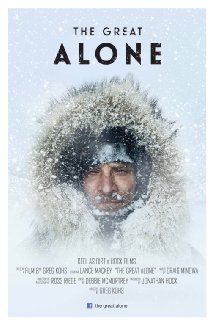
MV5BMTUxMzk0MjY4M15BMl5BanBnXkFtZTgwMjMyNjQxNDE@._V1_SX214_AL_During the 2013 Iditarod Trail Sled Dog Race the independent filmmaker Greg Kohs followed four-time Iditarod and Yukon Quest champion Lance Mackey along the trail. Combining that hard-won film footage with family photos, interviews and other media, Kohs produced a film which told an incredible story of one man’s dedication, endurance, and faith, not only in his own abilities, but in his dogs, and in his family, friends, fans and sponsors who helped him achieve the seemingly near-impossible.

In March the film was screened for audiences in Anchorage and Fairbanks, and in an article for Alaska Dispatch Suzanna Caldwell quoted Kohs, “What was appealing to me about Lance was his openness and honesty, he was just very authentic.” Caldwell wrote [the film] “…traces back to his early life, with family interviews, including dad and 1978 Iditarod champion Dick Mackey, along with his hard-scrabble rise over the years to becoming a legendary dog musher.”

Best_of_SIFF_238x238The film was enthusiastically received by sold-out crowds in both Anchorage and Fairbanks, and this past weekend Kohs’ film, The Great Alone, won the Grand Jury Award for Best Documentary at the Seattle International Film Festival. Recognized as one of the top film festivals in North America, the Seattle International Film Festival (SIFF), held annually since 1976, is the largest, most highly-attended film festival in the United States, with over 155,000 attendees annually. This year’s SIFF showcased over 450 films, with 70 documentaries competing for top honors.

For those in the Seattle area, there will be an encore presentation of The Great Alone at “The Best of SIFF 2015” on Sunday, June 14th @ 2:15 p.m. at SIFF Cinema at the Uptown Seattle, Washington.

Posted in DVD & Video | Tagged , , , , , , , , , , , | Leave a comment

Knik Arm

Knik Arm, looking northeast from Point Mackenzie

Knik Arm, looking northeast from Point Mackenzie

Only a River . . .

Knik Arm is the northernmost branch of Cook Inlet, a great body of water which stretches 180 miles from the Gulf of Alaska and splits at Anchorage into Knik Arm and the more southern Turnagain Arm.

BlighWilliam Bligh, who served as Captain Cook’s Sailing Master on his third and final voyage, thought that both Knik Arm and Turnagain Arm were the mouths of rivers and not the opening to the Northwest Passage.

Under Cook’s orders Bligh organized a party to travel up Knik Arm, and they quickly returned to report that Knik Arm indeed led only to a river.

Early Knik

Early Knik

Early Navigation

Boats of any kind are a rare sight on Knik Arm today, but in times long past the Arm was traversed by rowboats, freighters, and sailing ships.

George Palmer, a merchant who owned stores in Knik and near the later site of Palmer, frequently crossed the Knik Arm, as cited by Valley historian Colleen Mielke: “Palmer’s first schooner, the two masted ‘C. T. Hill,’ arrived at Knik Harbor June 7, 1913. Leaving his store in the hands of a clerk, Palmer and crew sailed the schooner from Goose Bay to San Francisco, two or three times a summer and brought back merchandise for his store.” And: “In the spring of 1915, Palmer traveled to Seward, by dog sled, where he boarded a steamer to San Francisco to purchase a newer schooner named ‘The Lucy.’ Palmer and ‘The Lucy’ arrived at Goose Bay on May 3, 1915.”

26473520

April 1907, Palmer’s launch via Knik to Seldovia

Colleen Mielke later reports: “A fearless boatman, Palmer made routine trips from Knik to Tyonek, Sunrise, Hope and Seldovia, bucking the relentless Turnagain Arm wind and tide, in a small open gas boat.”

Today’s navigators generally avoid the silty, churning, tide-wrenched waters of Knik Arm. There are far easier ways to get from point A to point B.

Excerpted from The Beautiful Matanuska Valley, by Helen Hegener (Northern Light Media, 2013).

The Beautiful Matanuska Valley

Matanuska ValleyThis book is a must-have volume for anyone who lives in, travels through, or loves Alaska’s beautiful Matanuska Valley! 140 pages, full color, 8.5″ x 10″ paperback, maps, resources, index and photo index.

• $29.95 plus $5.00 postage and handling.

Valley Buy Now• To place a secure order via credit card or Paypal, simply click this image link:

• To order via check or money order, mail your order to Northern Light Media, PO Box 298023, Wasilla, Alaska 99629

• Also available via IndieBound and on Amazon

Posted in Books | Tagged , , , , , , , , , , , | Leave a comment

Sheep Camp Dog Team

Hegg, Eric A., 1898: Sheep Camp on the Chilkoot trail during the Klondike Gold Rush. Advertisement on log cabin reads: "The Mascot. Hot drinks and meals, lunches and beds." Caption on image: "The favorite dog team of Sheep Camp"


Sheep Camp on the Chilkoot trail during the Klondike Gold Rush. Advertisement on log cabin reads: “The Mascot. Hot drinks and meals, lunches and beds.” Caption on image: “The favorite dog team of Sheep Camp” Photo by Eric A. Hegg, 1898

Posted in Uncategorized | Leave a comment

Alaskan Roadhouses

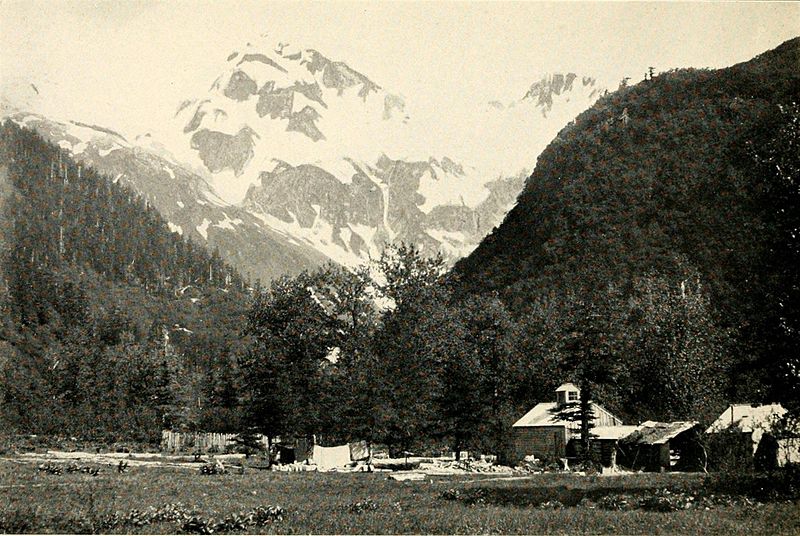
"An Alaskan Road House"; stable, cabins, and tents at the mouth of a mountain valley, a snowy peak framed in the valley. Location not specified. From 'Alaska the Great Country,' copyright 1908, MacMillan Co., by Ella Higginson, photographer E.A. Hegg, Juneau

“An Alaskan Road House”; stable, cabins, and tents at the mouth of a mountain valley, a snowy peak framed in the valley. Location not specified. From ‘Alaska the Great Country,’ copyright 1908, MacMillan Co., by Ella Higginson, photographer E.A. Hegg, Juneau

“Under no circumstance should the Alaskan roadhouse be confused with the establishments scattered along the highways on the outside that call themselves ‘roadhouses.’ The Alaskan roadhouse is a trail or roadside hotel. It deserves and has earned the high regard that all Alaskan and northern travelers have for the ‘roadhouse.’ Many tales of heroism and bravery could be told of the daring rescue and relief parties that have been headed by the intrepid roadhouse keepers. Story has it that no stranded man or dog has ever been denied food or shelter by these landlords of the lonely northern trails.” ~William E. Gordon, in Icy Hell (Wm. Brendan & Son, 1937)

Blix Roadhouse ~ Copper Center

Cape Nome Roadhouse ~ Seward Peninsula

Deering Roadhouse ~ Seward Peninsula

Grandview Roadhouse ~ Kenai Peninsula

Haly’s Roadhouse ~ Fort Yukon

Kantishna Roadhouse ~ Denali Park

Pioneer Roadhouse ~ Knik

Rika’s Landing Roadhouse ~ Delta Junction

Slana Roadhouse ~ Slana

Talkeetna Roadhouse ~ Talkeetna

Posted in Uncategorized | Tagged | Leave a comment

Matanuska Colony History

On Wednesday, May 20, I gave an hour-long talk and slideshow on the history of the 1935 Matanuska Colony Project for the Palmer Historical Society. It’s always interesting to given presentations of that history in Palmer, for many of those in the audience are friends and descendants of the original Colonist families, and they often know a lot more about the history than I do. But I talk about what I’ve learned in my research and we have a good time sharing and enjoying the old photos. And there are many wonderful photos! Here is a quick sampling of those I shared during my talk, most of them are by Willis T. Geisman, the official A.R.R.C. photographer for the project:

I explained how my interest in the Colony began with my research on the Colony barns. This is the Rebarchek barn, gone now. [Library of Congress photo]

I explained how my interest in the Colony began with my research on the Colony barns. This is the Rebarchek barn, gone now. [Library of Congress photo]

The old Rebarchek farm is now part of the Alaska State Fairgrounds. [Northern Light Media photo]

The old Rebarchek farm is now part of the Alaska State Fairgrounds. [Northern Light Media photo]

The iconic Palmer water tower behind Palmer's second post office, 1935. [Willis T. Geisman, 1935]

The iconic Palmer water tower behind Palmer’s second post office, 1935. [Willis T. Geisman, 1935]

The town of Matanuska, seen from the tracks of the Alaska Railroad, August, 1916

The town of Matanuska, seen from the tracks of the Alaska Railroad, August, 1916

Constructing the mess tent for the workers at Palmer [Willis T. Geisman, 1935]

Constructing the mess tent for the workers at Palmer [Willis T. Geisman, 1935]

Newly arriving colonist families seek their tent homes [Willis T. Geisman, 1935]

Newly arriving colonist families seek their tent homes [Willis T. Geisman, 1935]

Driving pins into log walls [Willis T. Geisman, 1935]

Driving pins into log walls [Willis T. Geisman, 1935]

Near the warehouse in Palmer [Willis T. Geisman, 1935]

Near the warehouse in Palmer [Willis T. Geisman, 1935]

A group of colonist children [Willis T. Geisman, 1935]

A group of colonist children [Willis T. Geisman, 1935]

Mrs. Anna Emma Havemeister and her family [Willis T. Geisman, 1935]

Mrs. Anna Emma Havemeister and her family [Willis T. Geisman, 1935]

Posted in Alaska History | Tagged , , , , | Leave a comment

PHS History Night

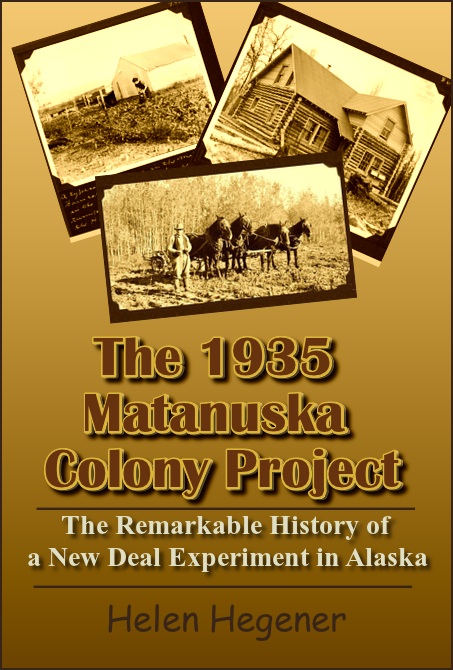
Mat Colony ProjectI’ll be giving a slideshow and presentation about four of my books for the Palmer Historical Society’s History Night on Wednesday, May 20th, at the Palmer Public Library. Through photos, stories, and a look at the history behind the Colony Project, I’ll share what led me to write the books which focus on the Colony and the Matanuska Valley, including how my research was done, and what I learned about this important chapter of Alaska’s history, when 200 families traveled north on a government troopship to carve their homes and farms from the Alaskan wilderness.

Matanuska ValleyThe four books featured will be The Matanuska Colony Barns, The Beautiful Matanuska Valley, and my two books on the history of the Matanuska Colony Project. All can be purchased at Fireside Books and the Colony House Museum in Palmer, from this website or Amazon, or from any bookstore, anywhere, just give them the title and author.

I hope you’ll join us on May 20th, at 7:00 pm, in the conference room of the Palmer Public Library, for this fun FREE event! The Palmer Historical Society’s History Nights are always an interesting and engaging exploration of our Valley’s fascinating past!

Posted in Alaska History, Books | Tagged , , , , , | Leave a comment