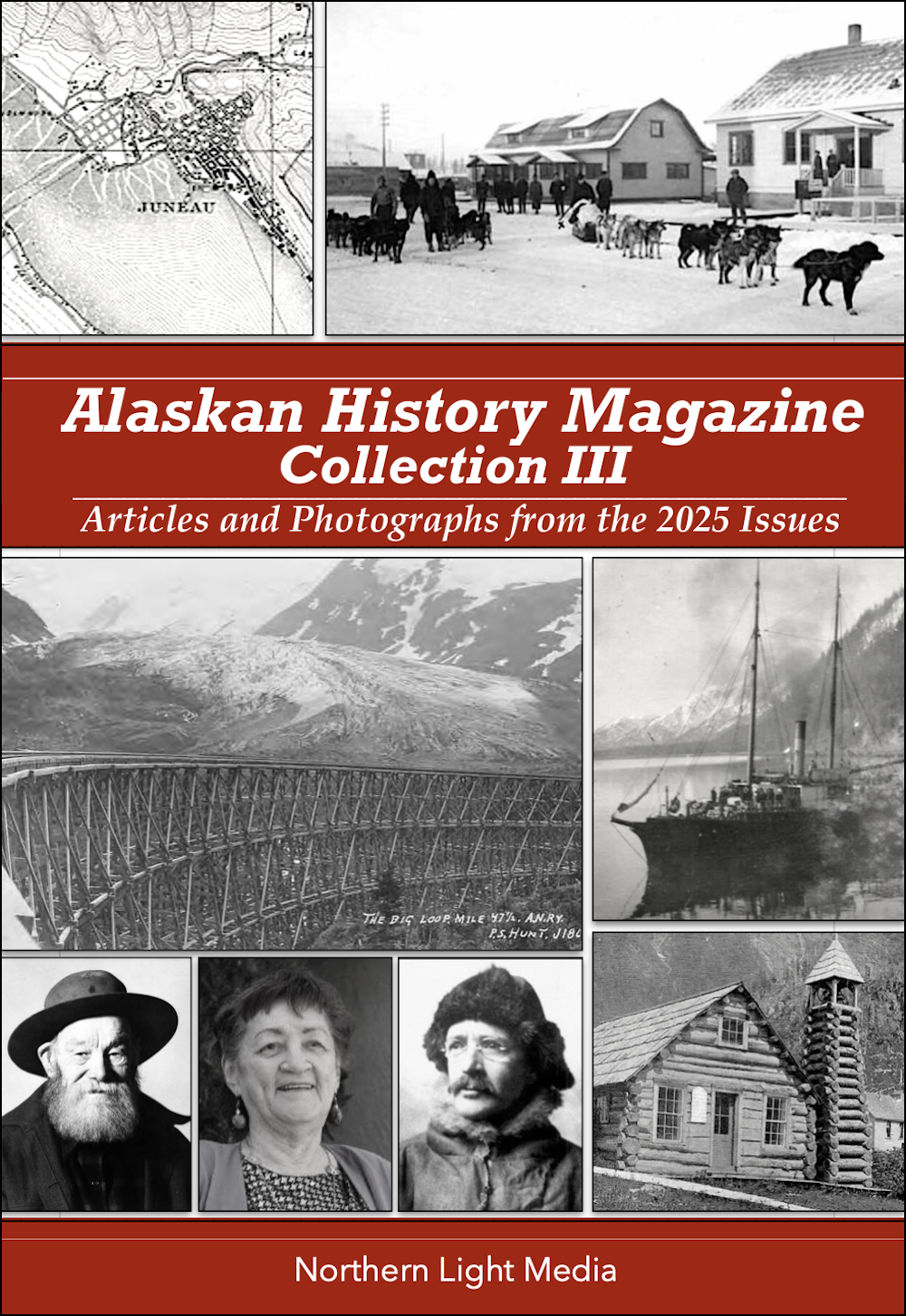
All of the articles published in the magazine in 2025
All six issues published in 2025 are collected into this book, and every article, photograph and image appears just as they ran in the magazine. 377 pages, B/W 6″ x 9″ format, published in January, 2025. “No advertising, all history.” Over 300 historic photographs and images. Price includes shipping.
Included: The History of Tanana • The Knik News • Pioneer Photographer P. S. Hunt • Ohio Creek Roadhouse • Will Rogers and Wiley Post • Alaska Central Railroad • W.A. Dickey and Renaming Denali • Deering • To McCarthy in 1919 • Anchorage was an Iditarod Trail Town • Moosemeat John • Nome Gold Rush • Willow Creek Mining District • Shipping Pioneer E. E. Caine • Addison Powell’s Search for Gold • Alaska’s Birds • Pioneer Activist Alberta Daisy Schenck • Territorial Judge James Wickersham • Rev. George C. F. Pringle • Lake George • Robert Service • A Tribute to Sled Dogs • Sergeant William Yanert • Sydney Laurence • Ruby • Bud & Daisy Whitney • Cordova • The New Deal in Alaska • Emily Craig Romig • Bureau of Indian Affairs • Icy Hell • Charles Sheldon and Harry Karstens • Rika’s Landing Roadhouse • Lt. Schwatka on the Yukon • Historic Barns of Alaska • Juneau in 1920.
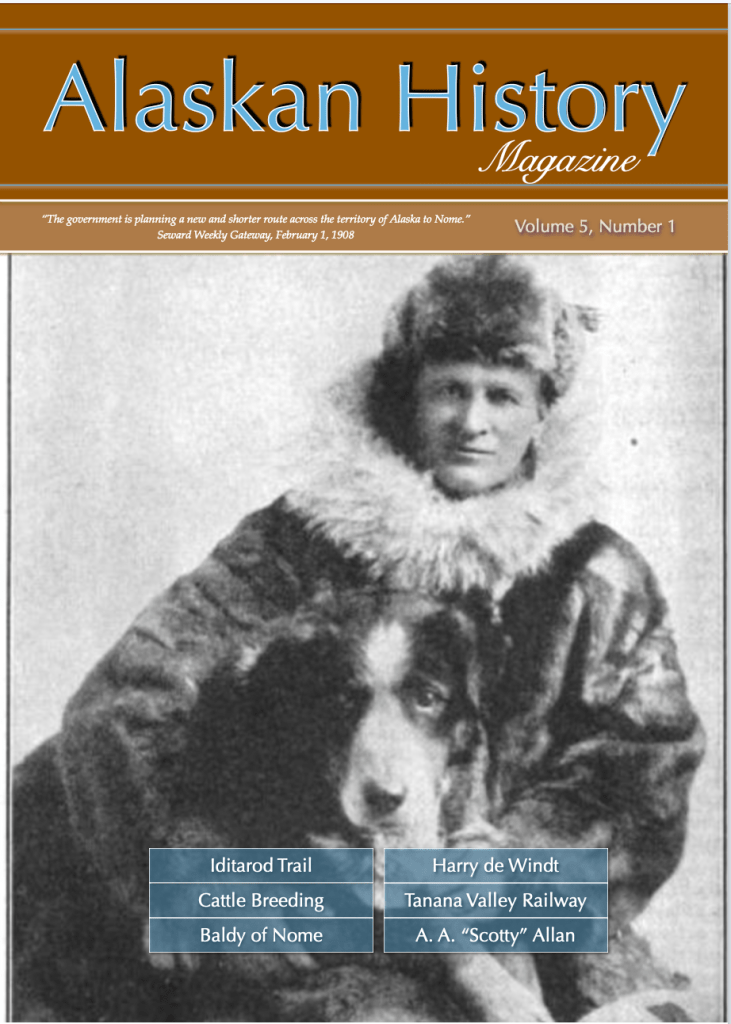
In this issue: Colonel Walter Goodwin and the Iditarod Trail, 1929 Report on Cattle Breeding in Alaska, Harry de Windt on the Yukon River, Falcon Joslin and the Tanana Valley Railway, All Alaska Sweepstakes Champions Baldy of Nome and A. A. ‘Scotty’ Allan.
$12.00 postage paid. 64 pages. 6″ x 9″ b/w format. No ads, just history. Mails the first week of 2026. Back issues and subscriptions available.
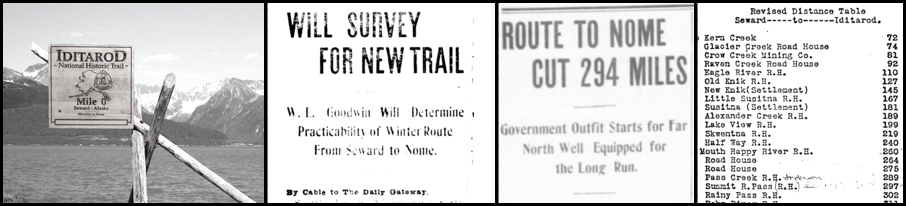
The first issue of Alaskan History Magazine for 2026, Volume 5, Number 1, will feature a lengthy excerpt from Colonel Walter Goodwin’s 1908 report on the route which would become the Iditarod Trail. Goodwin was the Superintendent of the Alaska Road Commission’s Nome District when the Commission (ARC) directed him to lead an overland reconnaissance from Seward to Nome to assess the feasibility of a winter trail across the territory for winter mail service. The stated goal was to provide a shorter, more direct overland winter route to Nome than the existing 1,300-mile route from Valdez through Fairbanks and down the Yukon River. There were networks of seasonal trails throughout the area, and there were two important winter trails radiating from McGrath to Nenana and to Bethel, but there was no direct route between the Cook Inlet region and the increasing activity in the Innoko-Kuskokwim gold mining district and the established mining areas around Nome. In the winter of 1908, the Alaska Road Commission dispatched Goodwin and a crew of three men with dog teams to scout a winter route. Goodwin’s report was the first official documentation of what would become one of the most famous trails in the world.
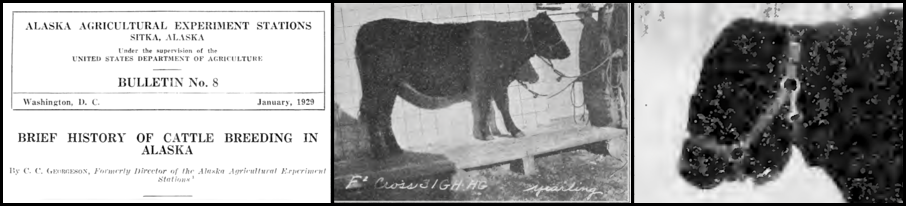
The history of cattle breeding in Alaska was the subject of a report written by C. C. Georgeson, Director of the Alaska Agricultural Experiment Stations, in 1929. He wrote about the Russians maintaining “a considerable number” of cattle at Kalsin Bay, on Kodiak Island, and noted later developments after the purchase of Alaska:
“A few head of cattle of the dairy type were introduced with the establishment of salmon canneries at various points along the coasts. Some of the descendants of these animals remained in the country. At Kodiak, Sitka, Kenai, and other places where Americans had settled, a few head of cattle were kept for the supply of milk. More cattle were introduced into the country with the development of new settlements and camps. Dairies sprang up in the towns to meet the local demands for milk. These cattle, however, were maintained, excepting for the small amount of pasturage available during the summer, on feed which had to be imported from Seattle for the purpose. This is the situation even today, but it does not show that cattle can not be supported by locally produced feed.”
Georgeson’s report details the livestock situation in Alaska in 1898, with updates on the situation at the time of his 1929 report, including consumption figures for beef and dairy products in 1925, providing an interesting overview of how cattle played an important role in the early days of the territory.
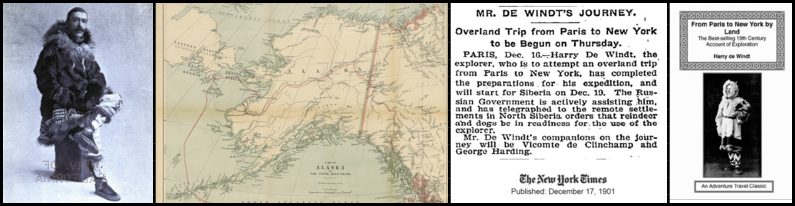
Explorer and writer Harry de Windt and his friend George Harding had attempted to travel around the world by land in 1896, but in Siberia they ran into unforeseen life-threatening difficulties. Narrowly escaping disaster, de Windt nevertheless wrote a book about the adventure in 1898, titled Through the Gold-fields of Alaska to Bering Straits, and in December, 1901 he and Harding set out once again, this time traveling in reverse of the first trip. This issue excerpts a chapter from his subsequent 1903 book, From Paris to New York by Land. A brief passage:
“Cities on the American Yukon consist of perhaps a score or more of log huts, which Yankee push and enterprise have invested with the dignity of towns. Rampart City, for instance, which the Hannah reached on the sixth day in from the coast, consisted of only about thirty one-storied wooden dwellings, the erection of which had been due to the discovery of gold in the vicinity, although during the previous year (1901) the claims around had only produced £40,000. And yet even this tiny township could boast of two hotels, five or six saloons, electric light and two newspapers: the Alaska Forum and Rampart Sun. The circulation of these journals was not disclosed to the writer, who was, however, gravely interviewed by the editors of both publications. Just before leaving Rampart City news of the postponement of the coronation of his Majesty King Edward VII, on account of serious illness, reached us, and it was gratifying to note the respectful sympathy for the Queen of England displayed by the American inhabitants of this remote Alaskan settlement.”
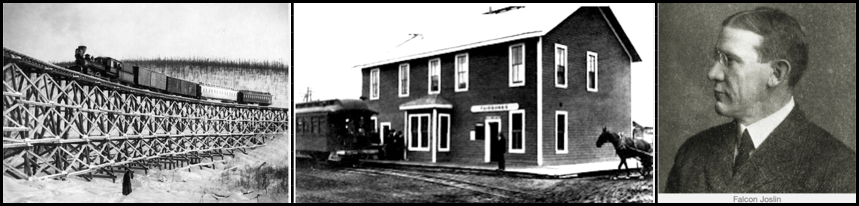
The history of Falcon Joslin and his visionary Tanana Valley Railway are included in this issue. The TVR was Joslin’s visionary dream, planned as a rail line reaching north and east to Circle City on the Yukon River, at that time the center of the Circle Mining District and the landing for steamboats heading upriver to the town of Eagle, or to Dawson City in the Yukon Territory, or downriver to Nenana, Ruby, Nulato, and St. Michael on Norton Sound, and the Bering Sea. When the Alaska Railroad was constructed and planning for the northern portion was under consideration, parts of Joslin’s Tanana Valley Railway were incorporated.
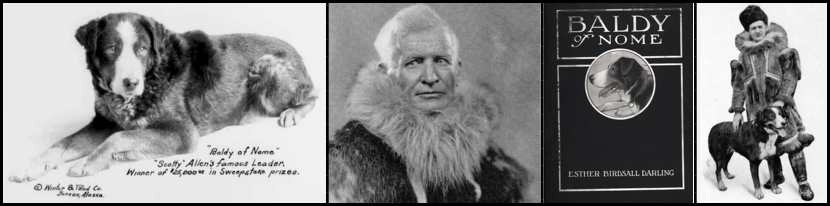
On the cover of this issue is a photograph of two well-known champions of the historic All Alaska Sweepstakes race, and inside this issue is the story of one of the most famous dogs in literature, Baldy of Nome. He was Scotty Allan’s famous lead dog in the All Alaska Sweepstakes; and a profile of Scotty, written for a major American magazine in 1921 by one of Alaska’s most beloved writers, is reprinted in full with a larger biography of the intrepid Scotsman’s life in Alaska, Washington, and California.
“A wonderful publication outlining the richness of Alaska’s history with excellent production values, NO ADVERTISING and well researched stories with links to source materials for further reading. There are delightful stories that even 50 years of living here had not brought to my attention. Very highly recommended!” ~Amazon review
“The purpose of history has ever been to enlighten, to make clearer, to create greater understanding and appreciation.” ~Writing Alaska’s History, Vol. 1, Alaska Historical Commission, 1974
“Good information source. Lots of references if reader wishes to dig further into details. The entire series of publications are interesting, light reads.” ~Verified Amazon purchaser
“An excellent collection of well-researched articles on the history of Alaska, always interesting, always saved for reading and enjoying again later! ~Subscriber
“It’s always exciting to see this magazine in my mailbox!” ~Subscriber
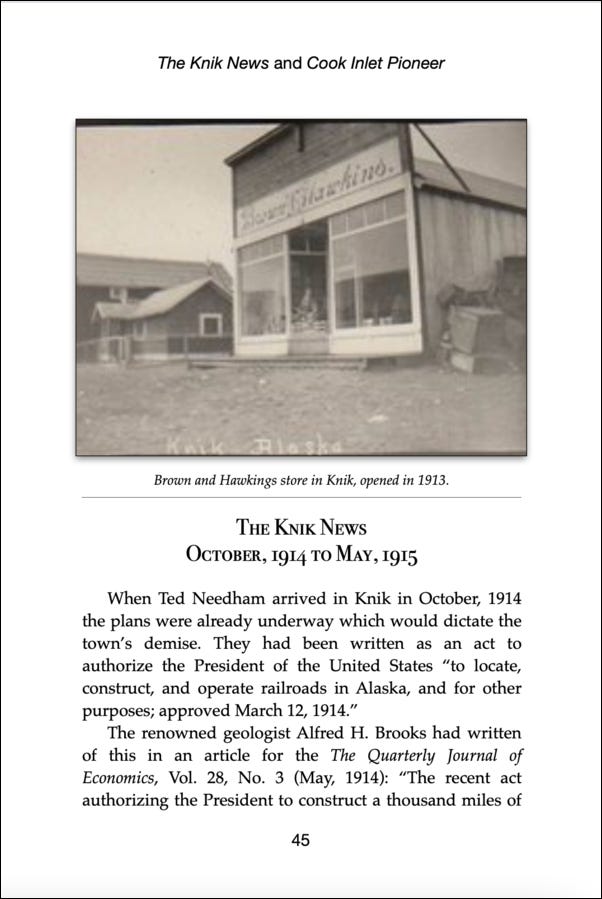
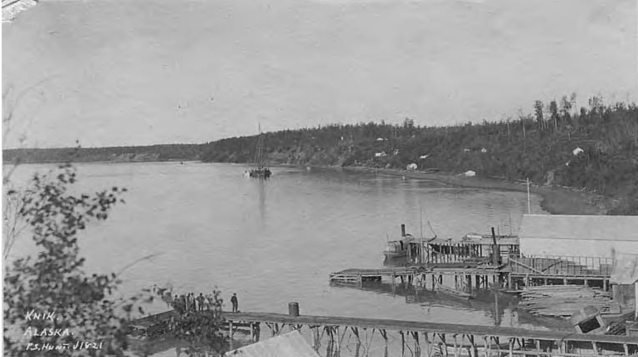
In June, 2024, Northern Light Media published a history of the first newspapers in the Cook Inlet region by Alaskan historian Helen Hegener, titled The First Newspapers of Knik and Anchorage. They were The Knik News – which later became the Cook Inlet Pioneer and Knik News, the name given when the newspaper moved from Knik to the new Knik Anchorage townsite at Ship Creek in 1915.
The book opens with a brief history of the Cook Inlet region, the land and its first inhabitants, the Dena’ina. The stories of the towns of Knik and Anchorage follow, giving context for the coming of the newspapers, and then the newspaper histories lead into the actual pages of each publication, reprinted in full from archives at the Library of Congress. A May, 2024 article in the free Northern Light Media email newsletter shares details of the book and the history of the newspapers.
Share this page with your friends through social media:
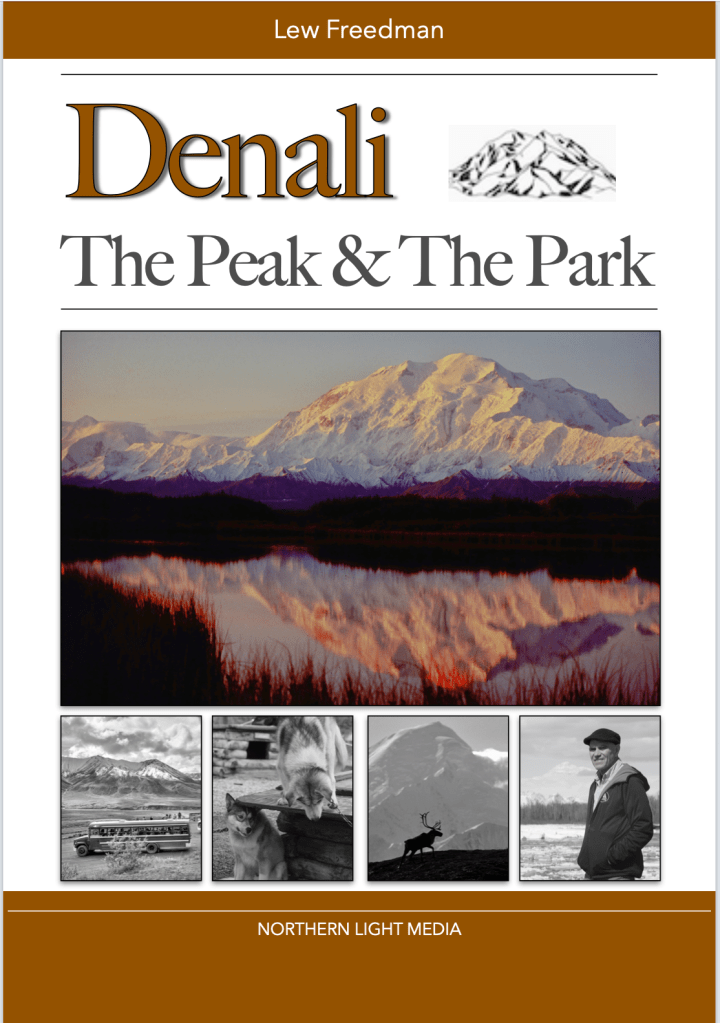
The newest book from multiple-award-winning author Lew Freedman is a fresh and creative look at Denali National Park and Preserve and the tallest mountain in North America. The author takes his readers on an exciting exploration of what is perhaps the most beloved natural feature of Alaska, from the adventures and experiences of those who live near the great mountain—including the stories of many who have scaled its heights—to the history of the area and the simple joys of watching wildlife and just being in this unique and wondrous natural area.
The mountain is the signature of Alaska. It is a gigantic hunk of rock and snow that looms high above the landscape in the interior region of the largest state in the United States, breathtaking when glimpsed even from afar, awesome when seen up close. ~Lew Freedman, from the Preface
Since the 1890s, when the 20,310-foot peak was first “discovered” by a prospector, the great massif has been a symbol of the wild in Alaska. Its mere presence on the horizon has enthralled visitors, the lure of its slopes has enticed mountaineers, and the mountain remains the centerpiece of one of the most rugged National Parks in the United States. More than five dozen photographs, from the cover image of Denali over Wonder Lake by Al Grillo, to historic photos from the beginnings of the Park, give readers an in-depth look at this great American landmark.
The Park grounds attract approximately 500,000 visitors during a short summer season, hikers and campers, bus riders and the wide-eyed who wish to view the spectacular scenery and watch grizzly bears, caribou and other wild creatures in their natural habitat. The Park provides the cocoon surrounding the peak. At the same time, the perpetually snow-covered mountain is a magnet for around 1,000 people per year who wish to climb one of the most formidable mountains on Earth due to its soaring altitude and unpredictable weather.
The mountain has stood tall for thousands of years. The Park has been under federal government domain since 1917. The mountain and the Park have alternately and interchangeably been called Denali and McKinley, after the late 19th-century president. The query, “What’s in a name?” is one aptly applied to the six-million-acre gem of the north, and author Freedman explores the socio-political dynamics of the great peak’s changing name.
Chapters include interviews with and biographies of past and current Park rangers, superintendents, scientists, climbers, guides, pilots, bus drivers, mushers, tourists, and those who just live near and love the mountain and the area surrounding it. Other chapters explain details of interesting subjects such as the only working sled dog kennel in a U.S. national park, how a glacier-sited base camp functions, how trash and human waste are removed from the mountain, how a sled dog team made it to the summit, and the complexities which arise when a landslide takes out a large segment of the only road into the Park.
Denali: The Peak and The Park, by Lew Freedman, is an excellent addition to the literature on North America’s tallest mountain, a delightful guide for anyone seeking to learn more about the Alaskan treasure that is Denali National Park and Preserve. Handy travel-sized 6” x 9” format, 298 pages, more than 70 b/w photos, 40 chapters. Published in September, 2025 by Northern Light Media.
Share this page with your friends through social media:
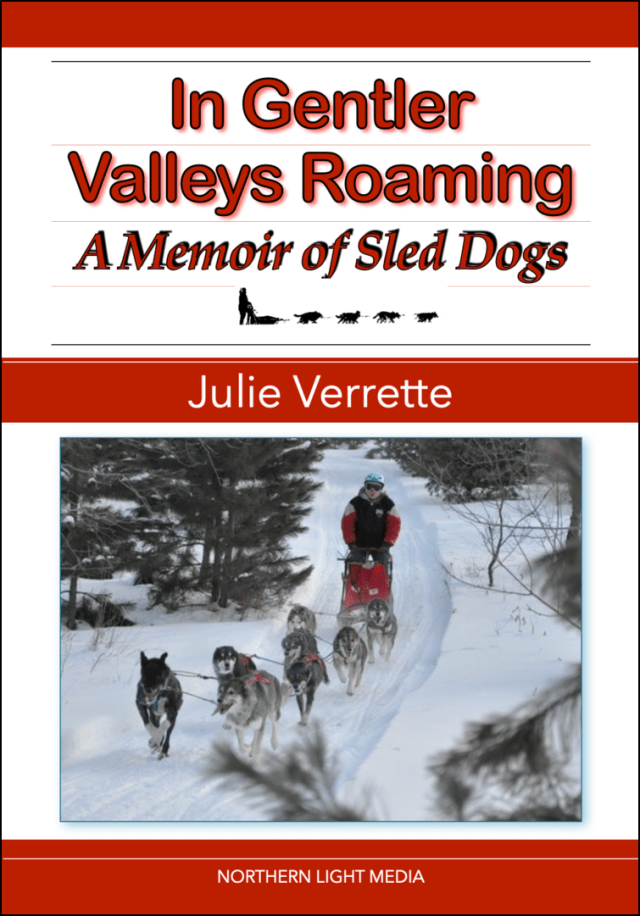
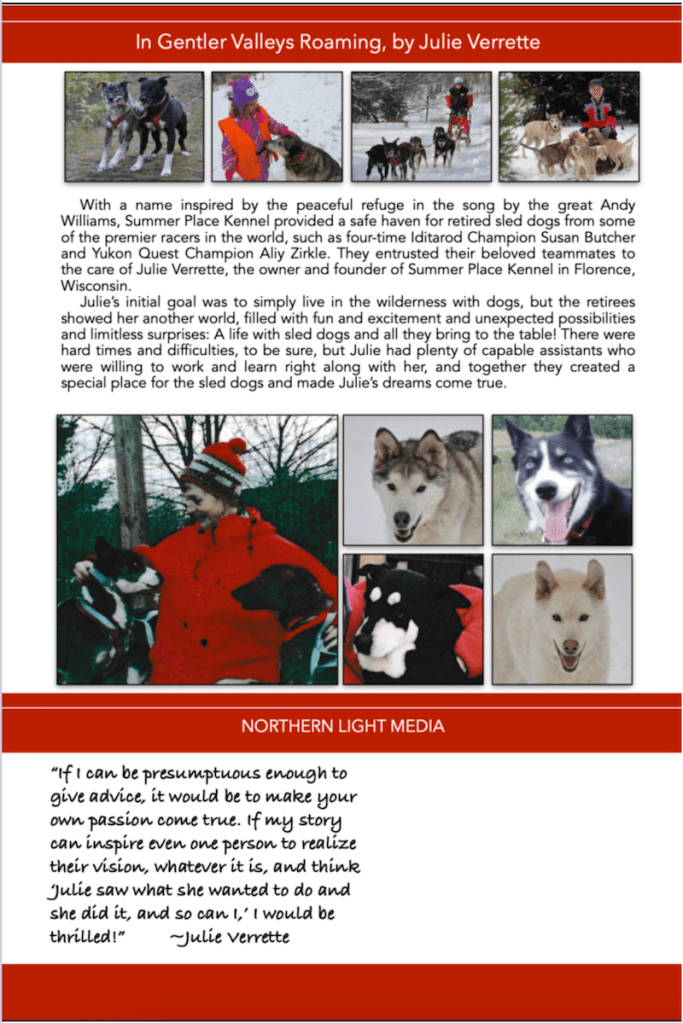
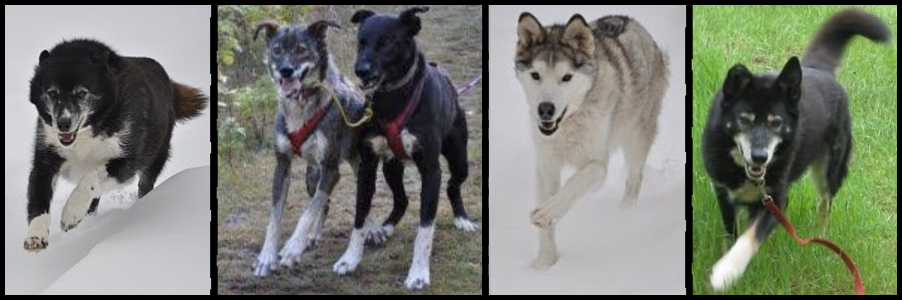
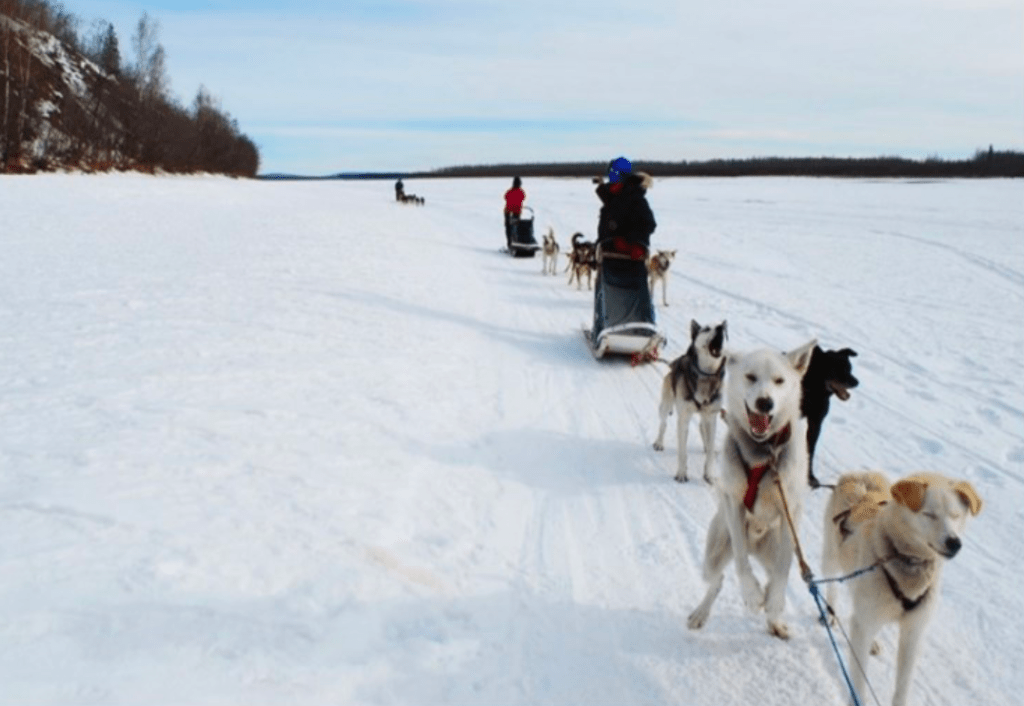
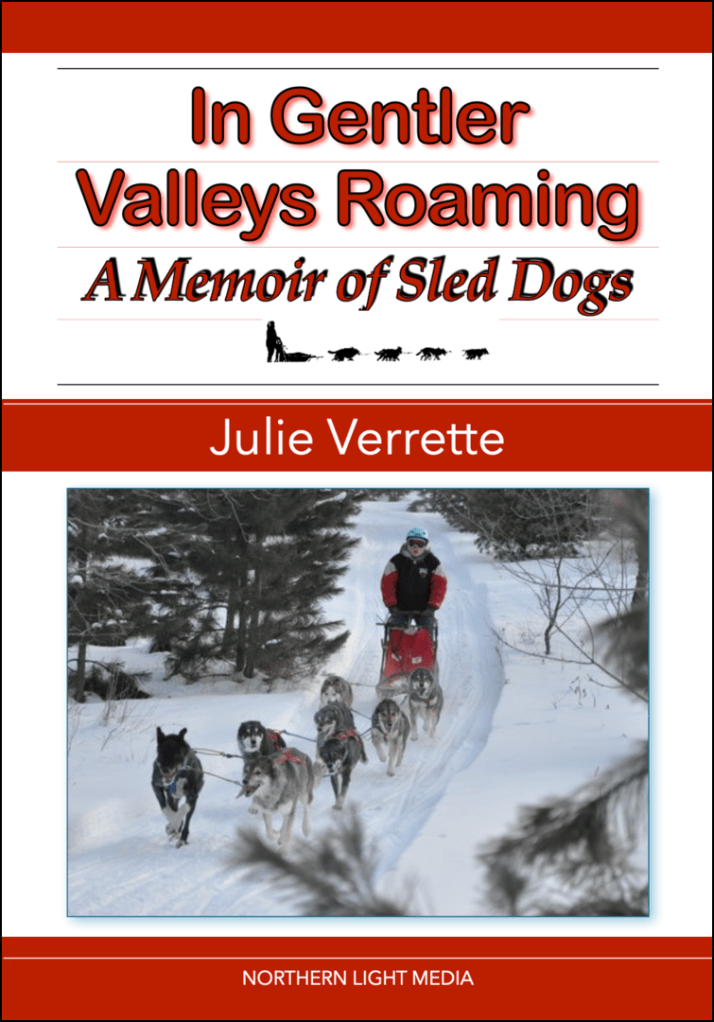
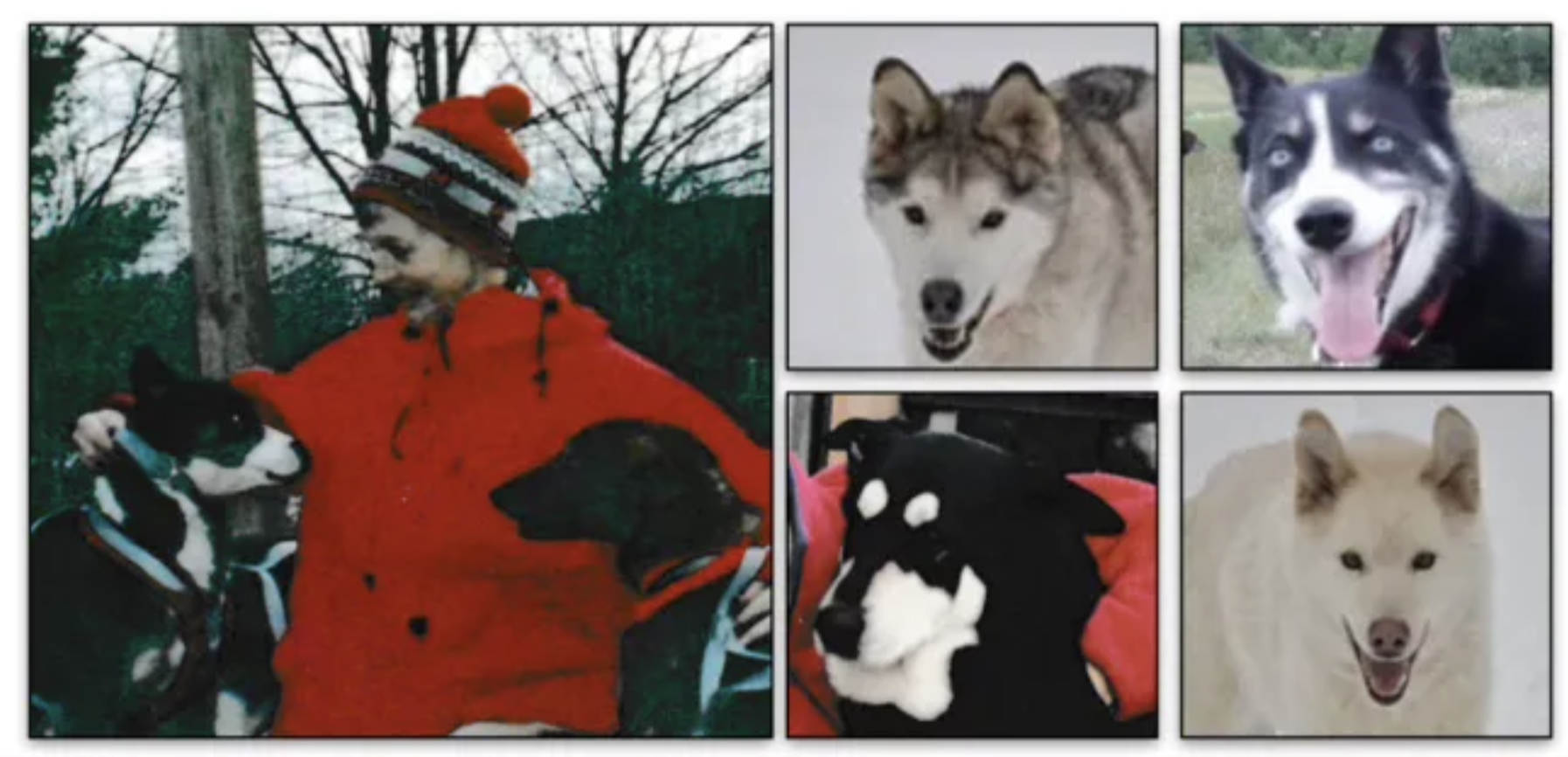
With a name inspired by the peaceful refuge in the song by the great Andy Williams, Summer Place Kennel provided a safe haven for retired sled dogs from some of the premier racers in the world, such as four-time Iditarod Champion Susan Butcher and Yukon Quest Champion Aliy Zirkle. They entrusted their beloved teammates to the care of Julie Verrette, the owner and founder of Summer Place Kennel in Florence, Wisconsin.
“If I can be presumptuous enough to give advice, it would be to make your own passion come true. If my story can inspire even one person to realize their vision, whatever it is, and think ‘Julie saw what she wanted to do and she did it, and so can I,’ I would be thrilled!” ~Julie Verrette
In the first chapter of her book, Julie writes about a family trip to northern Minnesota and her first experience on a dogsled: “I climbed into the sled with our guide/musher and a twelve-dog team. Our guide said he wanted to get off running smoothly and then let me drive. We took off without a hitch and I was amazed at how quiet it quickly became as the dogs settled into their work. The swish, swish of runners on fresh snow and the occasional sound of huskies breathing was mesmerizing. It was exhilarating to fly through the Minnesota winter wilderness!”
In time, that experience would change her life, as she writes in the prologue: “Long before I could define it, the concept of retired sled dogs roaming in the gentler valleys of Wisconsin, I felt the powerful need for a lifestyle I couldn’t clearly identify. I took the leap and made a home for high performance sled dogs and strived to give them their best lives.”
Julie’s love of the sled dogs took her to Alaska and the Iditarod Trail Sled Dog Race, where she visited several checkpoints along the trail, and she came home with some of the best racing dogs in the world, retired from top kennels such as Trail Breaker (Susan Butcher) and Skunk’s Place (Aliy Zirkle). Back in Wisconsin, Julie built a life for herself and the dogs entrusted to her care.
Julie’s initial goal was to simply live in the wilderness with dogs, but the retirees showed her another world, filled with fun and excitement and unexpected possibilities and limitless surprises: A life with sled dogs and all they bring to the table! There were hard times and difficulties, to be sure, but Julie had plenty of good friends and capable assistants who were willing to work and learn right along with her, and together they created a special place for the sled dogs and made Julie’s dreams come true.
The inspiring and heartwarming story of one woman’s dedication and work with retired sled dogs, and the life she and they built together in a beautiful Wisconsin valley.
In Gentler Valleys Roaming: A Memoir of Sled Dogs
By Julie Verrette. 114 pages, 6″ x 9″ format, b/w interior and photos, bibliography, indexed. ISBN 9798294154202. $24.95 plus $5.00 postage.
$29.95
Share this page with your friends through social media:
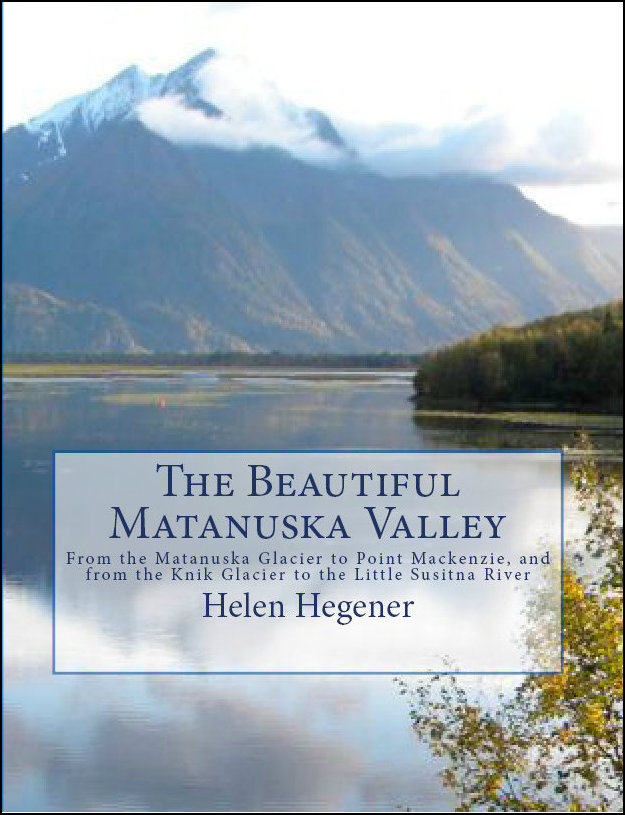
The Beautiful Matanuska Valley is a tribute to a very special part of the Last Frontier, a unique valley surrounded by towering mountains, bordered on its southern edge by the tidewaters of Knik Arm, a branch of Cook Inlet, crossed by sparkling streams and great rivers and dotted with thousands of crystal clear lakes.
This valley is also the home of the Iditarod Trail Sled Dog Race, one of Alaska’s fastest-growing towns, and some of the richest historical sites in the state. The book includes chapters on Palmer, Wasilla, and other communities within the Valley, both still-existing and long-gone.
Stories and photos of Knik, Sutton, Matanuska, Big Lake, Chickaloon and others tell the story of the founding, settling, and development of the area, while details about the Valley’s geography, geology, transportation, agriculture, mining, recreation, tourism, and history – highlighted by hundreds of full-color photographs – showcase the many wonders of the beautiful Matanuska Valley.
Shown in all four seasons, with significant landmarks, attractions, historic sites and other points of interest, this book is a terrific gift and a delightful keepsake for anyone who lives in, travels through, or loves southcentral Alaska’s beautiful Matanuska Valley!
The Beautiful Matanuska Valley
140 pages, full color, 8.5″ x 11″ paperback, published in 2013, maps, resources, index and photo index. $24.95 plus $5.00 shipping.
$29.95
Share this page with your friends through social media:
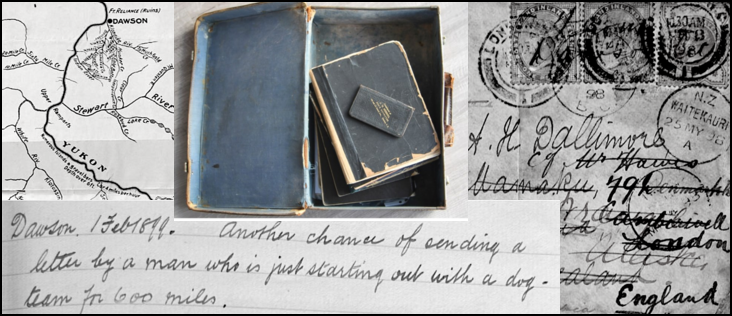
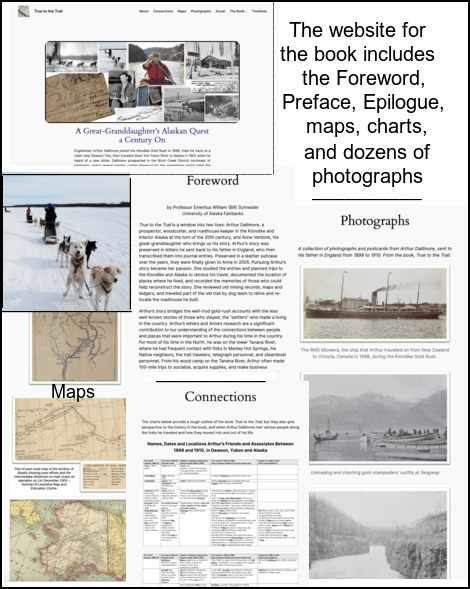
In 1898 Englishman Arthur Dallimore joined the Klondike Gold Rush. He tried his hand at a claim near Dawson City, then in 1902, hearing of a new strike, he traveled down the Yukon River to Alaska. Dallimore prospected on Preacher Creek in the Birch Creek Mining District northeast of Fairbanks, spent several winters cutting firewood for the many steamships which traveled the Tanana River in the summer months, and he built a popular roadhouse when a new trail was put in northwest of Fairbanks.
100 years later Arthur’s great-granddaughter Anne journeyed to the far North three times, beginning in 2008, to retrace his steps with his journal writings in hand. By foot, by dogteam, by canoe and by airplane, she followed his trails across the northland. “I had read and re-read Arthur’s stories and was excited. I wanted to go to those places he had described and have adventures like he did.”
In his Foreword to the book, Professor Emeritus William Schneider of the University of Alaska Fairbanks writes,
“Pursuing Arthur’s story became her passion. She studied the entries and planned trips to the Klondike and Alaska to retrace his travel, documented the location of places where he lived, and recorded the memories of those who could help reconstruct the story. She reviewed old mining records, maps and ledgers, and traveled part of the old trail by dog team to relive and relocate the roadhouse he built.”
True to the Trail was written to preserve the history of Arthur Dallimore’s travels, and his great-granddaughter writes, “I hope that Arthur’s experiences shed new light on the experiences of those who came to Alaska at the time of the gold rush.”
To that end, a website for the book shares the front matter, the Epilogue, maps, charts, and many historic photos from Arthur’s trail across the North.
True to the Trail, A Great-Granddaughter’s Alaskan Quest a Century On, by Anne Verdonk
468 pages, 6″x 9″ b/w format, with dozens of photographs, images, maps and charts. Published in July, 2025 by Northern Light Media. $29.95 plus $6.00 shipping.
$34.95
Share this page with your friends through social media:
With a name inspired by the peaceful refuge in the song by the great Andy Williams, Summer Place Kennel provided a safe haven for retired sled dogs from some of the premier racers in the world, such as four-time Iditarod Champion Susan Butcher and Yukon Quest Champion Aliy Zirkle. They entrusted their beloved teammates to the care of Julie Verrette, the owner and founder of Summer Place Kennel in Florence, Wisconsin.
“If I can be presumptuous enough to give advice, it would be to make your own passion come true. If my story can inspire even one person to realize their vision, whatever it is, and think ‘Julie saw what she wanted to do and she did it, and so can I,’ I would be thrilled!” ~Julie Verrette
Julie’s initial goal was to simply live in the wilderness with dogs, but the retirees showed her another world, filled with fun and excitement and unexpected possibilities and limitless surprises: A life with sled dogs and all they bring to the table! There were hard times and difficulties, to be sure, but Julie had plenty of capable assistants who were willing to work and learn right along with her, and together they created a special place for the sled dogs and made Julie’s dreams come true.
Scheduled to be published in August, 2025 by Northern Light Media.
In Gentler Valleys Roaming: A Memoir of Sled Dogs
By Julie Verrette. Estimated 200 pages, 6″ x 9″ format, b/w interior, dozens of photos. Available in August, 2025. $24.95 postage paid.
$24.95
An excerpt from the book:
I had already been in touch with Susan Butcher about another retiree. I needed a leader and told her of my plan to visit Aliy’s kennel in Two Rivers. Susan called me at Aliy’s kennel on the day of our planned camping trip. Aliy handed the phone to me with a big smile, saying “It’s Susan Butcher calling you,” a bit of a question in her eyes. I hadn’t mentioned to Aily that I was also going to visit Susan.
Susan said “Come early before your plane leaves and we’ll take a couple of leaders out that I think will work for you.” I told her “We have a planned camping trip today but it’s to be thirty below so I don’t think we’ll go.” Susan replied, “If I know Aliy, you’ll go!” We finalized our plans, Aliy would drive us to Fairbanks and we’d stop at Susan’s kennel enroute.
Share this page with your friends through social media:
With the help and advice of my 13-year-old grandson Collin, I created a new logo for this website, something I’ve been planning to do for some time. Those who’ve been with me for many years will know I’ve changed my logo and header for this site many times, and it’s fun to look back over some of the old designs:
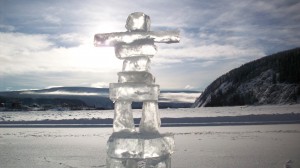
One of my first logos was based on this Inuksuk on the Yukon River at Dawson City, taken during the 2008 Yukon Quest. The sun behind the ice was part of the reason for using this photograph, and I wrote quite a bit at the time about why I chose to call my company Northern Light, as opposed to Northern Lights, and also why I avoided using the aurora in my logo, headers, etc. to avoid confusion. [Photo by Helen Hegener/Northern Light Media]
One of my first headers featuring the stained glass dog team. I have loved this 1910-era panel since finding it in 2007 while searching for something else, and I not only visited it in the Museum of History and Industry (MOHAI) in Seattle a couple of times, but I wrote a book about the search for its story and the history of Seattle, Alaska, the Arctic Club, and much more.
In 2014 I changed to this header. The blue font is called Beauty School Dropout, in part a reference to a song from the musical “Grease.”
I changed to this header in 2015, all my photos from my book, ‘The Beautiful Matanuska Valley.’
2016 was the first time I featured books on my website header.
In 2019 I kept it simple, but my business logo at the time was a compass rose.
In 2023 I went back to book covers again.Changed it in 2024, and now I’ve changed it again.
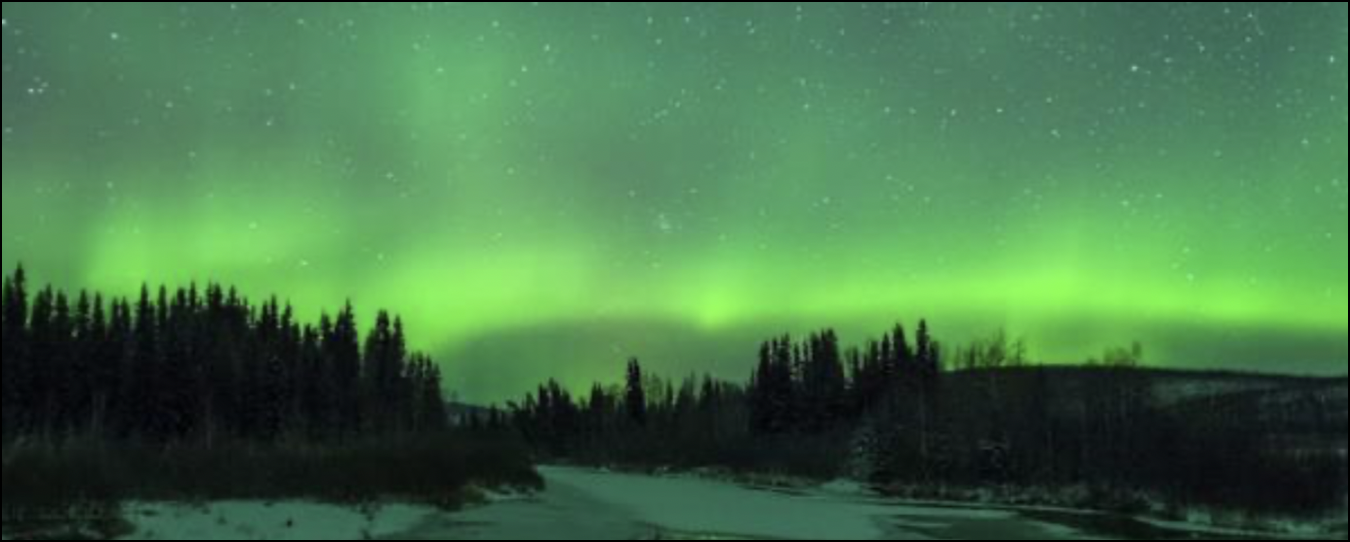
The new logo features those northern lights I’ve been avoiding for 18 years. I’m sure it will lead to misinterpretations of my company name, but doggoneit, I’m an Alaskan, my whole family is Alaskan, and the aurora is a large part of our lives, especially in winter.
My original thinking, and why I dropped the ‘s,’ was explained many years ago: “I chose the name ‘Northern Light’ for my company because, as a photographer and a sometimes-artist, I’m familiar with the properties of light, and I understand the innate beauty and preference for northern light.”
“Artists and photographers have recognized and understood the beauty and the benefits of light from a northern source for centuries. Northern light, also known as indirect or reflected light, produces cool tones and controlled shifts in light levels or values. These are important to artists and photographers, who work with colors, tones, contrasts, shadows, and other variables. With control over the light source which could otherwise produce washed out colors and stark shadowed areas, the subtle changes in colors, tones, and values have produced some of the greatest paintings, photographs, and artwork in history.”
“Artists such as the great seventeenth-century Dutch artist Johannes Vermeer, who was particularly renowned for his masterly treatment and use of light in his work, and was the original ‘painter of light,’ well known for the northern light illuminating his studio.
Photographers such as Ansel Adams, Alfred Steiglitz, and Edward Weston also recognized the qualities of indirect northern light, and many architectural elements, such as clerestory windows, are designed to take advantage of its diffuse nature. Northern Light is different, beautiful, sublime…”
But our beautiful northern lights (with the ‘s’) are perhaps the most sublime of all.
Share this page with your friends through social media:
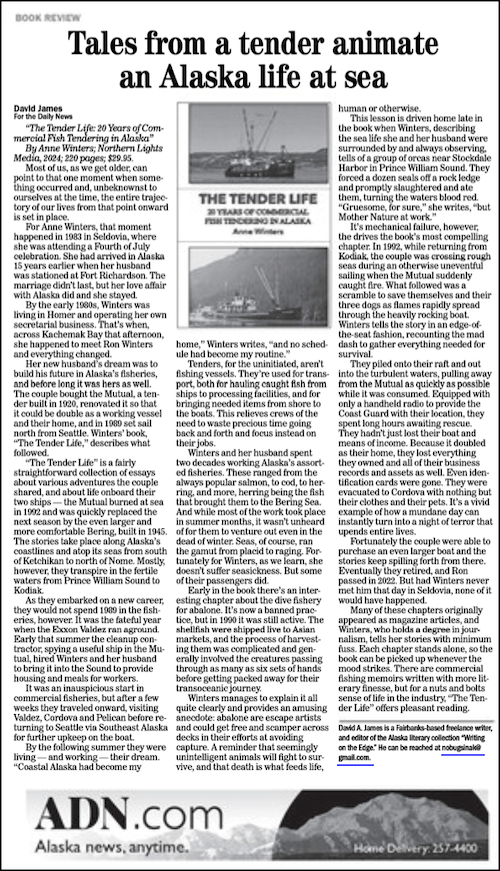
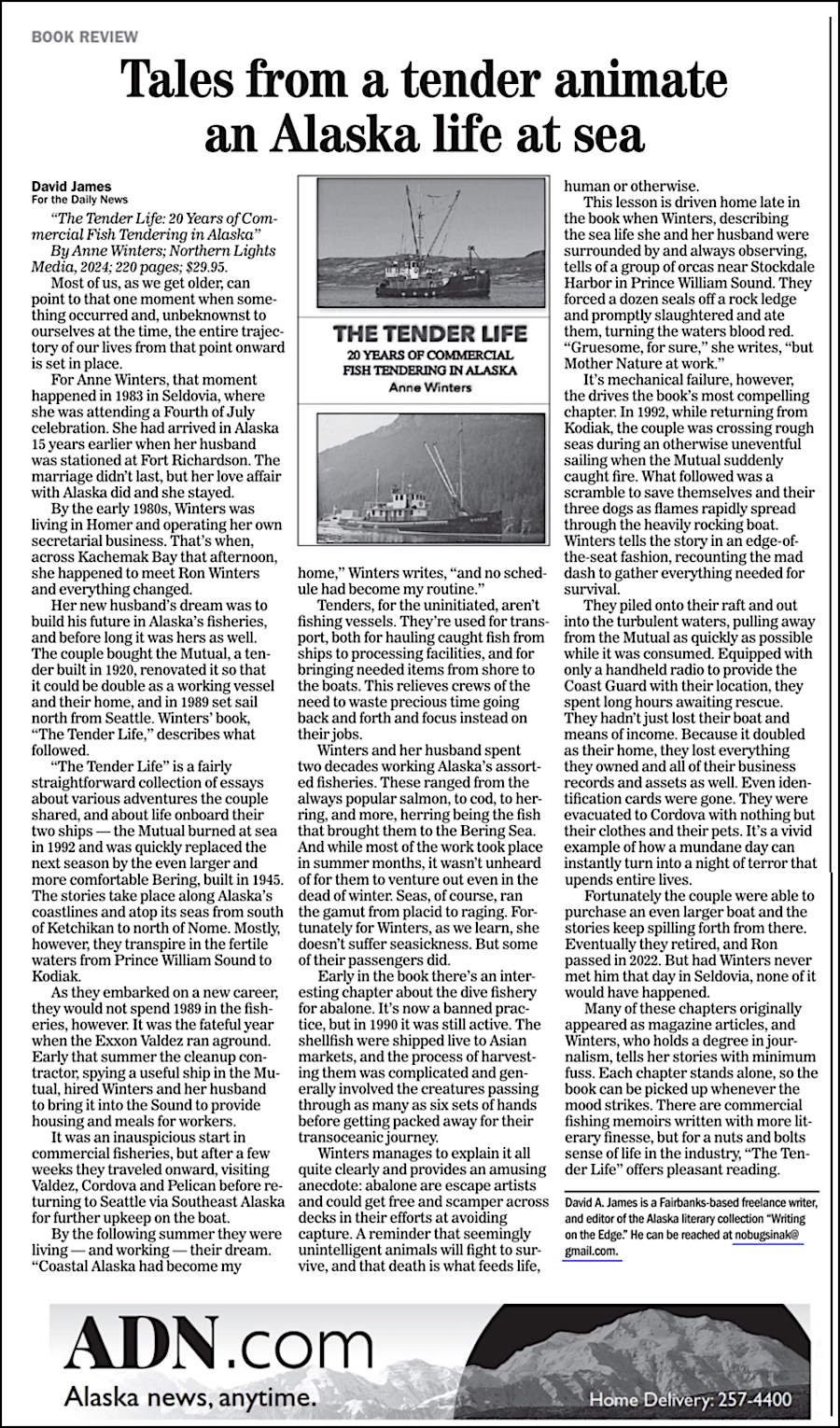
The Sunday, May 18, 2025 editions of the Anchorage Daily News and the Fairbanks Daily News-Miner include another terrific review of one of our books, by David A. James, the Fairbanks-based editor of the literary collection Alaska on the Edge. The Tender Life, by Anne Winters, is the subject of this week’s book review.
The entire review can be read under the PayPal link below.
From David’s review: “Tenders, for the uninitiated, aren’t fishing vessels. They’re used for transport, both for hauling caught fish from ships to processing facilities, and for bringing needed items from shore to the boats. This relieves crews of the need to waste precious time going back and forth and focus instead on their jobs.
“Winters and her husband spent two decades working Alaska’s assorted fisheries. These ranged from the always popular salmon, to cod, to herring, and more, herring being the fish that brought them to the Bering Sea. And while most of the work took place in summer months, it wasn’t unheard of for them to venture out even in the dead of winter. Seas, of course, ran the gamut from placid to raging.”
The Tender Life: 20 Years of Commercial Fish Tendering in Alaska
The Tender Life: 20 Years of Commercial Fish Tendering in Alaska, by Anne Winters, illustrations and maps by Jon Van Zyle, with over two dozen full color photos. 6” x 9” format, 218 pages, glossary, index, ISBN 9798339373292. $24.95 plus $5.00 shipping from Northern Light Media.
$29.95
Share this page with your friends through social media:

































 Northern Light Media