![First white child born in Cook Inlet, Martha White, and her mother, left, in Sunrise, Alaska in 1898. The child is wearing a hat and holding a cat. A man, several wooden buildings and a pile of logs are visible in the background. Photograph taken during the 1898 Cook's Inlet Exploring Expedition led by Edwin F. Glenn on behalf of the U.S. Army. The photographer is unidentified. Title taken from caption written on back of photograph. [Edwin F. Glenn papers, Archives and Special Collections, Consortium Library, University of Alaska Anchorage]](https://northernlightmedia.org/wp-content/uploads/2015/11/1st_white_child_born_in_cook_inlet___mother.jpg?w=300&h=234)
First white child born in Cook Inlet, Martha White, and her mother, left, in Sunrise, Alaska in 1898. The child is wearing a hat and holding a cat. Photograph taken during the 1898 Cook’s Inlet Exploring Expedition led by Edwin F. Glenn on behalf of the U.S. Army. [Edwin F. Glenn papers, Archives and Special Collections, Consortium Library, University of Alaska Anchorage]
The world traveler and lecturer Frank G. Carpenter wrote widely of his travels in Alaska, and in the April 5, 1917 issue of
Moderator-topics he wrote about several notable women of the territory, including the Anchorage pioneer, Mother Martha White:
“The first woman to establish a home on Cook inlet was Mother White, the wife of a whaler who made voyages to Bering sea and the Arctic ocean. He brought his wife with him, and she built a log cabin store and roadhouse on the shores, of Cook inlet, about 200 miles from the site of the new town of Anchorage. It was there that Miss Martha White was born. She was the first white child to see the light of day In that part of the world, and when the work began on the government railway she was chosen to drive the first spike.
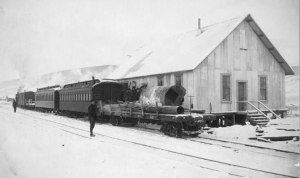
![Martha White driving the first spike in the construction of the Alaska Railroad, Ship Creek, April 29, 1915. [Photographer John E. Thwaites. University of Washington Libraries, Special Collections Division.]](https://northernlightmedia.org/wp-content/uploads/2015/11/woman_driving_the_first_spike_in_the_construction_of_the_alaska_railroad_ship_creek_1915.jpg?w=300&h=188)
Martha White driving the first spike in the construction of the Alaska Railroad, Ship Creek, April 29, 1915. [Photographer John E. Thwaites. University of Washington Libraries, Special Collections Division.]
“It is more than 20 years since Mrs. White established her store and roadhouse. She dealt with the Indians and trappers, and later on started a fish cannery and saltery. In one year she put up 2.000 barrels of salted salmon. She made considerable money, which she invested in mining. She was a part of the gold stampede to Sunrise, on Turnagain arm, where she made so much that she might have retired in comfort. Then bad luck came. She put her winnings into unsuccessful properties and lost them. She went back to the roadhouse business and established little hotels at Hope City and Sunrise. These were a success and she gradually accumulated some property. In the meantime, her daughter was growing up and Mother White decided to leave Alaska and go to the states to educate her. She moved to Chicago and opened a little store there, which supported her until a few years ago, when Martha’s education was finished.
![Mother Martha White standing in doorway, no date. [Frank and Frances Carpenter collection (Library of Congress)]](https://northernlightmedia.org/wp-content/uploads/2015/11/screen-shot-2015-11-05-at-11-14-35-am.png?w=189&h=300)
Mother Martha White standing in doorway, no date. [Frank and Frances Carpenter collection (Library of Congress)]
“And then came that longing to go back to Alaska that permeates the souls of all who have made their homes here for any length of time. It so obsessed Mrs. White that she left her daughter in Chicago and went alone to the north. With tears in her eyes, she told me how she came back to the mining camps of Hope and Sunrise and how they affected her. Many of the old prospectors whom she had known were still there, and she felt that here was her home and her friends. The result was that she came back to Alaska, bringing her daughter with her, and when the work on the railroad began she was one of the first on the ground at the new town of Anchorage. She came in with a stock of lumber and canvas, and before a rail was laid or any excavation made she had put up tents for eating and lodging down on the flats. Her sleeping tent was equipped with bunks one over the other like those of a sleeping car, and each bed brought her-a dollar a night. When the new site for Anchorage was chosen she built a frame hotel on the main street, and she is doing so well that she will probably have to put up a larger building in the near future.”
Share this page with your friends through social media:

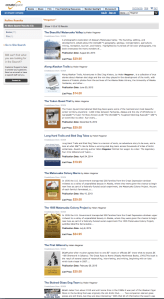 All of the books we publish, including the newest title, Alaskan Roadhouses, and our 2008 Lance Mackey DVD Appetite & Attitude, can be ordered directly from the independent publishing source CreateSpace, which produces all of the titles for Northern Light Media and offers them for sale in this online storefront.
 In addition to the overview featuring all of the books we publish, each book is spotlighted on its own ordering page, providing details about the publication date, page count, ISBN/EAN13, binding type, trim size, language and color.

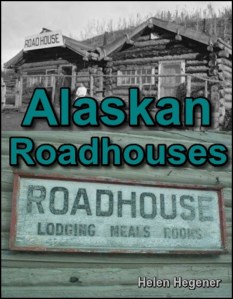 Alaskan Roadhouses: Shelter, Food and Lodging Along Alaska’s Roads and Trails’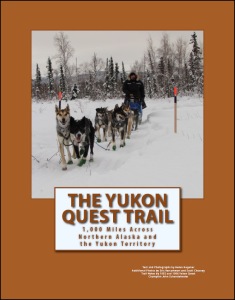
![Dyan Bergan's lead dog at the finish in Fairbanks, 2013. [Eric Vercammen/Northern Light Media]](https://northernlightmedia.org/wp-content/uploads/2014/12/img_1369_28151.jpg)


 We’re looking for sled dogs (and their mushers) who would like to participate in a unique opportunity to tell the world about mushing and sled dog racing!
 Mushers and their dogs are being selected at this time for an opportunity to appear “live and in fur” at the Federal Building and Courthouse in Anchorage for this event. Special access has been granted for a limited number of sled dogs, to be selected from the applicants. If you – and your favorite sled dog – would like to join us for this unique opportunity please contact Karen Laubenstein at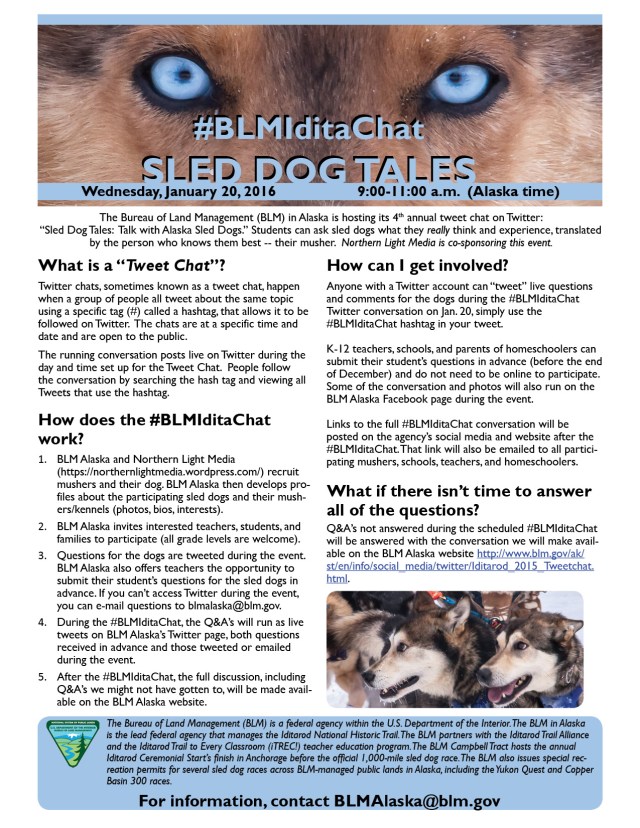
![First white child born in Cook Inlet, Martha White, and her mother, left, in Sunrise, Alaska in 1898. The child is wearing a hat and holding a cat. A man, several wooden buildings and a pile of logs are visible in the background. Photograph taken during the 1898 Cook's Inlet Exploring Expedition led by Edwin F. Glenn on behalf of the U.S. Army. The photographer is unidentified. Title taken from caption written on back of photograph. [Edwin F. Glenn papers, Archives and Special Collections, Consortium Library, University of Alaska Anchorage]](https://northernlightmedia.org/wp-content/uploads/2015/11/1st_white_child_born_in_cook_inlet___mother.jpg)
![Martha White driving the first spike in the construction of the Alaska Railroad, Ship Creek, April 29, 1915. [Photographer John E. Thwaites. University of Washington Libraries, Special Collections Division.]](https://northernlightmedia.org/wp-content/uploads/2015/11/woman_driving_the_first_spike_in_the_construction_of_the_alaska_railroad_ship_creek_1915.jpg)
![Mother Martha White standing in doorway, no date. [Frank and Frances Carpenter collection (Library of Congress)]](https://northernlightmedia.org/wp-content/uploads/2015/11/screen-shot-2015-11-05-at-11-14-35-am.png)