Long Hard Trails excerpt

Long Hard TrailsAn excerpt from the book, Long Hard Trails and Sled Dog Tales, by Helen Hegener, published by Northern Light Media. This chapter is about the 2008 centennial running of the All Alaska Sweepstakes race:

We were surprised to learn that only 16 teams had entered to vie for the purse, but among them were champion mushers whose race records left no doubt that they were there to win, including Lance and Jeff. It was interesting that both had agreed there was no rivalry between them in Steve MacDonald’s KTUU interview, when he’d queried them about what many people were wondering: “Is Mackey and King becoming a rivalry like we saw between Rick Swenson and Susan Butcher?”

Lance replied first: “I hope not. Nothing personal. He’s a competitor; I want to beat him just as badly as he wants to beat me. I don’t think it’s going to become a bad relation sort of deal.”

Jeff concurred: “I’ve raced Lance’s dad and his brother. It’s easy for me to remember that this is the third Mackey I’ve raced. It brings back a lot of memories. Lance was 10 years old when I was racing his dad back up in the Cold Foot, that’s a little bit of a shock for me.”

Long Hard Trails Buy NowLong Hard Trails and Sled Dog Tales

 $20.00 plus $5.00 postage and handling.

 To order via credit card or Paypal, click the linked cover image on the left.

 To order via check or money order, mail your order to Northern Light Media, PO Box 298023, Wasilla, Alaska 99629

 Available on Amazon and through your local bookstores

• Contact the author

Posted in Books | Tagged , , , , , , , | Leave a comment

The First Iditarod on Kindle

KINDLE EDITION

KINDLE EDITION LINK

The First Iditarod, Mushers’ Tales from the 1973 Race, is now available as a Kindle book.

Telling the story of the first race from the perspective of the mushers who ran it, The First Iditarod also includes the history of the Iditarod Trail, and the story of the founding of the race. Over the years an aura has developed around that first race, and most fans know the lore and the rudiments of the story, how it was Joe Redington Sr.’s pie-in-the-sky dream, how he wrangled others into sharing the dream with him and doing the groundwork necessary to make it happen. The history of how the race began can be found in almost every book about the event, because it’s a darned good story, colorful and compelling and full of true-life characters and exciting adventures. But the mushers’ unique individual stories are little-known.

“And they still don’t know what happened, because no one’s ever asked us.” ~Ford Reeves, who teamed up with Mike Schreiber to run the 1973 Iditarod

~ ~ ~ ~ ~ ~ ~ ~ ~ ~ ~ ~ ~ ~ ~ ~ ~ ~ ~ ~ ~ ~ ~ ~ ~ ~ ~ ~ ~ ~ ~ ~ ~ ~ ~ ~

To order the PRINT edition:

PRINT EDITION LINK

PRINT EDITION LINK

The First Iditarod: Mushers’ Tales from the 1973 Race, by Helen Hegener. Published in March, 2015 by Northern Light Media. 156 pages. ISBN-13 978-0-9843977-6-1 Format 6″ x 9″ perfect bound. $20.00 plus $5.00 shipping and handling to U.S. addresses only. Additional postage required for foreign orders. Postal orders can be mailed to Northern Light Media, Post Office Box 298023, Wasilla, Alaska 99629. Thank you!

Posted in Books | Tagged , , , , , , , | Leave a comment

The Early Days of Mushing

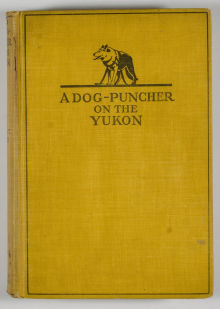
Dog-Puncher“I spent almost the entire winter freighting with my dogs to the outlying creeks, and so was away from civilization most of the time. There was more money in it than in ordinary freighting to the mines, and the life suited me better. I had to camp out, but this was less difficult now than formerly, as by this time we all had tents and stoves.”

— Arthur Treadwell Walden, ‘A Dog-Puncher on the Yukon’ (Houghton Mifflin Co., 1928)

Intrepid teams of hardy sled dogs were the primary mode of winter travel in the early days of Alaska and the Yukon, and the colorful history of dog team travel in the north country was surprisingly well documented. From Archdeacon of the Yukon Hudson Stuck’s ‘Ten Thousand Miles with a Dogsled’ (1914) to the classic ‘Gold, Men and Dogs,’ by famous sled dog racer A.A. “Scotty” Allen (G.P. Putnam Sons, 1931), books filled with stories which seem almost unbelievable today were written by the very men who’d trekked the trails with their canine workhorses.
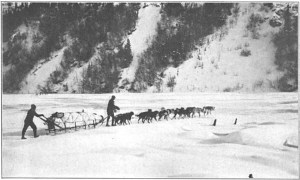
Hudson Stuck and Harry Karstens teams

Hudson Stuck and Harry Karstens teams near Denali

The central role which sled dogs played in the history and development of the territory of Alaska was well explained by cousins Gay and Laney Salisbury, in ‘The Cruelest Miles: The Heroic Story of Dogs and Men in a Race Against an Epidemic’ (W.W. Norton & Company, 2003): “…It was dogs and dog traction, for centuries the mainstay of Eskimo survival, that made this new world run. During the gold rushes, dogs brought the modern world to Alaska, hauling food, mining supplies, medicine, passengers, and gold across the network of rivers and trails that Eskimos and Athabaskans had been following for hundreds of years.”

BookCoverTo read the exploits of these early-day mushers is to venture back to a time when men depended on their dogs for their very lives. Driving a team of huskies for hundreds of miles through mountain ranges, across glaciers, over frozen lakes and rivers, and through vast unpeopled valleys required a caliber of strength and endurance almost unimaginable today. The long-distance mushers of today’s Iditarod and Yukon Quest sled dog races face similar conditions and challenges, but with vastly superior gear, and with a safety net of checkpoints and race officials tracking their progress. The mail drivers and freight haulers of old left civilization behind when they hit the trail, and they were on their own when trouble or tragedy struck, as it often did.

Scotty Allan and Baldy of Nome

Scotty Allan and Baldy of Nome

During the Solomon Derby, a race run from Nome to Solomon and back, Scotty Allan’s peerless leader Baldy somehow sensing that something was wrong, stopped the entire team, turned them and the sled around, and headed back down the trail in search of their missing musher. They found him lying unconscious on the trail, bleeding from a gash in his head. Scotty had been bending over to inspect a runner when he was hit in the temple by an iron trail marker and knocked off the sled. Revived by his anxious dog Baldy, the injured musher climbed back aboard his sled and they sped off to win the race. Scotty later credited Baldy for saving his life, and Esther Birdsall Darling, who was Scotty Allan’s kennel partner, immortalized the dog in her classic book, Baldy of Nome (A.M. Robertson & Sons, 1913).
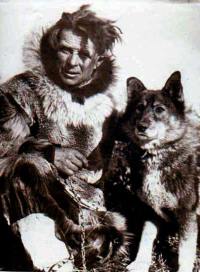
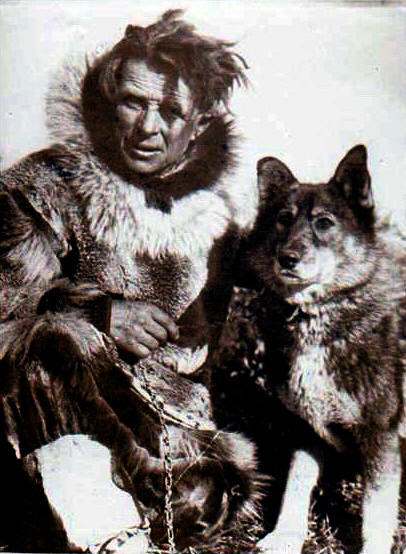
Leonhard Seppala and Togo

Leonhard Seppala and Togo

In the frozen north, the singular capabilities of a good sled dog often meant the difference between life and death. In the Nome Daily Nugget newspaper, April 2, 1917, a poem by Esther Birdsall Darling told the tale of a heroic rescue which had taken place only a few weeks before. Sled dog driver Bobby Brown, working at Dime Creek on the Seward Peninsula during the winter of 1916-17, was badly mangled in a sawmill accident. The man who would later become a legend in the north country, Leonhard Seppala, was nearby with his team, and he loaded the injured man onto his sled, wrapped him in wolf robes and set out for the nearest hospital, at Candle, over fifty miles away. With a dog named Russky in the lead, they made the hospital and delivered Bobby Brown to the doctors, but his injuries were too great and he died a few days later. The final stanza of Darling’s epic tribute read:

Man’s pluck, and the strength of a dog team–

“On Russky! We trust to your pace.”

There’s the flash of a light–then there’s Candle in sight–

And Seppala beats death in the Race!
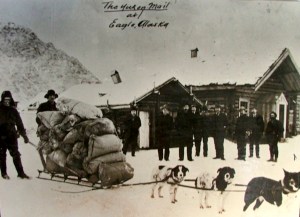
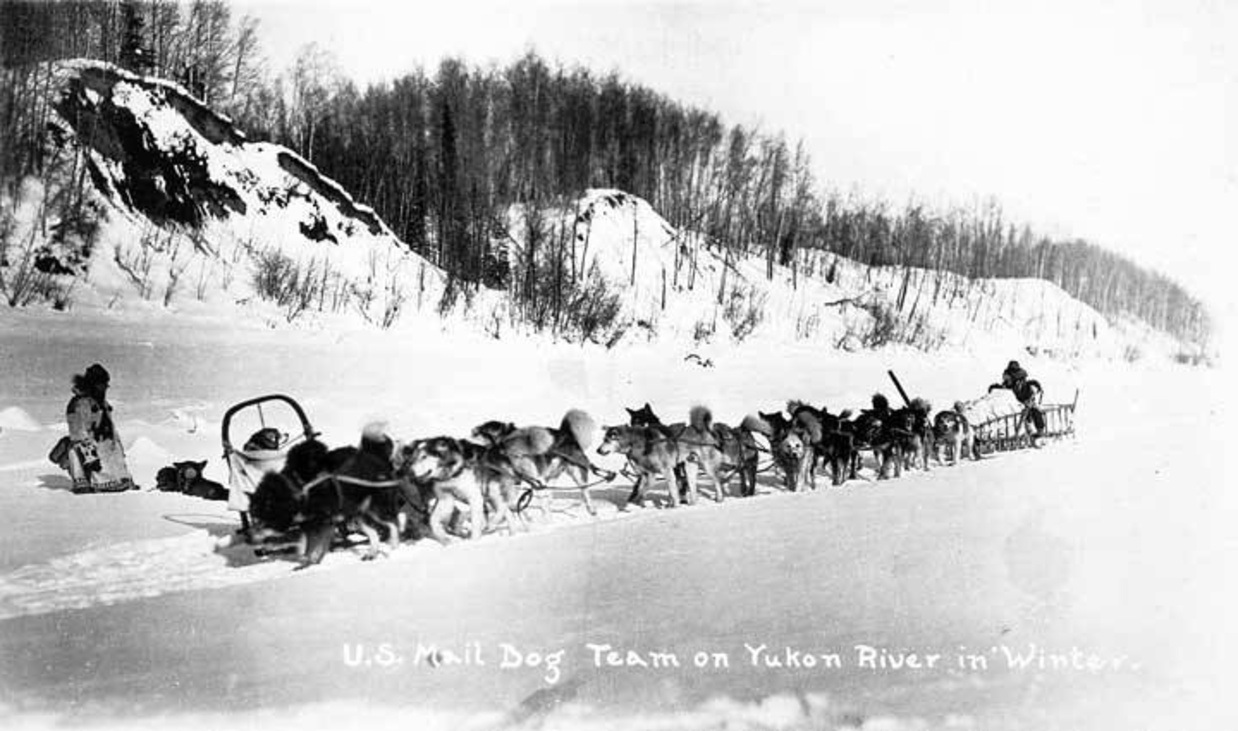
U.S. Mail team, Eagle

U.S. Mail team, Eagle

The mail drivers, freight haulers, and other early mushers faced danger on a regular basis, but it was just part and parcel of their job. By 1901, a network of mail trails throughout Alaska was in use, including a system that followed almost the entire length of the Yukon River. Adolph “Ed” Biederman was a contract mail carrier between the towns of Eagle and Circle. Delivering the mail on the Yukon River by dog team over the 160-mile section took six days one way, then a day’s rest, and six days back. Biederman ran this route thirteen times over the course of each winter, with loads of mail often exceeding 500 pounds, following a string of roadhouses located at intervals along the river. In 1937 the Washington Daily News reporter Ernie Pyle, who would later gain fame as a war correspondent, wrote about the intrepid musher: “The things Biederman has been through would fill a book. I suppose no man knows more about sled dogs, or winter weather, or making his way alone in wild country.”
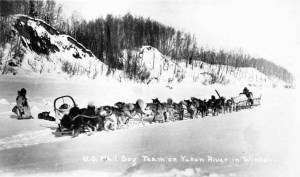
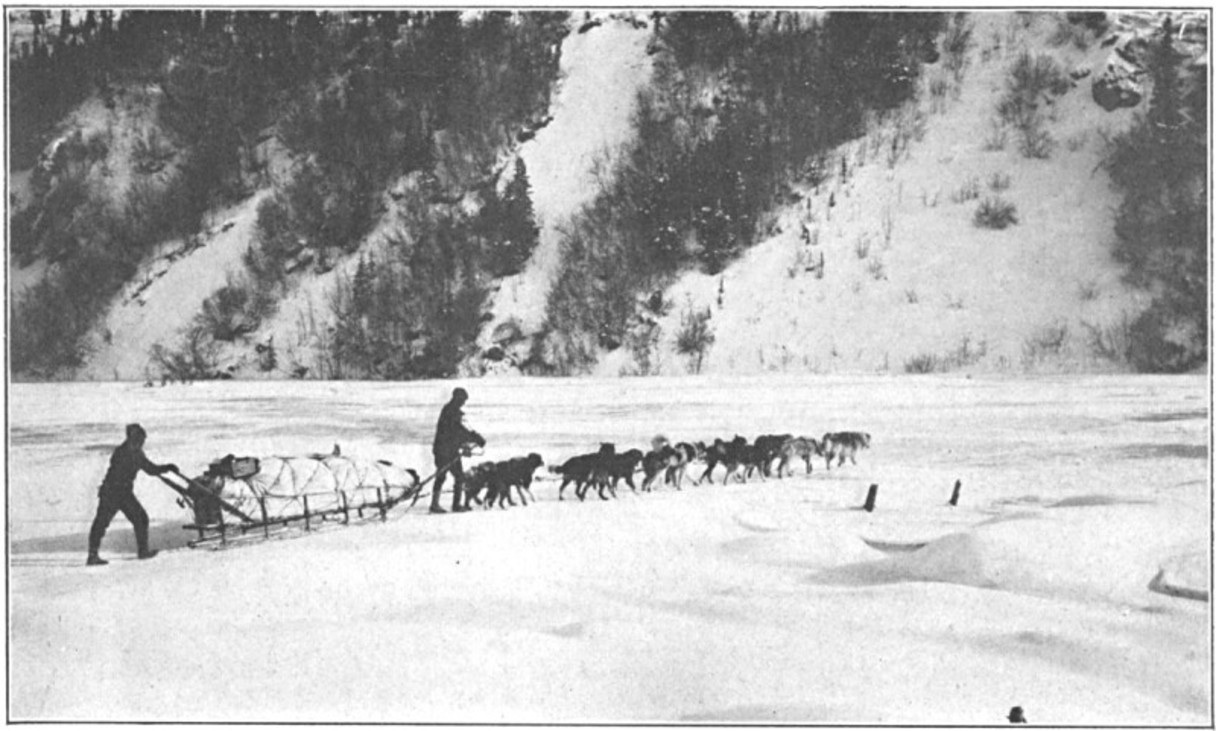
Mail driver on the Yukon River

Mail driver on the Yukon River

By 1916 Ed Biederman and his wife Bella had built a cabin midway between the two towns, which later became a hospitality stop on the Yukon Quest sled dog race. In his classic book about the Yukon Quest, Yukon Alone (Henry Holt & Co., 2000), John Balzar tells a story about Ed Biederman which had originally been related by Ernie Pyle: “The story is told of the summer of 1925, when Ed lost his dog team in a barge accident on the river. That winter, he had to rely on a new team of inexperienced dogs. Lacking trail experience, they pulled him onto thin ice and he broke through to a warm spring below–mushy overflow. It was 42 below and Ed’s feet froze before he could pry off his boots and built a fire. He knew he was in for it. He had frozen his feet before, but this time he knew it was for good. . . . A doctor amputated the fore parts of his feet, a little at a time. He was back running the mail the next winter.’”
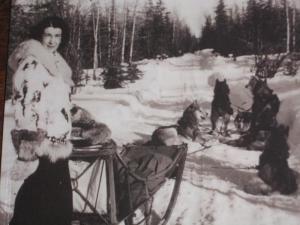
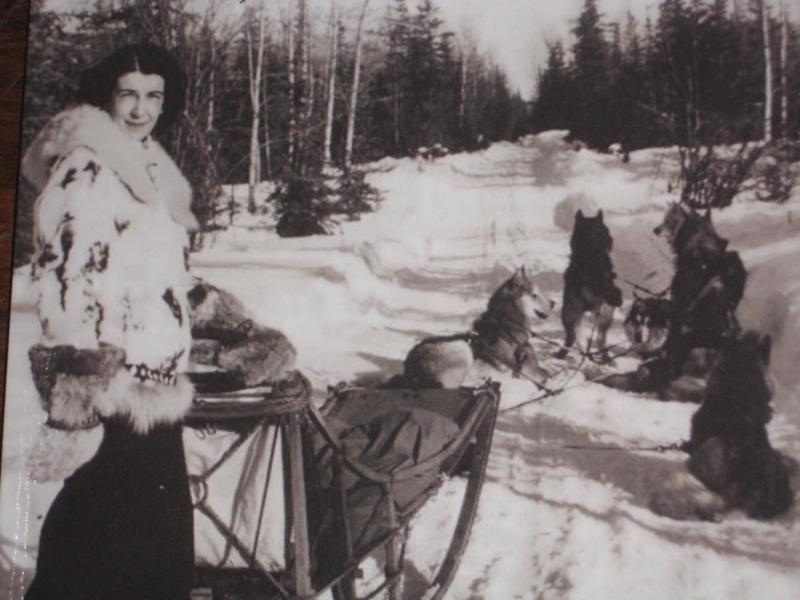
Mary Joyce and her team, 1936

Mary Joyce and her team, 1936

Men weren’t the only mushers in early-day Alaska and the Yukon Territory; women like Mary Joyce also took to the runners. Owner of the remote Taku Lodge near Juneau, Mary hitched her team of huskies to her sled in December of 1936 and drove them to Fairbanks, 1,000 miles away, becoming the first white person over a portion of the trail which later became part of the Alaska Highway. During the most hazardous part of the trip, between Burwash Landing and Tanana Crossing, Mary followed the Kluane River in temperatures reaching sixty degrees below zero.
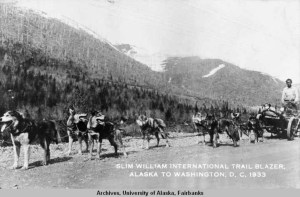
Slim Williams and his team near Hazelton, British Columbia

Slim Williams and his team near Hazelton, British Columbia

Another musher who traveled the Alaska Highway route before the highway existed was Slim Williams, who left Alaska in 1933 and traveled down the proposed route by dogsled, through what was previously unmapped territory. His destination was the 1933 Chicago World’s Fair, where he attracted plenty of attention and gained the favor of First Lady Eleanor Roosevelt. She declared that Slim and his dogs were her favorite exhibit and invited Slim to the White House, so after the Fair closed Slim and his dog team proceeded to Washington, D.C., where he spent the winter discussing Alaskan concerns with legislators and meeting with President Franklin Roosevelt.
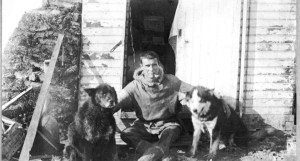
Ernest deKoven Leffingwell and dogs on Flaxman Island. Anglo-American Polar Expedition. Canning district, Northern Alaska region, Alaska. C. 1910. - ID. Leffingwell, E.K. 159 - lek00159  - U.S. Geological Survey -

Ernest deKoven Leffingwell and dogs on Flaxman Island. Anglo-American Polar Expedition. Canning district, Northern Alaska region, Alaska. C. 1910. – ID. Leffingwell, E.K. 159 – lek00159 – U.S. Geological Survey –

Dog teams were indispensable to Arctic travelers such as explorer and anthropologist Vilhjalmur Stefansson, who undertook the most comprehensive scientific study of the Arctic ever attempted, or Ernest de Koven Leffingwell, who, from 1906 to 1914, created the first accurate map of a large part of the Alaskan arctic coastline and became the first to accurately identify the oil potential of the North Slope region of Alaska. Missionaries, lawmen, doctors, gold seekers, mail drivers, and anyone who needed to travel the winter trails in Alaska depended on the always-reliable dog team, leading the venerable Judge James Wickersham to state in 1938, “He who gives his time to the study of the history of Alaska, learns that the dog, next to man, has been the most important factor in its past and present development.”

These stories and many others are shared in the book, Along Alaskan Trails:
Along Ak Trails Buy Now• Along Alaskan Trails, Adventures in Sled Dog History, by Helen Hegener. Published in July, 2012 by Northern Light Media (ISBN 978-0-9843977-2-3). $19.00 postpaid (US only, foreign orders please use Amazon). To order via check or money order, mail to Northern Light Media, PO Box 298023, Wasilla, Alaska 99629. To order via credit card or Paypal, click on the linked cover image.


Posted in Alaska History, Books | Tagged , , , , , , , , , , , , , , | Leave a comment

The Great Alone

MV5BMTUxMzk0MjY4M15BMl5BanBnXkFtZTgwMjMyNjQxNDE@._V1_SX214_AL_Lance Mackey is one of the greatest dog drivers of all time. Four-time Yukon Quest Champion. Four-time Iditarod Champion. Winner of the Humanitarian Award for excellence in sled dog care for both races, winner of numerous awards  over the years in dozens of races. Twice nominated for ESPN’s prestigious Excellence in Sports Performance Award. A true dogman. The Dogfather.

Greg Kohs is an accomplished filmmaker. Winner of ten Emmy Awards®, he has produced films and commercials for clients such as Google, Apple, Nike, Mastercard, Disney, and others. His feature films include the award-winning Song Sung Blue, described by the late Roger Ebert as “Superb.” His films have been described as “strong stories with visually beautiful and honest imagery,” and “about people who pursue their own passions in life.”

dick-mackey-running2

Lance’s father, Dick Mackey, wins the 1978 Iditarod

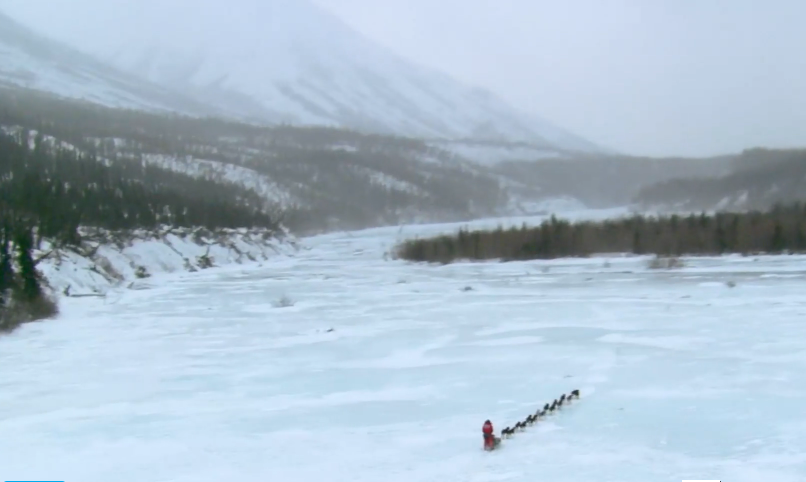
The combination of Lance Mackey’s life story and Greg Kohs’ filmmaking talents has resulted in a spectacular film, The Great Alone, which seizes the audience right from the opening scene. It’s a brilliant moment: A gray-haired man works out on a treadmill while an excited radio announcer describes the finish of a sled dog race. Those familiar with the history will recognize 1978 Iditarod Champion Dick Mackey listening to the closest-ever finish in Nome, when he beat Rick Swenson by one second and then collapsed on top of his sled in exhaustion. The film moves to old footage of the moment, and standing beside Dick are his sons, 7-year-old Lance and 6-year-old Jason, wide-eyed and taking it all in.

Lance Mackey and his father [screenshot from video]

Lance Mackey and his father

Without so much as a mention of Lance’s own historic achievements, the film begins telling the story of the two young boys. They lived a hardscrabble Alaskan childhood; when their parents separated their tough-as-nails mom made sure dogs remained a part of their life, and sled dog races assured they would grow up to be mushers like their dad. That part of the film is hard to watch, as Kohs lays bare the heartache and anguish of a broken family; the hurt, pain, and unanswered questions.

Screen Shot 2015-03-05 at 12.50.08 PMThe years go by, the young boys grow up. Lance becomes a commercial fisherman in the Bering Sea, and he admits of cowering behind the wheelhouse after a fearsome storm in fear for his life, certain he’s going to die and swearing never again if he makes it back to port. But then he collects $5,500 for a month’s work and smiles… The money and the lifestyle take him in what he only describes as a bad direction.

More years pass, Lance marries his high school sweetheart and they build a cabin on the Kenai Peninsula. The wedding photos of the couple, and the cabin they built with only a handsaw and backwoods ingenuity, are priceless. Lance begins collecting dogs.

Screen Shot 2015-03-05 at 12.49.19 PMThe story moves back into familiar territory again. Lance starts entering and winning races, and eventually he enters the Big One, the Iditarod. Halfway to Nome he calls his mom to tell her things are going wonderfully! And then, three-quarters of the way to Nome he calls her again; something is wrong. Once again the film becomes difficult to watch, as Lance talks candidly about the cancer. When he tells of the moment when he realized that he might not make it out of surgery, that he could be saying goodbye to his family for the last time, the emotional tension is palpable. There’s simply no way to watch it without a lump in your throat.

Lance, his mother Kathy, and brother Jason, 2007  [screenshot from video]

Lance, his mother Kathy, and brother Jason, 2007

Lance survives, of course, and the underlying thread of the film, the 2013 Iditarod, continues, checkpoint by checkpoint. Lance’s life story continues as well, and he wins the 2007 Iditarod. It’s another emotionally-charged moment as his brother Jason grabs him in a great bearhug and Lance tells him “Life just changed!” He tells his mother “Dreams DO come true!” and when his father, arriving late, steps onstage at the mini-convention center it’s a moment we know Lance has waited his whole life for. His father is proud of him.

Lance’s 2007 win was tempered by many of his mushing peers saying it was a fluke, he got lucky, it would never happen again, and that sets up a wonderful moment in the film when Lance talks about their negative attitudes and then resolutely states, “Watch this!”

The Great Alone premiered in Anchorage on March 4. It’s scheduled to show in Fairbanks on March 8. For future news and updates about the film follow the Facebook page or Lance Mackey’s Comeback Kennel website.

Posted in DVD & Video, Sled Dog Races | Tagged , , , , , , , , , , , , | 7 Comments

1973 Iditarod, The First Race

“W. A. Dikeman and Charles Peterson reported by Iditarod Nugget as “First Mushers Over the Iditarod Trail: Taking 45 Days from Seward to Otter, they meet several others on the trail including Harry Johnson and Bob Griffis.” (Iditarod Nugget, December 28, 1910)

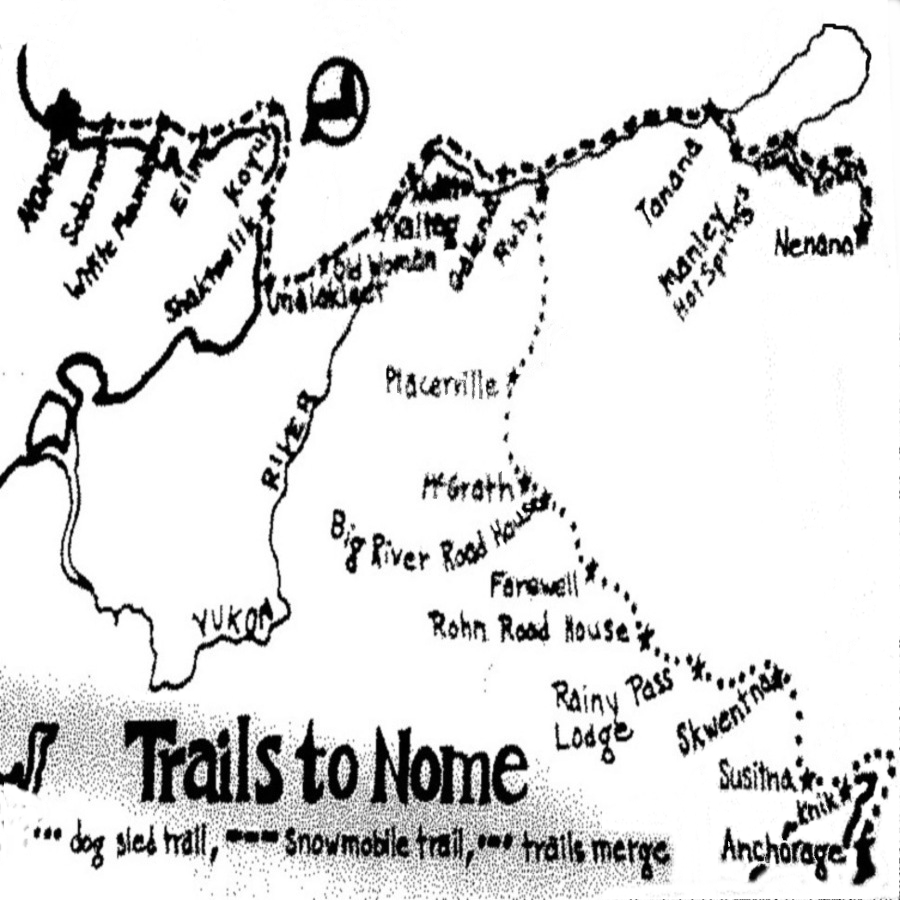
1973 map of the Iditarod Trail Sled Dog Race, from the Anchorage Daily News files

1973 map of the Iditarod Trail Sled Dog Race, from the Anchorage Daily News

The first chapter of the newest book from Northern Light Media, The First Iditarod: Mushers’ Tales from the 1973 Race, by Helen Hegener, shares the history of the Iditarod Trail:

“Before there was an Iditarod Trail there were shorter routes and trails used by the Native peoples of the land; the Dena’ina and Deg Hit’an Athabaskan Indians of south-central Alaska, and the Inupiaq and Yup’ik Eskimos farther north. They were not mushing trails, however. The early peoples viewed dogs as useful for tracking game and sometimes hauling travois-like sleds, but mushing teams of dogs as we know it came later, during the gold rush of the late 1800s, when the prospectors and miners needed a reliable mode of transportation and freight hauling.”

The book details how gold was discovered in Nome, Fairbanks, and near Ruby, recounts the first official scouting of the trail in the winter of 1908 by a four-person crew headed by Colonel Walter L. Goodwin, and then reports a strike was made at Iditarod:

“On Christmas day, 1908, two prospectors, William A. Dikeman and John Beaton, both veterans of the Klondike gold rush, discovered gold near the Iditarod River. The last great gold rush was on, and between 1910 and 1912, 10,000 gold seekers came to Alaska’s ‘Inland Empire,’ taking $30 million worth of gold from the ground.”

The book continues:

“In 1910 the Alaska Road Commission once again sent Colonel Walter L. Goodwin to follow the Iditarod Trail, this time brushing and mapping the route with ten men and 42 dogs in six dog teams. Starting from Nome on November 9, 1910, they surveyed and recorded the trail, and located potential sites for roadhouses, keeping a log of the distances covered with cyclometers attached to the sides of their dogsleds. Goodwin and his men reached Seward on February 25, 1911, having blazed the Seward to Nome Mail Trail, as it was then known.”

The book shares the history of mail carriers on the Iditarod Trail, the First Annual Iditarod Sweepstakes Race in 1910, the glory days of the trail when hundreds of thousands of dollars in gold traveled over it, the 1925 Serum Run to Nome on the northern section of the trail, the trail’s fall into disuse, the reclaiming of the trail by Joe Redington Sr. and the U.S. Army, and how Joe and Vi Redington helped the Iditarod Trail became a part of the National Historic Trails system.

New First IditarodThe First Iditarod: Mushers’ Tales from the 1973 Race, by Helen Hegener.

Published in March, 2015 by Northern Light Media. 154 pages. ISBN-13 978-0-9843977-6-1 Format 6″ x 9″ perfect bound, text only, no photos. $20.00 plus $5.00 shipping and handling to U.S. addresses only. Additional postage required for foreign orders.

Postal orders can be mailed to Northern Light Media, Post Office Box 298023, Wasilla, Alaska 99629. Thank you!

Posted in Alaska History, Books | Tagged , , , , , , , | 1 Comment

The Beautiful Matanuska Valley

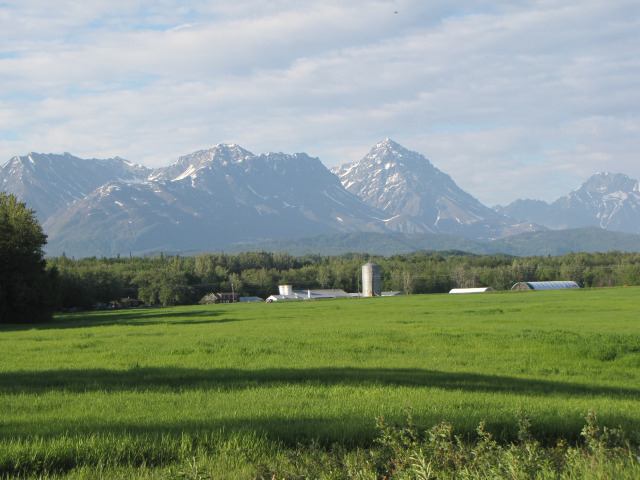
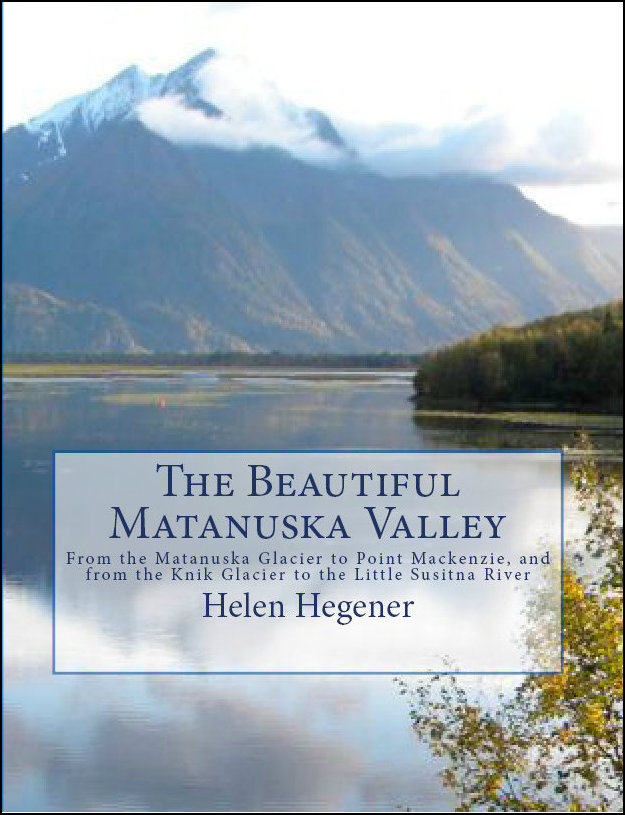
MatanuskaValleyCoverThe Beautiful Matanuska Valley is a tribute to a very special part of the Last Frontier, a unique valley surrounded by towering mountains, bordered on its southern edge by the tidewaters of Knik Arm, a branch of Cook Inlet, crossed by sparkling streams and great rivers and dotted with thousands of crystal clear lakes. This valley is also the home of the Iditarod Trail Sled Dog Race, one of Alaska’s fastest-growing towns, and some of the richest historical sites in the state.

img_3316The book includes chapters on Palmer, Wasilla, and other communities within the Valley, both still-existing and long-gone. Stories and photos of Knik, Sutton, Matanuska, Big Lake, Chickaloon and others tell the story of the founding, settling, and development of the area, while details about the Valley’s geography, geology, transportation, agriculture, mining, recreation, tourism, and history – highlighted by hundreds of full-color photographs – showcase the many wonders of the beautiful Matanuska Valley.

100_5598 copyShown in all four seasons, with significant landmarks, attractions, historic sites and other points of interest, this book is a terrific gift and a delightful keepsake for anyone who lives in, travels through, or loves southcentral Alaska’s beautiful Matanuska Valley! 


Waterfront at Knik, circa 1914, photo by P. S. Hunt

Matanuska Valley

The Beautiful Matanuska Valley

140 pages, full color, 8.5″ x 11″ paperback, published in 2013, maps, resources, index and photo index. 424.95 plus $5.00 shipping.

$24.95


Posted in Books | Tagged , , , , , , , | 1 Comment

2015 Yukon Quest

This gallery contains 24 photos.

More Galleries | Tagged , , , , , , , , , | Leave a comment

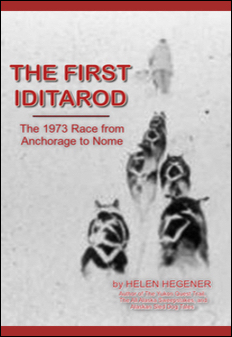
The First Iditarod

“Musher after musher agrees that no one – racers or officials – knew what to expect.” ~Bill Sherwonit in Iditarod: The Great Race to Nome (Alaska Northwest Books, 1991)

First Iditarod 2nd EdThis book is the result of several years of researching, interviewing, and writing, beginning with an idea which took shape in 2007. But one could really say it began long before that, because my first interest in the Iditarod came in late 1972, when, as a sprint-racing fan, I began hearing thin reports of some mushers in Wasilla meeting to discuss an unprecedented 1,000 mile race across Alaska. The very idea was astonishing, unbelievable, incomprehensible. Who in the world would race their sled dogs one thousand miles? Was it even possible? Would the dogs survive? Would the mushers?
Over the years an aura has developed around that first race, and most fans know the lore and the rudiments of the story, how it was Joe Redington Sr.’s pie-in-the-sky dream, how he wrangled others into sharing the dream with him and doing the groundwork necessary to make it happen. The history of how the race began can be found in almost every book about the event, because it’s a darned good story, colorful and compelling and full of true-life characters and exciting adventures. But the mushers’ unique individual stories are little-known.

imageedit_37_2063624493Several years ago I set about tracking down and visiting the remaining mushers from the 1973 race who would share their stories, their memories of what it was like to be one of the original pioneers setting out on what has since become known as “The Last Great Race on Earth.”  I have not included all of the still-living mushers’ stories here; as many of them have written their own books, and many others did not reply to my inquiries. I have also not included much about subsequent races; for that story I would refer readers to the excellent recently-published book titled Iditarod: The First Ten Years, by a group known as The Old Iditarod Gang, comprised of those who lived that history. They have achieved a herculean effort and produced a seven-pound marvel of a book. Find a copy.

imageedit_83_3081490922Much of my book is comprised of the verbatim words of mushers who made that first journey to Nome in 1973, captured through recorded and videotaped interviews conducted over a span of several years. I am very grateful to the men who shared their long-ago adventures with me, and I am grateful as well for the delightful memories I brought away from our time together.

As I transcribed my recordings for this book, I was once again caught up in each musher’s very contagious sense of wonderment and awe as he described and discussed what he and all of the other mushers had accomplished so long ago. More than once a voice would falter and break, and a long pause would follow. There was a very reverent quality to the way they each shared their memories of that first race.

It was one for the ages.

“And they still don’t know what happened, because no one’s ever asked us.” ~Ford Reeves, who teamed up with Mike Schreiber to run the 1973 Iditarod


First Iditarod 2nd Ed

The First Iditarod, The 1973 Race from Anchorage to Nome, by Helen Hegener, a revised edition of the 2015 book, published by Northern Light Media. 199 pages. Format 6″ x 9,″ b/w illustrations, bibliography, resources, indexed. $24.00 plus $5.00 shipping and handling. Foreign orders please use Amazon.  Click here to order via PayPal.

Postal orders can be mailed to Northern Light Media, Post Office Box 870515, Wasilla, Alaska 99687-0515.

Thank you!


Posted in Alaska History, Books, Sled Dog Races | Tagged , , , , , , , , , , | 1 Comment

On Cover Designs

1973IditarodAt some point in writing each of my books I’ll take a break from the writing and play with the cover design. This isn’t just an exercise in graphic arts, the process of putting the book cover together often helps pull the entire project together, sometimes giving it a focus and a direction which may have been missing before.

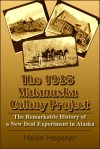
Mat Colony ProjectThis certainly happened with my book about the 1935 Matanuska Colony Project. I’d been so focused on getting the history right and double-checking all of the conflicting references I’d found in my research that I had lost touch with the true heart of the story, which was the 200 families who took the U.S. government up on their offer to come to a new land and begin a new life. Looking through the photos of men holding their children close and mothers growing gardens for their families behind canvas tents, I felt a new reverence for what they’d gone through, what they’d sacrificed. Working on that cover helped me regain a sense of what a tremendous undertaking this was, and how much of the Project was blazing new ground in ways no one could have imagined.

Also considered

Also considered

About halfway through my newest book, about the 1973 Iditarod Trail Sled Dog Race, I began tinkering with ideas for the cover. I knew I wanted warm colors, golds and browns, to evoke a sense of history. And I wanted a single black-and-white photo, again to convey the history and the subject visually. A book’s content should be immediately evident when someone picks up a book and looks at the cover, as their interest can be won or lost in that critical moment.

1973IditarodMy first cover attempt, right, utilized a photo I’d taken at the Northern Lights 300 sled dog race a couple of years ago. The musher is my friend Sebastian Schnuelle, we used the same image on many graphics for the race, and I never intended for the photo to be much more than a placeholder and a reminder of the direction I wanted to go with the cover.

By t1973 Iditarodhe time the book was ready to publish I’d played with the concept a little more, and changed the photo to a very similar one I’d taken several years ago at the Copper Basin 300, of a musher crossing Meier’s Lake (left). It seemed perfect, and I considered the cover finished and went back to finishing the book.

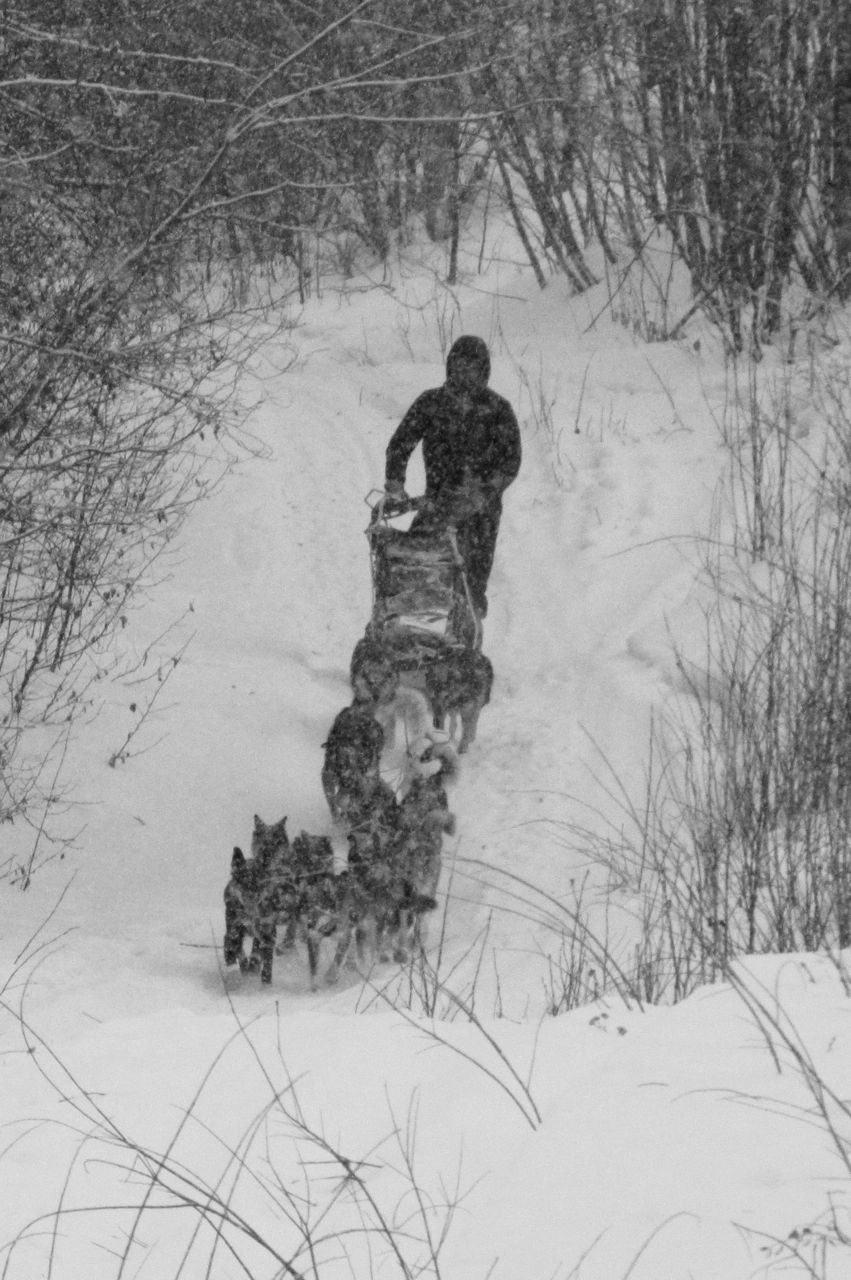
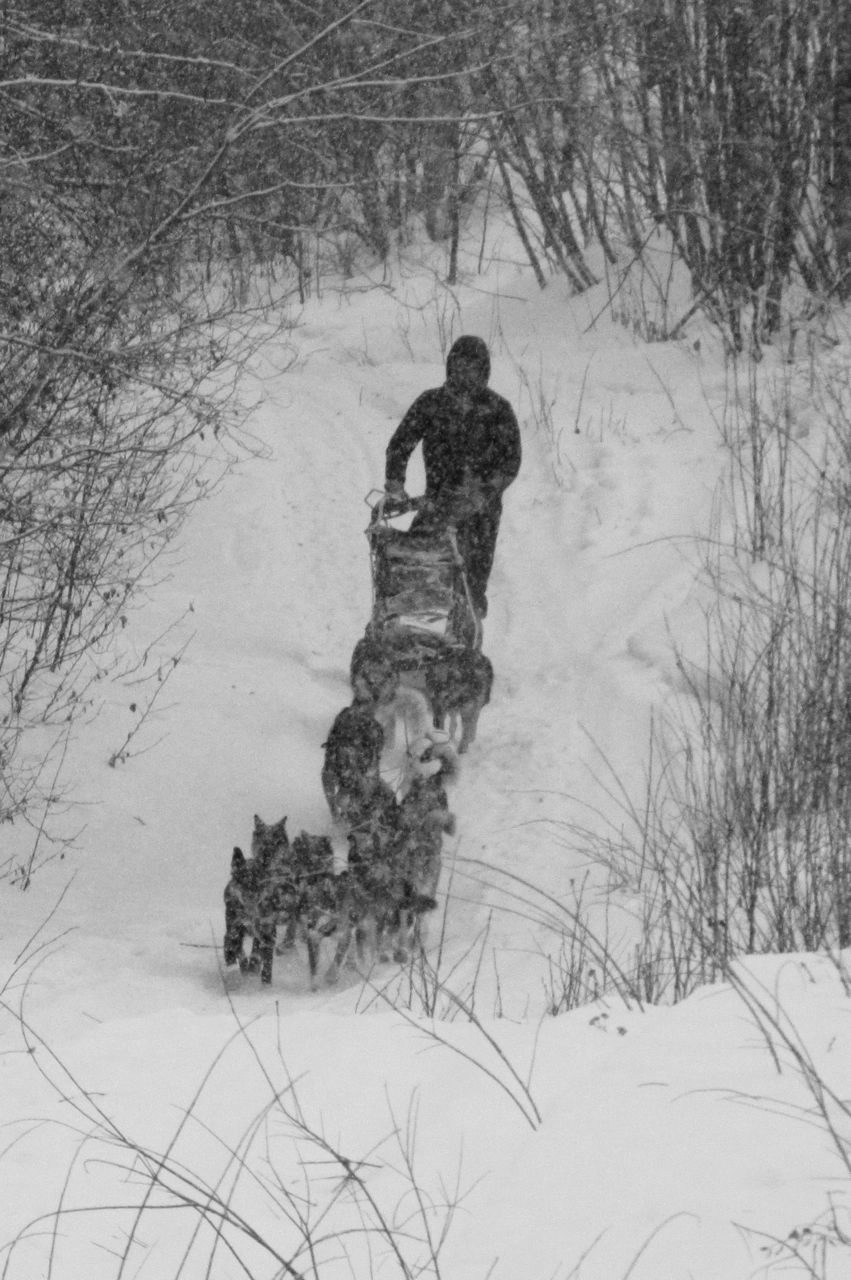
1973 IditarodFast-forward ahead to the finished book. I was reviewing the proofs, ready to release the book to the public, when I realized I was just not as happy with the cover as I’d been several weeks before. The concept was good, but the photo was off. It only took me an hour to find the right image, a photo of a dogteam moving through snow which captures the essence of the first race perfectly. For many of the 1973 mushers the race became a slow slog through deep snow, walking ahead of their teams on snowshoes, and this grainy, blurry, washed-out image was exactly the right one.

New First IditarodThe First Iditarod: Mushers’ Tales from the First Race, by Helen Hegener. Published in March, 2015 by Northern Light Media. 152 pages. ISBN-13 978-0-9843977-6-1 Format 6″ x 9″ perfect bound, text only, no historic images or photographs. $20.00 plus $5.00 shipping and handling to U.S. addresses only. Additional postage required for foreign orders.

Postal orders can be mailed to Northern Light Media, Post Office Box 298023, Wasilla, Alaska 99629. Thank you!


Posted in Books | Tagged , , , , , , | Leave a comment

Iditarod Adventures

Iditarod-Adventure-194x300Iditarod Adventures: Tales from Mushers Along the Trail, by Lew Freedman, illustrations by Jon Van Zyle (Alaska Northwest Books, 2015).

In this splendid collection of profiles and ‘tales of the trail,’ written by the mushers themselves, twenty-three top Iditarod and Yukon Quest mushers explain why they have chosen this rugged lifestyle, sharing stories and experiences they have endured along the trails.

Through bone-chilling cold, across countless frozen rivers and lakes, over mountain ranges and across the icy Bering Sea, their most exciting – and sometimes frightening – moments are shared with clarity and honesty in this book. Also featured are profiles of several key race officials, administrators, volunteers, and a few classic Iditarod characters.

“From Unalakleet it normally takes like six hours to Koyuk. I think it took me nine and a half and I already had a long run into Shaktoolik before. It was a monster long run. When I got to Koyuk Lance was already there. The only other thing moving behind me was John Baker. Nobody else wanted to start out. I’m in second place and that was pretty cool. But that’s when my racing instinct wasn’t there enough. I thought I could win it because Lance was still there. Actually, Lance came out and talked to me. With the experience he had he probably knew I wasn’t trying hard to catch him. Lance stayed another three and a half hours, I think, but I ended up staying there for twelve hours.” ~Sebastian Schnuelle


Posted in Books | Tagged , , , , , , , | Leave a comment