Slim Williams

Alaska Highway Trailblazer

TrailblazerPC

While his trip was sponsored by The International Highway Association of Alaska and the Yukon Territory, Williams still sold postcards such as this along his route. [Slim Williams Papers, UAF-207-59-17 University of Alaska Fairbanks]

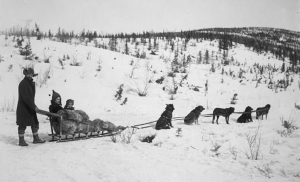
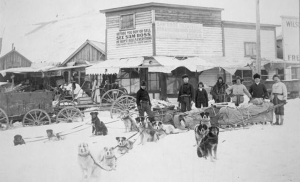
Clyde “Slim” Williams arrived in Alaska in 1900 at the age of 18 and spent the next thirty years trapping, hunting, and blazing trails throughout the frontier. In the early 1930’s Williams became a strong proponent of the plan for a highway linking Alaska to the lower 48 states, and he boasted that he could drive his dog team along the proposed route and continue all the way to Chicago, Illinois, where the 1933 Century of Progress Exposition was planned as part of the World’s Fair, celebrating man’s innovations in architecture, science, technology and transportation. The Alaska Road Commissioner, Donald MacDonald, persuaded Williams that such a trip could be used to promote the building of an Alaska highway, and so in 1933 Slim traveled down the proposed route by dogsled, using only crude maps in what was previously unmapped territory.

WhiteRoadhouse

Leaving the White Roadhouse on Indian River on the way to U.S., 1933 [Slim Williams Papers UAF-2007-59-11 University of Alaska Fairbanks]

    An article for the Uniontown News Standard reported on December 11, 1933, “He started from Copper Center, November 20, 1932, without stove, tent or compass and with only the stars, the trees and the sun to guide him. His route carried him through Dawson City, White Horse, Atlin and Telegraph Creek and after covering 1800 miles through the wildest sections of Alaska and British Columbia he reached civilization at Hazelton, B.C. On sections of this trip he traveled as far as 500 miles without seeing one human being. Cooking over an open fire and sleeping in his sled were part of the journey which was tinged with tragedy when the wolves along Forty Mile river killed one of his favorite dogs.”

MuddySled

Slim’s wheeled sled in the mud between Smithers and Prince George, B.C. [Slim Williams Papers UAF-2007-59-15 University of Alaska Fairbanks]

    It took Williams five months to reach the end of the then-existing highway system near Hazelton, British Columbia. When spring thawing made sledding impossible, he mounted four Model T Ford wheels on his dogsled in Smithers, B.C. and continued toward the Chicago World’s Fair. By the time he reached Seattle, Williams and his wolf-dog team had become celebrities. Articles about his overland trek appeared in Time magazine, The Washington Post, The Christian Science Monitor and many others.

ChicagoPC

Slim with his team at the Chicago Century of Progress Exposition, 1933 [Slim Williams Papers UAF-2007-59-5 University of Alaska Fairbanks]

    In Chicago, Williams and his dogteam made a popular Alaskan exhibit at the Century of Progress Exposition. A Time magazine article (October 2, 1933) reported that when former President Herbert Hoover visited the fair he chatted with Williams, and First Lady Eleanor Roosevelt described her meeting with Slim Williams as the most enjoyable part of her visit. A lecture brochure noted: “upon returning to Washington she told newsmen that what she liked best was a tall young man with blue eyes that looked miles away, who had driven his dog team all the way from Alaska.”

RembrandtPC

Slim Williams with his leader “Rembrandt.” When asked about his name Slim replied, “Well, isn’t he a picture?” [Slim Williams Papers UAF-2007-59-16 Univ of AK Fairbanks]

    After the World’s Fair closed for the season, Slim and his team of half-bred wolf/dogs proceeded to Washington, D.C., bringing the total distance of his journey by dogteam to over 5,600 miles. He camped in a city park and spent the winter discussing Alaskan concerns with legislators, and even met with President Franklin Roosevelt to further promote the highway. Williams enjoyed a dinner with the President and the First Lady, still advocating for the proposed road. The President finally did set up a commission with Canada to explore building a highway to Alaska, but while the project was considered feasible it was deemed too costly and unnecessary at that time.
Later in life, Slim traveled around the country with his wife doing presentations and slideshows, and he enjoyed success as a popular lecturer, as described in the text of a lecture brochure: “The Adventurers Club of Chicago, where all famous explorers speak, say his talk is one of the most fascinating and thrilling they’ve had in years.”
In 1956 an authorized biography of Slim Williams’ adventures was published by Richard Morenus: Alaska Sourdough: The Story of Slim Williams. The book detailed Slim’s 1933 solo dogsled adventure, and also his 1939 trip from Fairbanks to Seattle by motorcycle with 25-year-old John Logan. Their goal was the New York World’s Fair, and just as with Slim’s 1933 trip, the purpose was to gain publicity for the need to build a road connecting Alaska to the rest of the United States. At that time, there still wasn’t even a crude trail to follow for over 1,000 miles of the journey, so the adventurers crossed the wide rivers and daunting mountains in whatever manner they could, and their much-publicized journey once again spotlighted Alaska’s need for a road to the 48 states.
In early 1942, when World War II made an overland route necessary, President Roosevelt signed the authorization, and on November 20, 1942, at Soldier’s Summit near  Kluane Lake, a ceremony marked completion of the first phase of construction. Today the road is a major artery to the north, and the Alaska Highway project is still heralded as one of the greatest engineering feats of the twentieth century.   ~•~

Excerpted from Along Alaskan Trails, Adventures in Sled Dog History, by Helen Hegener, published by Northern Light Media


Posted in Alaska History | Tagged , , , , , , , | 2 Comments

Northern Light Media Store

Screen Shot 2015-12-13 at 12.06.03 PMAll of the books we publish, including the newest title, Alaskan Roadhouses, and our 2008 Lance Mackey DVD Appetite & Attitude, can be ordered directly from the independent publishing source CreateSpace, which produces all of the titles for Northern Light Media and offers them for sale in this online storefront.
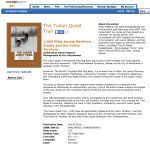
Screen Shot 2015-12-13 at 12.04.01 PMIn addition to the overview featuring all of the books we publish, each book is spotlighted on its own ordering page, providing details about the publication date, page count, ISBN/EAN13, binding type, trim size, language and color.

Direct orders from this storefront provide the highest available royalties, helping us continue to bring great books about Alaska’s history and our exciting long-distance sled dog races to publication.

Click this link to visit the Northern Light Media Store at CreateSpace.


Posted in Books, DVD & Video, News & Information | Tagged , , , , | Leave a comment

New Address

expressteam

We’ve moved!

Here’s our new postal mailing address:

Northern Light Media

Post Office Box 870515

Wasilla, Alaska 99687-0515

The physical mailing address is 401 N. Main St. #0515, Wasilla, Alaska 99687-0515.


Posted in Uncategorized | Leave a comment

The First Iditarod

New First IditarodThe First Iditarod: Mushers’ Tales from the 1973 Race, by Helen Hegener.

The First Iditarod shares the history of the first running of The Last Great Race, and most of the book is comprised of the verbatim words of mushers who made that first journey to Nome in 1973, captured through recorded and videotaped interviews conducted over a span of several years.

The book also delves into the history of the trail itself, and includes the colorful histories of mail carriers on the Iditarod Trail, the First Annual Iditarod Sweepstakes Race in 1910, the glory days of the trail when hundreds of thousands of dollars in gold traveled over it, the 1925 Serum Run to Nome on the northern section of the trail, the trail’s fall into disuse, the reclaiming of the trail by Joe Redington Sr. and the U.S. Army, and how Joe and Vi Redington helped the Iditarod Trail became a part of the National Historic Trails system.

Published in March, 2015 by Northern Light Media. 154 pages. ISBN-13 978-0-9843977-6-1 Format 6″ x 9″ perfect bound, text only, no photos. $20.00 plus $5.00 shipping and handling to U.S. addresses only. Additional postage required for foreign orders.

Available at Amazon, eBay, and your local independent bookstores.

Postal orders can be mailed to Northern Light Media, Post Office Box 870515, Wasilla, Alaska 99687-0515.

Posted in Alaska History, Books, Sled Dog Races | Tagged , , , , , , , , | Leave a comment

Alaskan Roadhouses

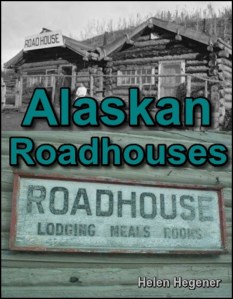
RoadhousesAlaskan Roadhouses: Shelter, Food and Lodging Along Alaska’s Roads and Trails’
“The Alaskan roadhouse …. deserves and has earned the high regard that all Alaskan and northern travelers have for the roadhouse.” ~William E. Gordon, in Icy Hell (Wm. Brendan & Son, 1937)

‘Alaskan Roadhouses: Shelter, Food and Lodging Along Alaska’s Roads and Trails,’ by Helen Hegener, is the newest book from Northern Light Media, publisher of acclaimed Alaskan history books, including ‘The 1935 Matanuska Colony Project,’ ‘The First Iditarod,’ and ‘Along Alaskan Trails.’ This long-anticipated 284-page book recounts the detailed histories of twenty-four roadhouses, and presents historic photos of two dozen more. Along with the colorful histories are first-hand accounts of those who stayed at the roadhouses while traveling the early trails and roads of Alaska, including the Reverend Samuel Hall Young, Frank G. Carpenter, Judge James Wickersham, Leonhard Seppala, Col. Walter L. Goodwin, and Matilda Clark Buller, who opened a roadhouse near Nome in 1901, at the height of the Nome Gold Rush.
“Alaskan Roadhouses, Shelter, Food, and Lodging Along Alaska’s Roads and Trails,” by Helen Hegener, published by Northern Light Media. 6″ x 9″, over 100 black/white photographs, 284 pages. $24.95 plus $5.00 shipping and handling. http://www.northernlightmedia.com

Available at Amazon, eBay, and your local independent bookstores.

Postal orders can be mailed to Northern Light Media, Post Office Box 870515, Wasilla, Alaska 99687-0515.

Posted in Uncategorized | Leave a comment

The Yukon Quest Trail

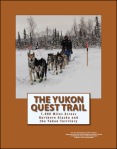
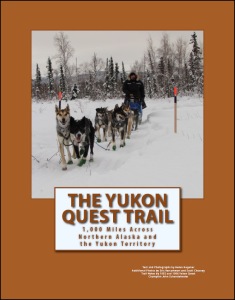
YQ Front CoverThe Yukon Quest International Sled Dog Race spans some of the harshest and most beautiful winter territory anywhere: 1,000 miles between Fairbanks, Alaska and the city of Whitehorse in Canada’s Yukon Territory.

Known as ‘The World’s Toughest Sled Dog Race,’ it’s an event like no other. Run every February, the race is phenomenally challenging, crossing four mountain ranges, including the dangerous and intimidating 3,685-foot Eagle Summit, as it loosely follows the course of the mighty Yukon River.

Dyan Bergan's lead dog at the finish in Fairbanks, 2013. [Eric Vercammen/Northern Light Media]

[Eric Vercammen/Northern Light Media]

The Yukon Quest Trail, by Helen Hegener, takes readers checkpoint by checkpoint from Fairbanks to Whitehorse, an extraordinary journey in which the author shares insights and details of the trail, along with the incredible history of both the race and the wild and beautiful land it crosses. Over 180 photographs by the author and by photographers Eric Vercammen and Scott Chesney provide an unparalleled look at the trail, the mushers, the dogs and more. Also included are Trail Notes for Mushers, detailing the route in both directions, compiled by two-time Yukon Quest Champion John Schandelmeier.

YQ Front CoverThe Yukon Quest Trail: 1,000 Miles Across Northern Alaska and the Yukon Territory, text and photographs by Helen Hegener, additional photos by Eric Vercammen and Scott Chesney; with Trail Notes for Mushers, by two-time Yukon Quest Champion John Schandelmeier. Published December, 2014 by Northern Light Media. 151 pages, 8.5″ x 11″ full color format, bibliography, maps, indexed. $29.00 (plus $5.00 shipping and handling). Click on the image to order.

Northern Light Media books are all available through independent bookstores, click on this image to find your local bookstores:

Shop Indie Bookstores

Posted in Books, Sled Dog Races | Tagged , , , , , , , , , , | Leave a comment

A Call for Sled Dogs

oie_9616117jY7WlEQWe’re looking for sled dogs (and their mushers) who would like to participate in a unique opportunity to tell the world about mushing and sled dog racing!

The Bureau of Land Management (BLM) is hosting the fourth annual “IditaChat” on Twitter, on January 20, 2016. “Sled Dog Tales: Talk with Alaska Sled Dogs,” will be a live Twitter conversation for youth, schoolchildren, and anyone interested in hearing about what sled dogs think and experience on the trail and at home in their kennels, as interpreted by their mushers.

oie_962049NMMW71xBMushers and their dogs are being selected at this time for an opportunity to appear “live and in fur” at the Federal Building and Courthouse in Anchorage for this event. Special access has been granted for a limited number of sled dogs, to be selected from the applicants. If you – and your favorite sled dog – would like to join us for this unique opportunity please contact Karen Laubenstein at klaubens@blm.gov
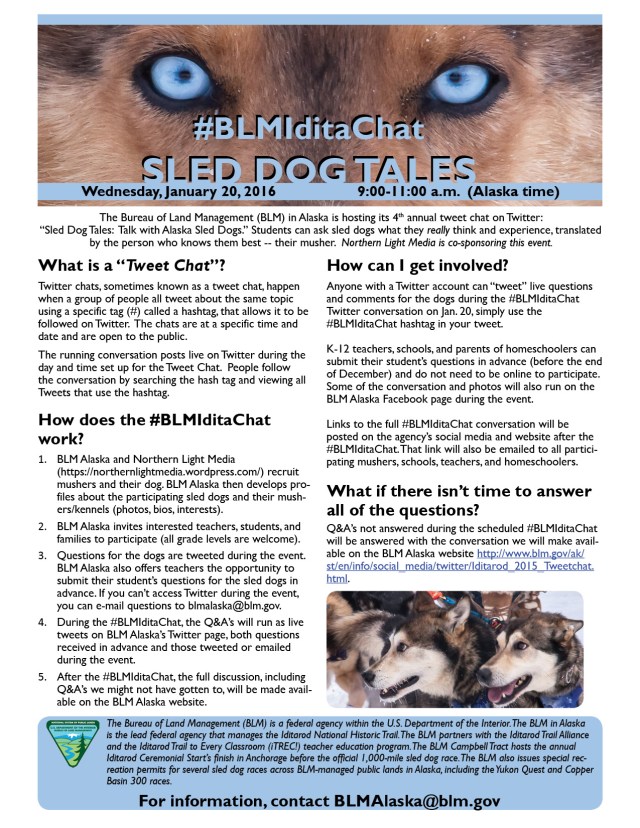
IditaChat-info-flier

Posted in Uncategorized | Tagged , , , , , | Leave a comment

Mother Martha White

First white child born in Cook Inlet, Martha White, and her mother, left, in Sunrise, Alaska in 1898. The child is wearing a hat and holding a cat. A man, several wooden buildings and a pile of logs are visible in the background. Photograph taken during the 1898 Cook's Inlet Exploring Expedition led by Edwin F. Glenn on behalf of the U.S. Army. The photographer is unidentified. Title taken from caption written on back of photograph. [Edwin F. Glenn papers, Archives and Special Collections, Consortium Library, University of Alaska Anchorage]

First white child born in Cook Inlet, Martha White, and her mother, left, in Sunrise, Alaska in 1898. The child is wearing a hat and holding a cat. Photograph taken during the 1898 Cook’s Inlet Exploring Expedition led by Edwin F. Glenn on behalf of the U.S. Army.  [Edwin F. Glenn papers, Archives and Special Collections, Consortium Library, University of Alaska Anchorage]

The world traveler and lecturer Frank G. Carpenter wrote widely of his travels in Alaska, and in the April 5, 1917 issue of Moderator-topics he wrote about several notable women of the territory, including the Anchorage pioneer, Mother Martha White:

“The first woman to establish a home on Cook inlet was Mother White, the wife of a whaler who made voyages to Bering sea and the Arctic ocean. He brought his wife with him, and she built a log cabin store and roadhouse on the shores, of Cook inlet, about 200 miles from the site of the new town of Anchorage. It was there that Miss Martha White was born. She was the first white child to see the light of day In that part of the world, and when the work began on the government railway she was chosen to drive the first spike.

Martha White driving the first spike in the construction of the Alaska Railroad, Ship Creek, April 29, 1915. [Photographer John E. Thwaites. University of Washington Libraries, Special Collections Division.]

Martha White driving the first spike in the construction of the Alaska Railroad, Ship Creek, April 29, 1915. [Photographer John E. Thwaites. University of Washington Libraries, Special Collections Division.]

“It is more than 20 years since Mrs. White established her store and roadhouse. She dealt with the Indians and trappers, and later on started a fish cannery and saltery. In one year she put up 2.000 barrels of salted salmon. She made considerable money, which she invested in mining. She was a part of the gold stampede to Sunrise, on Turnagain arm, where she made so much that she might have retired in comfort. Then bad luck came. She put her winnings into unsuccessful properties and lost them. She went back to the roadhouse business and established little hotels at Hope City and Sunrise. These were a success and she gradually accumulated some property. In the meantime, her daughter was growing up and Mother White decided to leave Alaska and go to the states to educate her. She moved to Chicago and opened a little store there, which supported her until a few years ago, when Martha’s education was finished.

Mother Martha White standing in doorway, no date. [Frank and Frances Carpenter collection (Library of Congress)]

Mother Martha White standing in doorway, no date. [Frank and Frances Carpenter collection (Library of Congress)]

“And then came that longing to go back to Alaska that permeates the souls of all who have made their homes here for any length of time. It so obsessed Mrs. White that she left her daughter in Chicago and went alone to the north. With tears in her eyes, she told me how she came back to the mining camps of Hope and Sunrise and how they affected her. Many of the old prospectors whom she had known were still there, and she felt that here was her home and her friends. The result was that she came back to Alaska, bringing her daughter with her, and when the work on the railroad began she was one of the first on the ground at the new town of Anchorage. She came in with a stock of lumber and canvas, and before a rail was laid or any excavation made she had put up tents for eating and lodging down on the flats. Her sleeping tent was equipped with bunks one over the other like those of a sleeping car, and each bed brought her-a dollar a night. When the new site for Anchorage was chosen she built a frame hotel on the main street, and she is doing so well that she will probably have to put up a larger building in the near future.”

Posted in Alaska History | Tagged , , , , , , , , , , | 4 Comments

Delta News Web Article

Screen Shot 2015-11-02 at 9.25.17 AMThe Delta News Web, which serves the communities of Delta Junction, Big Delta and the surrounding area in northeastern Alaska, at the junction of the Richardson Highway and the Alaska Highway, features an article about four roadhouses in that part of the state, with historic photos of Rika’s Landing, Sullivan’s Roadhouse, the Black Rapids Roadhouse and Yost’s Roadhouse.

The article quotes a 1944 booklet by the U.S. Department of the Interior: “Alaska roadhouses are functional necessities to travel through country populated sparsely or not at all. They are inns or taverns…. providing food and shelter for the traveler…. they often serve as trading posts…. sources of supply for pack trains, prospectors, and trappers…. and are post offices as well as general stores, often linking enough functions to become real communities in themselves.”

Roadhouses Buy NowAlso: “The roadhouse tales span the territory of Alaska, and include first-hand accounts of early travelers along the trails.”

Alaskan Roadhouses: Shelter, Food and Lodging Along Alaska’s Roads and Trails, by Helen Hegener, published in October, 2015 by Northern Light Media. 284 pages, over 125 black/white photographs, 6″ x 9″ format. $24.95 plus $5.00 shipping and handling from Northern Light Media.

Available at Amazon, eBay, and your local independent bookstores.

Postal orders can be mailed to Northern Light Media, Post Office Box 870515, Wasilla, Alaska 99687-0515.

Posted in Alaska History, Books, Roadhouses | Tagged , , , , , , , , , | 2 Comments

Roadhouse Videos

Alaskan roadhouses are a popular subject for video photographers, as shown in the three videos below. All of these roadhouses are included in the new book from Northern Light Media, Alaskan Roadhouses: Shelter, Food and Lodging Along Alaska’s Roads and Trails, by Helen Hegener. You can click on the title for more information about ordering a copy of the book.

Talkeetna Roadhouse, Talkeetna

Rika’s Roadhouse, Big Delta

Alaska Nellie’s Kenai Lake Roadhouse

Posted in Alaska History, Books, DVD & Video | Tagged , , , , | Leave a comment