Looking for Lizzy

lizzy

Elizabeth “Lizzy” Geady

As an author of books on the history of Alaska, I often receive inquiries from people seeking information about long-lost relatives, and I’m always happy to help whenever I can. Family connections are important, and helping someone piece together clues to a lost relative is a fringe benefit of my work which brings happiness and often new friends.

I received one such letter recently which provides a fascinating glimpse into the life of a young roadhouse keeper along the Valdez-to-Fairbanks Trail, which would later become the Richardson Highway, in the early years of the 20th century, when travel was slow and arduous, whether by dogteam, horse-drawn wagon or sleigh, or most often, by foot.

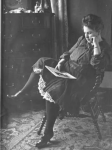
lizzy-at-gulkana

“Lizzy at Gulkana.” [UAF Archives}

The letter came from my friend Julie Stricker, the online content editor at the Fairbanks Daily News-Miner. Julie had received the letter from a woman named Lorne Brown who’d read Ray Bonnell’s article about the Sourdough Roadhouse in the News-Miner, and she queried: “I am looking for any information you might be able to offer regarding the woman who purchased the Roadhouse from C.L. Hoyt in 1916. We have an old family letter from my G-G Aunt Elizabeth Geady — she married a Kerr and a Stevens, but we believe was divorced from both before arriving in Alaska — in which she writes about the trading post, she refers to it as a store, that she owns in Gulkana, at least that is where the letter is postmarked from. The letter is dated January 30, 1915.”

There was more to Lorne’s letter to Julie, describing her great-great aunt’s 1915 letter, and she ended with this plea: “Any assistance you can offer would be greatly appreciated. She’s our lost Klondiker.”

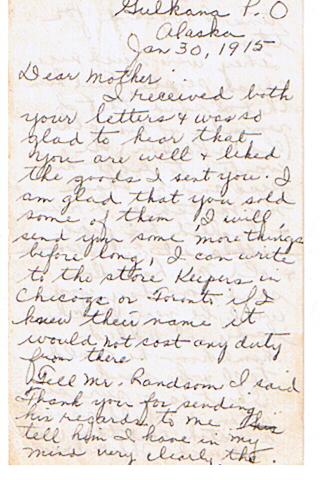
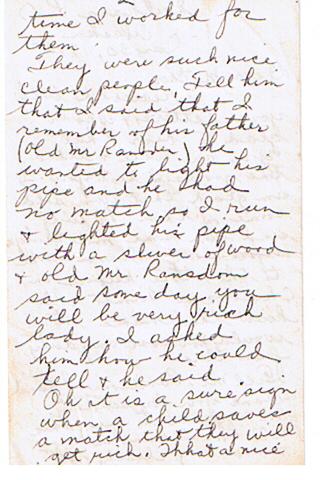
Young Elizabeth Geady wrote this letter to her mother from Gulkana in January, 1915. I’ve transcribed it for easier reading and the text of the letter is below the photos.

1

2

3

4

5

6

Gulkana P.O

Alaska

Jan 30, 1915

Dear Mother,

I received both your letters and was so glad to hear that you are well and liked the goods I sent you. I am glad that you sold some of them. I will send you some more things before long, I can write to the store keepers in Chicago or Toronto if I know their name it would not cost any duty from there.

Tell Mr. Randsom I said Thank you for sending his regards to me (?) tell him I have in mind very clearly the time I worked for them.

They were such nice clean people. Tell him that I said that I remember of his father (Old Mr. Randsom) he wanted to light his pipe and he had no match so I run and lighted his pipe with a sliver of wood and old Mr. Randsom said someday you will be very rich lady. I asked him how he could tell and he said oh it is a sure sign when a child saves a match that they will get rich. What a nice lady Mrs. Randsom was, and also her sister. I hope they are all well. The last time I saw Mrs. Randsom she had a little baby girl and I had lots of fun with Leslie.

Mr. Randsom might be able to give you the address of some wholesale stores in Toronto, ask him and send me the address and I will send you some things from there.

I have a store here and am doing well. I have 3 black foxes and 9 cross foxes alive. I sold a black live fox this summer for $1000 for breeding purposes. I caught him myself in a trap and I sent to the States and got a lot of goods. I got 1 ton of flour, 200 lb bacon, 500 lbs sugar and everything in proportion and lots of clothing. I sell them to the Indians. Flour is $16 a hundred, sugar $20 a hundred, tea $1.50 a lb, bacon 60¢ a lb, socks $1.50 pair (can’t decipher). Everything is high here. I have a horse and I send 150 miles for the goods after they land in Alaska.

Oh how I wish you were here with me. I am so comfortable and contented. If you were here you could get my breakfast for me. I hate to cook and do housework. I have a saddle horse to ride all over the country. I have a shotgun and shoot partridges and grouse. They are so good to eat.

I am living on the bank of the Tolsona River. The trout and greyling are so thick one can get them by the thousand

Mother, did you get my letter where I told you to give Teany my hand painted things, there are a few things

Lizzy’s letter ends there. Lorne explained “The Teany she mentions at the end is my Great Grandma Brown, Christianna (nee Geady) Brown.”

If you have any information about Elizabeth “Lizzy” Geady (possibly Kerr or Stevens) from around 1915, please get in touch with me at helenhegener@gmail.com and I will forward your information and contact details to Lizzy’s great-great niece, Lorne Brown.


Posted in Alaska History, News & Information, Roadhouses, Uncategorized | Tagged , , , , , , , | Leave a comment

“A Mighty Nice Place”

“The valley looks great. It looks fine, fine. You got a mighty nice place here.”     ~American humorist and commentator Will Rogers, Palmer, Alaska, August, 1935

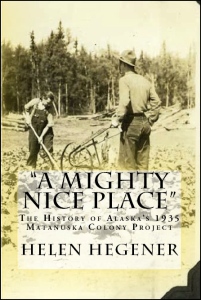
a-nice-place-coverThe newest book from Northern Light Media combines the history of the Matanuska Valley with the photographs of A.R.R.C. photographer Willis T. Geisman, who was charged with recording the events surrounding the 1935 Matanuska Colony Project. This book combines two earlier titles into one comprehensive history of this important era in Alaska, when the federal government took a direct hand in the future of the territory.

The Matanuska Colony Project was part of President Franklin Delano Roosevelt’s New Deal for America, an unprecedented series of economic programs designed to provide aid to people reeling from the Great Depression. Nearly one hundred new communities were designed and developed by Roosevelt’s planners, but the largest, most expensive, and most audacious of them all was to build a government-sponsored farming community in Alaska’s Matanuska Valley.

“A Mighty Nice Place,” The History of the 1935 Matanuska Colony Project, by Helen Hegener, explains how a few visionary men convinced the planners in Washington, D.C. to extend their community-building efforts north to Alaska, and tells the complex story of this important chapter in Alaska’s history.

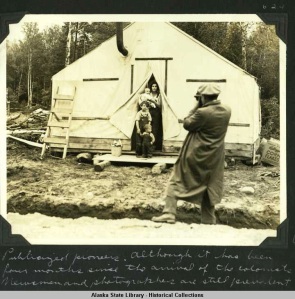
Photo by Willis T. Geisman, A.R.R.C. 1935

Photo by Willis T. Geisman, A.R.R.C. 1935

The remarkable photos of official A.R.R.C. photographer Willis T. Geisman documented every aspect of the venture, and his compelling images tell the true stories, moments in time captured and preserved, brought together here with the detailed history of the Matanuska Colony Project.

Kindle Edition now available. $3.99

“A Mighty Nice Place,” The History of the 1935 Matanuska Colony Project, by Helen Hegener. Published in November, 2016 by Northern Light Media. 276 pages, 120 photos, 6″ x 9″ b/w format. $24.00 plus $5.00 shipping. Click here to order now via PayPal.

Posted in Alaska History, Books, Matanuska Colony, Matanuska Valley, News & Information | 3 Comments

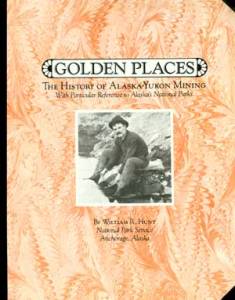
Golden Places

cover

Golden Places: The History of Alaska-Yukon Mining, With Particular Reference to Alaska’s National Parks, was written in 1990 by William R. Hunt, prepared as a special theme study to assist in the assessment of cultural resources associated with metal mining in Alaska’s national parks. Designed to focus on mineral discovery and development in the national parks, its first chapters explore the earliest prospecting efforts in the north country, through the Klondike Gold Rush years. From the first Cassiar discovery in the Stikine River country in 1862, through gold discoveries at Sitka, Juneau, Yakutat, the Fortymile country, the Circle Mining District, the stampede to Nome, the Nabesna and Nizina gold strikes, strikes at Kantishna, Kuskokwim, and the stampede to Iditarod, the complete history of gold in Alaska and the Yukon is presented clearly with a gold mining chronology.

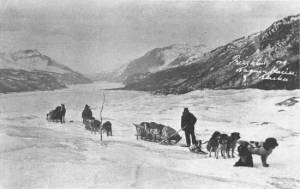
fig20

Teams freighting to Chisana

The book, which is available free to read online, is divided into 18 chapters which detail the history with in-depth descriptions and fascinating details, such as this from chapter 12: “In February 1914 Chisana folks argued that their community had more log cabins than Circle, Fairbanks, or Dawson and deserved to be called ‘the largest log cabin town in the world.’ Four hundred cabins was one estimate, including seven general stores, a saloon, two restaurants, a clothing store, and ‘roadhouses galore.'”

030405_iditarod

Iditarod

There is a brief but good description of the history of the Iditarod Trail, shared here in full: “The Seward-Nome Trail, famed today as the Iditarod Trail because of annual dog-sled races from Anchorage to Nome, was never a major long-distance route. It consisted of a number of winter trails that had developed in the early prospecting days that were linked in 1910. When the upper Innoko strike attracted miners from Cook Inlet and elsewhere in 1906, a trail to tidewater appeared beneficial. In February 1908 the Alaska Road Commission began a survey of a new trail from Seward to Nome. After a Christmas strike on Otter Creek by prospectors W.A. Dikeman and John Beaton, the boom town of Iditarod developed. Over the winter of 1910 the Alaska Road Commission marked and cleared 1,000 miles of trail from Kern Creek, on the Alaska Northern railroad 71 miles north of Seward, to Nome. Some portions of the trail were new and some had been used by prospectors or natives earlier. The Seward-Knik section became a mail and supply route until the railroad was extended, and the Knik-Kaltag section was much used from 1910-20. Other portions of the wide winter trail network were used as needed, then abandoned when conditions changed.”

Detailed maps, charts, photographs and extensive notes and bibliographies at the end of each chapter make this book an outstanding online research tool, but also an enjoyable contribution to the history of Alaska for the more casual reader. An observation from the last chapter: “Alaska’s hunters, trappers, dog mushers, and hikers have a certain respect for those early miners. It required travel skills and a spirit of adaptation that is generally admired by Alaskans who have a particular sensitivity to their natural environment.”


Posted in Alaska History, Book Reviews, Uncategorized | Tagged , , , , , , , , , , , , , , , , , , , | Leave a comment

Gakona Roadhouse

Alaskan Roadhouses

This article is an excerpt from the book by Helen Hegener,  Alaskan Roadhouses, Shelter, Food, and Lodging Along Alaska’s Roads and Trails, published in 2015 by Northern Light Media. Ordering information below.
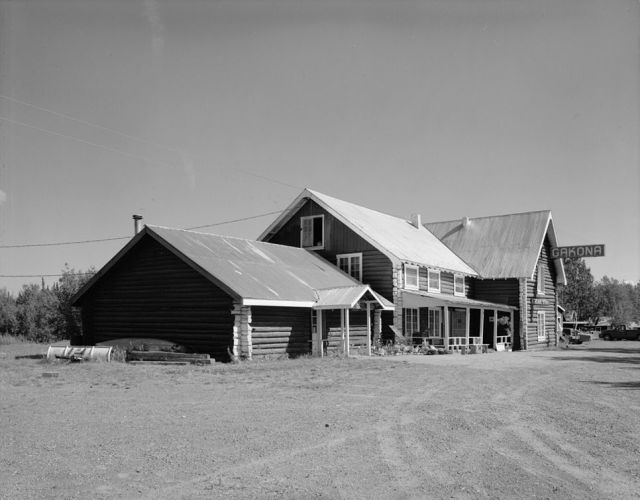
 

Gakona_Roadhouse_from_side

Gakona Roadhouse, 1984. Photograph by Jet Lowe. [HABS AK-27-1]

The Gakona roadhouse at milepost 205 on the Glenn Highway, dating from the first buildings constructed on the site in 1902, is the oldest still-operating roadhouse in Alaska.


Gakona 1930

Mile 2, Gulkana-Chisana Road, Gakona River and Roadhouse, Copper River in distance. Photo by Walter W. Hodge, 1930. [UAF-2003-63-278]

Originally called Doyle’s Ranch, the Gakona Roadhouse was constructed by Jim Doyle, who homesteaded a site on the banks of the fast-flowing Gakona River, which joins the mighty Copper River a few hundred yards downstream. His homestead was at mile 132 of the Trans-Alaska Military Road, which was the name of the then-new Valdez-to-Eagle Trail, built by the U.S. Army to link its post at Fort Liscum, near Valdez, with Fort Egbert, at Eagle on the Yukon River. The Valdez-to-Fairbanks Trail also ran north from the site, making the junction of the two trails an excellent location for a roadhouse.


Gakona Roadhouse, by P. S. Hunt. [AMRC-b62-1-a-151 Crary-Henderson Collection]

Gakona Roadhouse, by P.S. Hunt. [AMRC-b62-1-a-151 Crary-Henderson Collection]

The original roadhouse was built of six- to ten-inch saddle-notched round logs, approximately 20′ by 50′, with with a 15′ by 30′ shed-roofed addition. The building included living quarters, a kitchen and dining room, a few private rooms, an upstairs dormitory and a store. A low shed which could accommodate dog teams was built, and a military telegraph station was installed nearby. In 1910, the roadhouse become the main stop for the Orr Stage Company, and Doyle added a blacksmith shop and a barn that could hold up to a dozen horses. He also raised oats and hay on over sixty acres of fields.
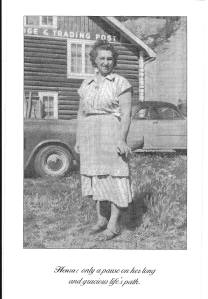
 

Arne Sundt - Gakona RH Arne's Grandma

Henra Sundt

Jim Doyle sold the roadhouse in 1912, and the property went through several owners, including the Slate Creek Mining Company. In 1926 Arne N. Sundt, a director of the Nabesna Mining Company, discovered that the manager of the Slate Creek mine, a fellow named Elmer, was sidetracking the gold which should be going to the mine owners. In a 1993 interview for the University of Alaska Fairbanks’ Oral History Program, Arne N. Sundt’s widow, Henra Sundt, explained what happened next: “Arne put on the only suit that he ever owned,” and traveled to the offices of the mining company and told them what was transpiring. They told Arne he “could just take over the place as Elmer hadn’t sent them one ounce of gold in years!”


Arne made an agreement to mine the company’s holdings on Slate Creek and send them a percentage, and they sold the roadhouse to him as part of the deal. When Arne got back to Gakona and confronted Elmer with the news, “Elmer got pretty upset and pulled a gun on him, but Arne just reached out and took the gun away from him.” Henra explained, “[Elmer] was just a little guy, but my husband was six feet tall! So Elmer left, but he stayed around the country, mining his own claims on Slate Creek.”
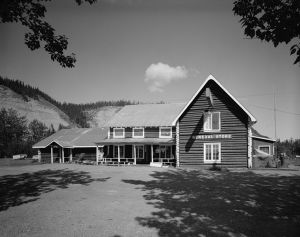
32. Gakona_Roadhouse_from_front copyIn her book, Sisters, Coming of Age and Living Dangerously in the Wild Copper River Valley [Epicenter Press, 2004], Aileen Gallaher described stopping at the roadhouse on her way north from Valdez in 1926: “Our next stop was Gakona, about thirty miles north of Copper Center. The Gakona Roadhouse there was a huge log building, which really could not be called a cabin. It had a second story and a high-pitched roof. The Gakona River flowed swiftly about fifty feet in front of it. The lobby was a large room without any decoration and only a few wooden benches for furniture. In one corner, a staircase led to the bedrooms upstairs, and the other corner was occupied by the Post Office. Across the front next to the lobby were the dining room and the kitchen, and behind were the owners’ quarters. The two men who lived there and operated Gakona Roadhouse were Arne Sundt from Norway and Herb Hyland, from Sweden. Both welcomed me warmly to Alaska, and made me feel at home in this new, amazing world.”

In 1929 Arne Sundt built a new roadhouse, much larger than its predecessor, in an L-shaped, gable-roofed plan, with 9 private rooms, a bunkhouse on the upper floor, two bathrooms, a general store, and a post office. He also built a separate owner’s residence, two cabins, a wagon repair shop, and other buildings. Arne and Henra, who had traveled to Alaska from Norway in 1928 to marry Arne, ran the roadhouse together for 22 years, until Arne’s untimely death from a heart attack in 1949. When he died, her friends said Henra should sell the roadhouse, but she felt running the roadhouse would provide a good living for her and her children, and she prospered, raising two sons and a daughter, finally selling the roadhouse in 1979.

img_8137

A dogteam in front of the Gakona Roadhouse during the 2014 Copper Basin 300. [Photo: Helen Hegener/NLM]

All of the buildings on the site – all but two of them made of logs – have been subsequently added to the National Register of Historic Places. Over the years, the roadhouse and its cabins have known many famous guests, including the venerable Judge James Wickersham, the first federal judge from Interior Alaska, who waded through overflow water to reach the roadhouse in 1905. Alaskan artists Ted Lambert, Eustace Ziegler, and Josephine Crumrine, with her artist-mother, rented cabins one summer, and each presented Henra Sundt with an original piece of their artwork. Bill Egan, the first governor of Alaska, stayed at the roadhouse often during his years in office, and the arctic explorer Hurbert Wilkins was a guest. Perhaps the most well-known guest is a pipe-smoking ghost, said to have a preference for Room 5, whose appearances have been written about in many newspaper and magazine articles over the years.


~•~

Excerpted from:

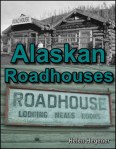
Roadhouses Buy NowAlaskan Roadhouses, Shelter, Food, and Lodging Along Alaska’s Roads and Trails, by Helen Hegener, published by Northern Light Media. 6″ x 9″, over 100 black/white photographs, 284 pages. $24.95 plus $5.00 shipping and handling.

Alaskan Roadhouses

$24.95 plus $5.00 S&H

Click on the book image to order your copy!

Available at Amazon, eBay, and your local independent bookstores.

Postal orders can be mailed to Northern Light Media, Post Office Box 870515, Wasilla, Alaska 99687-0515.

Posted in Alaska History, Books, Roadhouses, Uncategorized | Tagged , , , , , , , , , , , , , | Leave a comment

1912 All Alaska Sweepstakes

Screen Shot 2016-06-12 at 5.19.22 PMAn old friend, Robert Lutz, sent me the link to an article which appeared in the March 27, 1912 issue of the newspaper, The San Francisco Call, which noted entries for the 1912 All Alaska Sweepstakes race. The article read, in full:
Berkeley Woman’s Dogs To Race in Alaska

NOME, Alaska, March 27.—Few entries have been received for the 1912 All Alaska sweepstakes, the great dog race of the north, which will be run next month over the 412 mile course from Nome to Candle and return. The only contestants in sight are A A. (Scotty) Allen, driver of the dogs owned by Mrs. Charles E. Darling of Berkeley, Cal.; Charles Johnson, Alex Holmsen and possibly Bleechford. Holmsen will drive Colonel Sir James Ramsey’s team of Siberian wolfhounds, taking the place of John Johnson, the famous dog team driver, who has always handled the wolves and who is marooned on the Siberian coast. Johnson went to Siberia late last fall to get dogs for the race and was left stranded when the ice moving down from the Arctic drove his schooner back to the American shore.

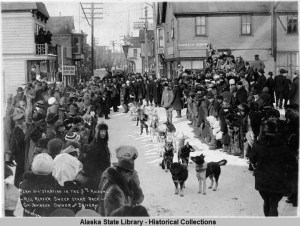
Team_No_1_starting_in_5th_All_Alaska_Sweepstakes_April_4_1912

Charles Johnson’s team starting the April 4, 1912 All Alaska Sweepstakes

I have written about the All Alaska Sweepstakes race many times, most recently in my newest book, Alaskan Sled Dog Tales. In that book I included an article about the great racer, John “Iron Man” Johnson, who is mentioned in the 1912 article. I also included a booklet written by Mrs. Charles E. Darling, also known as Esther Birdsall Darling, the author of the classic children’s book, Baldy of Nome. That booklet, The Dog Races of Nome, detailed the results of the fifth All Alaska Sweepstakes race in 1912:


oie_133373INKdBMH7

Posted in Alaska History, Sled Dog History, Sled Dog Races, Uncategorized | Tagged , , , , , , , , , , , , | Leave a comment

Seppala Kennels Advertising Card

I often stumble across interesting websites in my research, and one I’ve returned to a number of times over the years is the Alaskan Heritage Bookshop website, which sells Alaskan books, Alaskan art, vintage Alaskan memorabilia and photographs, and much more. Based in Juneau, the site bills itself as “The Museum of Alaska History Where Everything is for Sale.” I shared some fascinating horse snowshoes in my last post, and there are lots of other interesting items to be found at the Alaskan Heritage Bookshop.

One such item is an advertising card from Leonhard Seppala’s kennels in Nome, Alaska. This business card was apparently mailed to Carl Lomen, known as the “Reindeer King of Alaska” and one of the famous Lomen Brothers whose numerous photographs recorded early Alaskan history. The card features Seppala’s favorite lead dog, Togo, described as “the champion trophy winner of Alaska.”

Price for this historic gem is $750.00, plus $12.00 shipping.

Togo Card

Togo Card2

Posted in Alaska History, Sled Dog History, Uncategorized | Tagged , , , , , , , , | Leave a comment

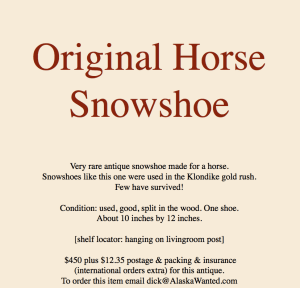
Horse Snowshoes

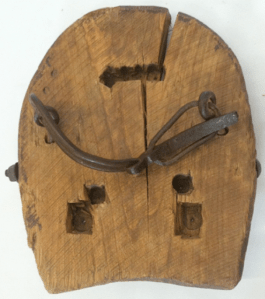
The photos and information here are borrowed from the Alaskan Heritage Bookshop website, which sells Alaskan books, Alaskan art, vintage Alaskan memorabilia and photographs, and much more. Based in Juneau, the site bills itself “The Museum of Alaska History Where Everything is for Sale.”

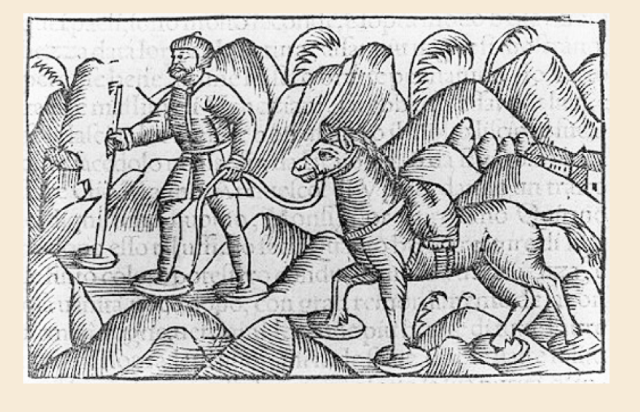
One item no longer for sale is an interesting pair of snowshoes for a horse. The screenshots below tell the story – remember these are no longer for sale, but there’s a limitless supply of interesting items at the Alaskan Heritage Bookshop website.

Screen Shot 2016-05-03 at 8.51.56 AM

Screen Shot 2016-05-03 at 8.53.17 AM

Screen Shot 2016-05-03 at 8.52.41 AM

Screen Shot 2016-05-03 at 8.53.34 AM

Screen Shot 2016-05-03 at 8.52.26 AM


Posted in Alaska History, Uncategorized | Tagged , , , , , | 1 Comment

Crow Creek Pass, Iditarod Trail

crow creek

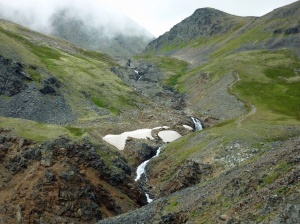
Trail up to Crow Creek Pass (by Frank Kovelchek, Wikimedia Commons)

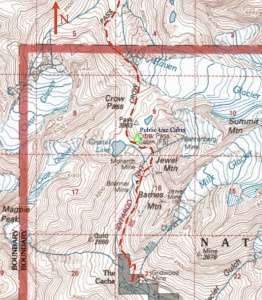
Crow Creek Pass is a popular summer destination with hikers and backpackers, crossing a scenic pass high in the great Chugach Range of mountains which overlooks Anchorage and separates the Matanuska Valley from Prince William Sound. Crow Creek pass, or Crow Pass as it is often referred to, is also a significant point on the Iditarod Trail, made famous by the similarly-named 1,049-mile sled dog race held annually since 1973.

The Iditarod Trail historically began  in the mountains of the Kenai Peninsula, threaded along the tidal waters of Turnagain Arm, and then turned up Glacier Creek and climbed mapover Crow Pass before dropping down into the Eagle River Valley. From there the trail turned north and wound around Knik Arm, through the trading post of Knik and over the Alaska Range to the gold rush town of Iditarod, just south and west of Denali (Mt. McKinley), and continued on to another gold rush town on the edge of the Bering Sea called Nome.
The trail was about 1,150 miles long and incorporated the long-traveled native trails of the Dena’ina and Deg Hit’an Athabaskan Indians on the southern and middle sections, and the Inupiaq and Yup’ik Eskimos on the northern end.

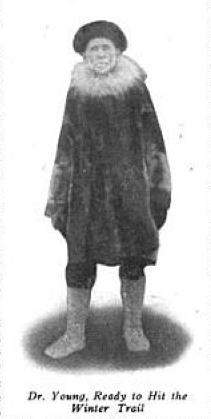
Screen Shot 2015-05-03 at 2.15.16 PMOne of the early travelers over the Iditarod Trail was a hearty adventuring Presbyterian minister known as ‘the Mushing Parson.’ The Reverend Samuel Hall Young had spent time traveling in southeastern Alaska with none other than the great naturalist John Muir, who would come to be known as the “Father of the National Parks” and founder of the Sierra Club. The story of their friendship is chronicled elsewhere on this website.
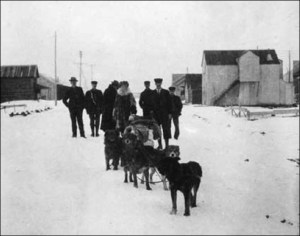
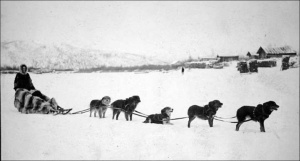
In 1913 Rev. Young wrote an article for the church publication The Continent in which he shared his story of a journey via dogteam from Iditarod to Seward over the Iditarod Trail, crossing Crow Creek Pass in March. He wrote from Knik, “The worst mountain pass of all is before us–Crow Creek Pass over the high Alaska range. Fearsome tales are told me of this pass, but there is nothing to do but to try it.”

team

S. Hall Young photo: “My start from Iditarod to the coast.” [UAF-2001-38-64a]

The Reverend, who suffered from a bad back, hired a young prospector named Fred Taulman to take him over the trail, writing, “Were it not for my lame back I would go alone, but they all say that the pass is too dangerous to be traveled singly even by a strong and vigorous person. So on March 21 we hitched up our eager dogs, whose three days rest has put them in high spirits, and hit the trail again around the head of Knik Arm.”

An overnight stop at a roadhouse near present-day Eklutna and the travelers were ready to start the arduous part of their journey the next day. Crossing the Eklutna River and Peter’s Creek, along the shore of Fire Lake and up the valley of the glacial Eagle River, the mountains on either side closing in and narrowing above them.

Young and Team

Rev. Young and his team at Iditarod, 1913. [UAF-2001-38-3]

“Now hard climbing up a steep road to the base of the pass at Raven Creek roadhouse. A storm is blowing. The snow banners on the mountains that overlook the pass and the fast falling snow make it impossible for us to go on, so we spend a day at this fine roadhouse, kept by three men who are hunters, prospectors and hotel keepers as occasion requires. The second day they hitch up four big dogs as big as Shetland ponies to supplement our smaller ones, and a sturdy mountaineer with ‘creepers’ on his feet comes to pilot us over the summit. From daylight until noon we struggle before reaching the summit, making only five miles in six hours. The descent from the summit is almost sheer for 2,000 feet.”

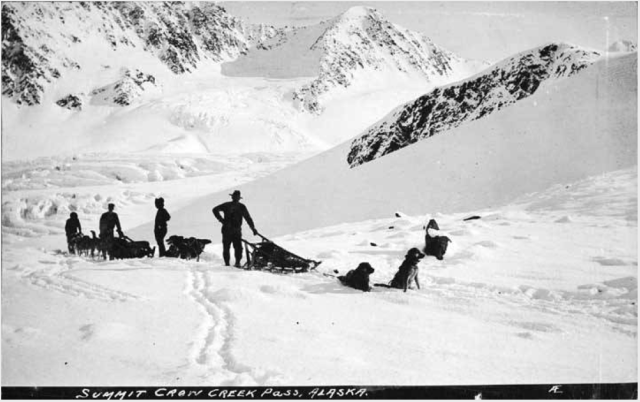
One of the rarest historic Alaskan photos is S. Hall Young’s image of his dogteams at the summit of Crow Creek Pass in March, 1913. It is the only photograph of dog teams in the pass this historian and author has ever found, and at least two historic societies have verified the scarcity of such historically important photos. This one (below) is part of the Rev. S. Hall Young Album in the collections of the University of Alaska Fairbanks.

Screen Shot 2016-05-06 at 6.01.21 PM

Rev. S. Hall Young photo: “Summit Crow Creek Pass, Alaska. One of the passes on my trip to the coast. [UAF-2001-38-104]

Posted in Alaska History, Roadhouses, Sled Dog History, Uncategorized | Tagged , , , , , , , , , , , , , , , , , , , | 2 Comments

Joe Redington’s Iditarod Booklet

Redington 0A slim little booklet came to my attention at the Palmer library recently; if memory serves me it was tucked into their collection which cannot be checked out of the library but must remain in the building. Titled Iditarod Trail, The Old and The New, published by Alladin Publishing in Palmer, Alaska around 1990, the booklet was apparently authored by M. Carter; across the bottom of the front cover are the words “Story by Joe Redington.”

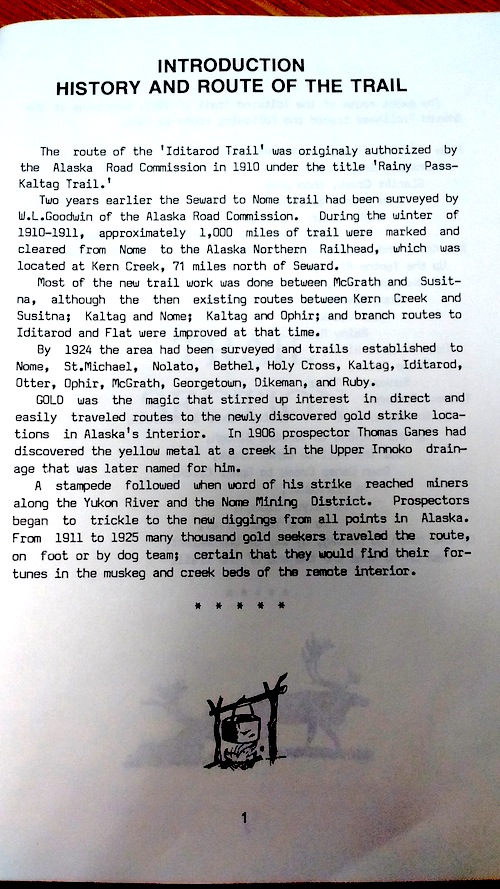
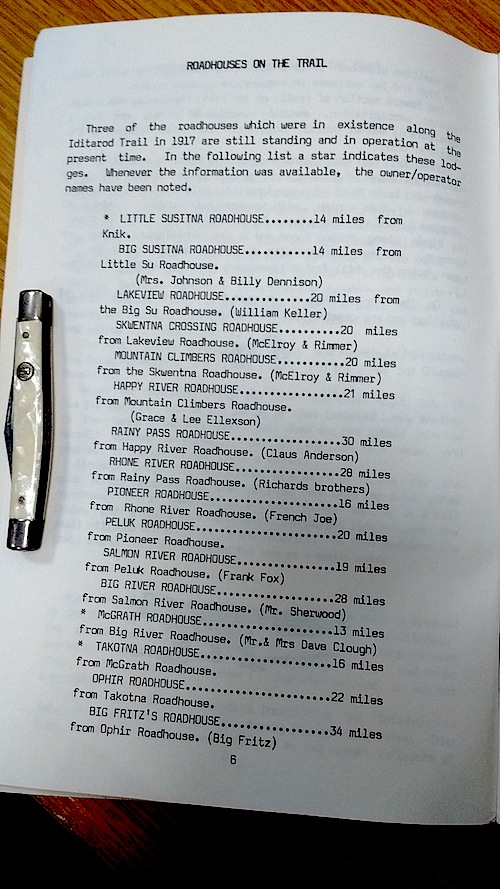
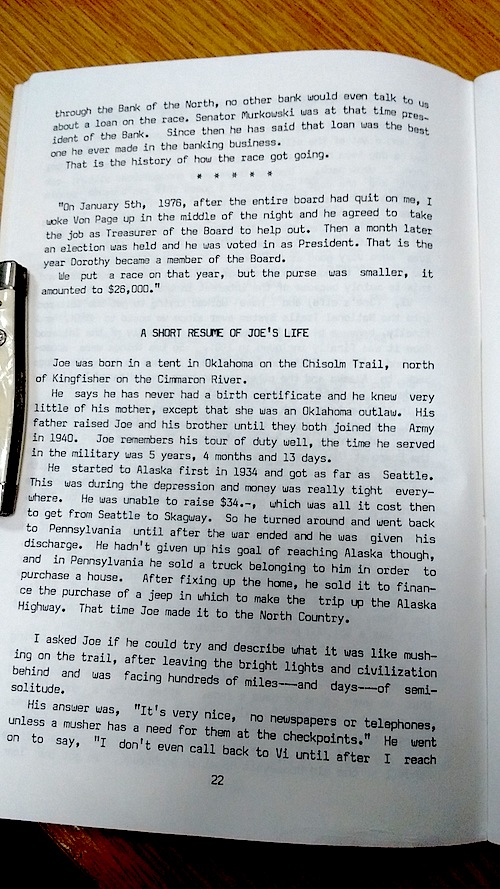
The book has some interesting charts and tables, such as a listing of the original 1907 route with the stopping points named, and a list of the roadhouses on the trail. There are a number of old photographs, but the most interesting part is that written by old Joe. I’ll share some photos I took at the library with my cellphone, hope they’re readable.

Redington 2a

Redington 2b

Redington 3

Redington 4

Redington 6

Redington 7

Redington 20

Redington 21

Redington 22

Redington 23

Posted in Alaska History, Books, News & Information, Roadhouses, Sled Dog Races, Uncategorized | Tagged , , , , , , , , , , , , , | Leave a comment

Dog Team Doctor

Screen Shot 2016-04-24 at 9.42.28 AMIn 1896 Dr. Joseph  H. Romig traveled to Bethel, Alaska, and opened the first doctor’s office and hospital west of Sitka, at a time when there were very few non-native people living in remote southwest Alaska. Four decades later a book would be written about the good doctor’s adventurous and life-saving exploits across the vast northern territory.

Joseph Herman Romig was born in Illinois in 1872. His parents were descendants of Moravian immigrants, and in exchange for his pledge to serve for seven years as a doctor at a mission, the Moravian Church sponsored his medical training. In 1896, Joseph married a nursing student he met at school, and the couple moved to Bethel to join Joseph’s older sister and her husband as missionaries to the Yup’ik people of the Yukon-Kuskokwim Delta. Bethel was barely a village at that time, consisting of only four houses, a chapel, an old Russian-style bath house and a small store. The Romig home was a simple two-room structure, and included the first hospital: one room with two homemade beds.

Screen Shot 2016-04-24 at 9.40.55 AMFor a time, Dr. Romig was one of the only physicians in Alaska, and he became expert at dog mushing, as his practice stretched for hundreds of miles. He became known as the “dog team doctor” for traveling by dog sled throughout the Yukon-Kuskokwim Delta in the course of his work.

When his term of missionary service was complete Dr. Romig left Bethel, and in the following decades he played an eventful and important role in the growth of Alaska. In the 1920’s Dr. Romig set up a hospital in Nenana for the Alaska Railroad. In 1930, he was asked to head the Alaska Railroad Hospital in Anchorage. He would eventually be, in addition to a missionary and a doctor, a superintendent of schools, U.S. Commissioner, mayor of Anchorage (1937-38).

Screen Shot 2016-04-24 at 9.50.37 AMIn 1939, Dr. Romig was appointed chief surgeon at Anchorage’s newly constructed state-of-the-art Providence Hospital, but he retired shortly thereafter, and purchased land on what would later be called Romig Hill. From his log cabin on the property, he started a “Board of Directors” club which eventually provided the founding members of the Anchorage Rotary Club. In the 1950’s and ’60’s Romig Ski Hill was a popular recreation area for Anchorage and provided a tow rope, lighted trails, a regulation jump, Quonset hut for warming up, and an intercom system which played polka music for the skiers.

dtdJoseph and Emily Romig moved to Colorado Springs, Colorado, where Joseph died in 1951. Although he was originally buried in Colorado, his remains were later disinterred and moved to Alaska to be buried in the family plot in Anchorage Memorial Park. J. H. Romig Junior High School, named in his honor for his dedication to youth and education and later renamed Romig Middle School, was built on Romig Hill in 1964.

Dr. Romig’s life story and his adventures in southwest Alaska became the subject of a book, Dog-Team Doctor: The Story of Dr. Romig, by Eva Greenslit Anderson, published in 1940.

Sled Dog TalesThis story is excerpted from the new book Alaskan Sled Dog Tales, which will be published May 14, 2016; advance orders are available now. All advance ordered copies will be signed by the author, Helen Hegener; after May 14 books will be shipped directly from the publisher and will not be signed. Alaskan Sled Dog Tales, by Helen Hegener. $24.95 plus $5.00 shipping & handling. 320 pages, 6′ x 9″ b/w format, includes maps, charts, bibliography, indexed. Click this link to order.

Posted in Alaska History, Book Reviews, Books, Uncategorized | Tagged , , , , , , , , , , , , | Leave a comment