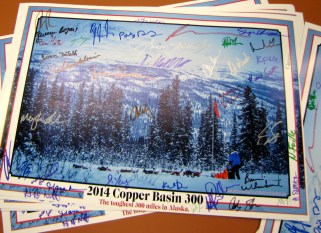
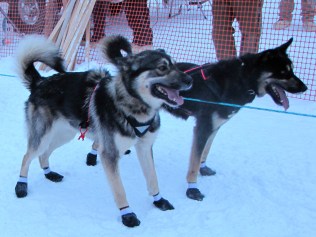
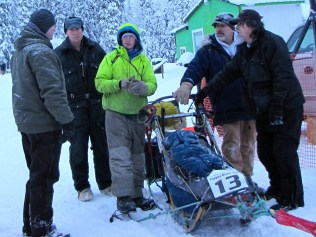
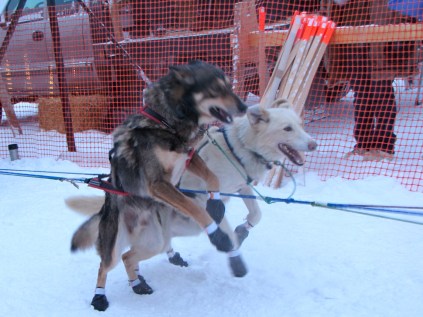
2014 Copper Basin 300, Part Two

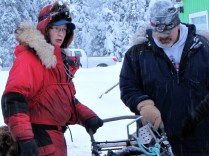
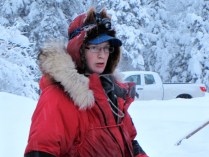
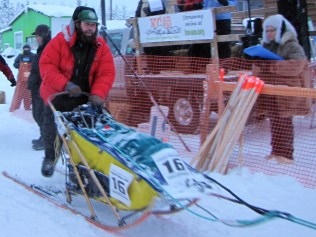
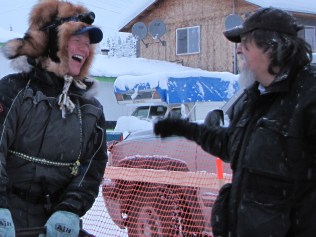
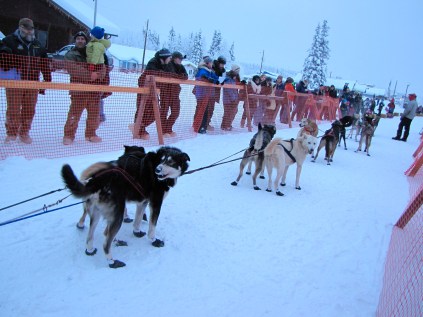
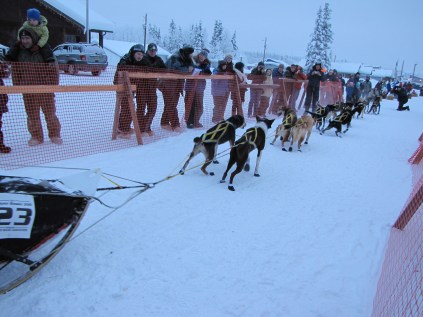
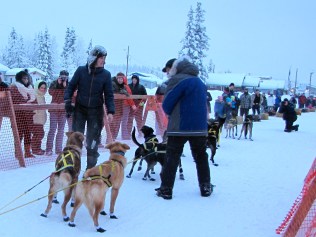
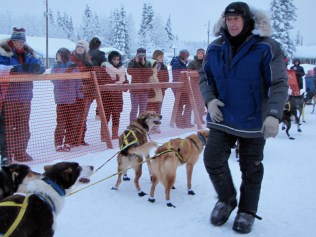
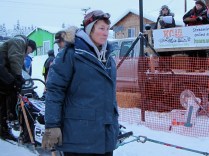
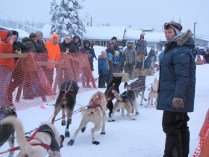
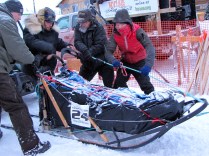
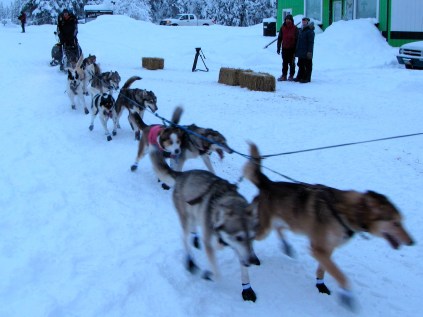
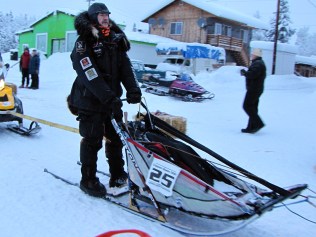
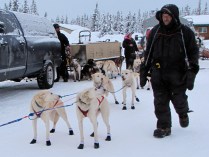
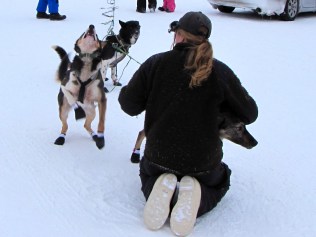
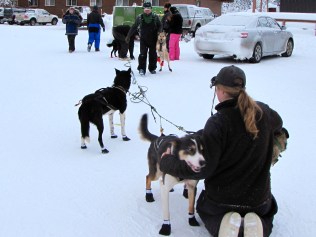
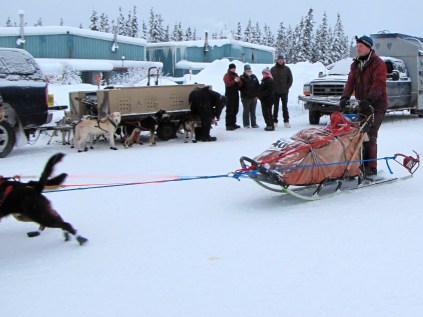
There are over 100 photos here, and they’re good resolution, so please give them a couple of minutes to fully load. You can hover over any photo for a caption, or click on any photo to see it larger and go through them individually. If there’s a photo you’d like to have for your website or Facebook page, please contact me at helenhegener@gmail.com – I’m always happy to share my photos, but I do appreciate being credited for my work: Northern Light Media.

Posted in Sled Dog Races | Tagged , , , , , , , , , , | Leave a comment

2014 Copper Basin 300, Part One

There are a couple hundred photos here, and they’re good resolution, so please give them a couple of minutes to fully load. You can hover over any photo for a caption, or click on any photo to see it larger and go through them individually. There are several groups of photos here, keep scrolling down through them for the entire article about the race. 

Road Trip – Going to Glennallen

Denali

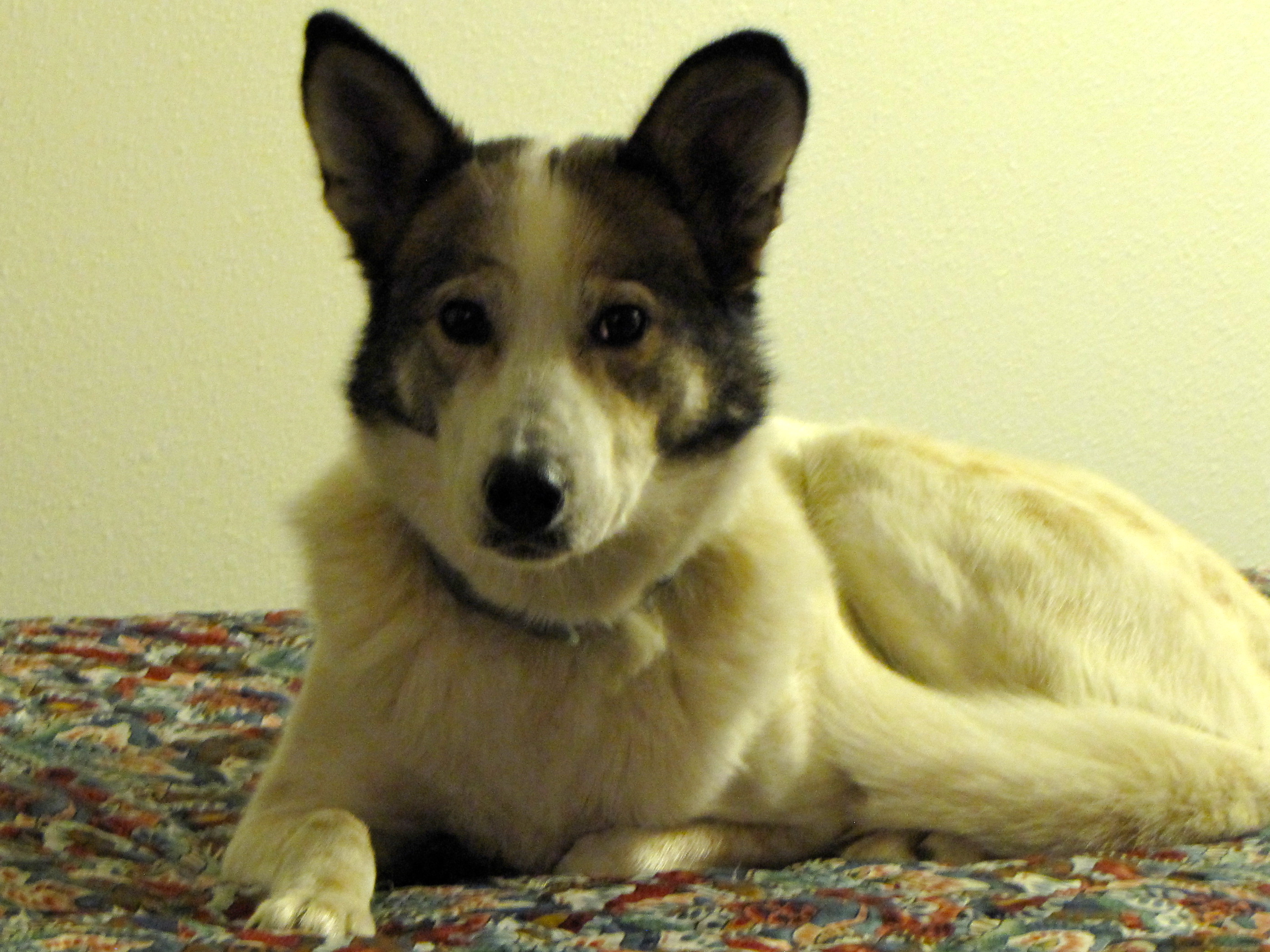
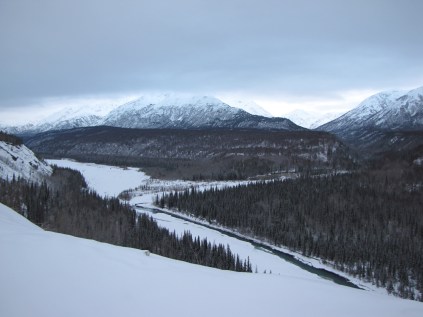
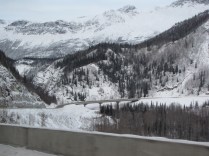
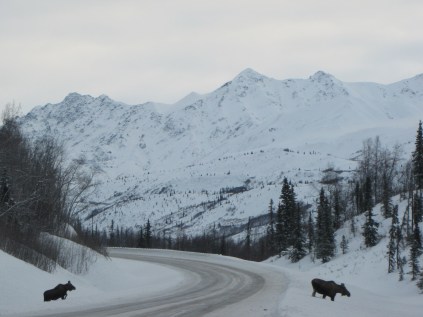
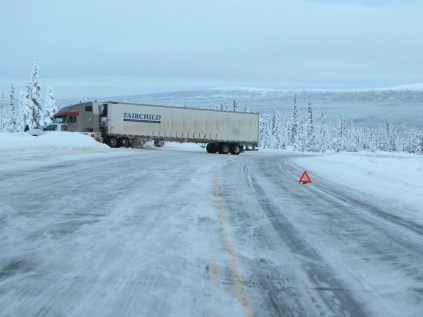
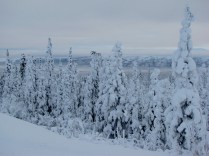
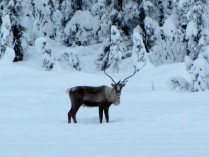
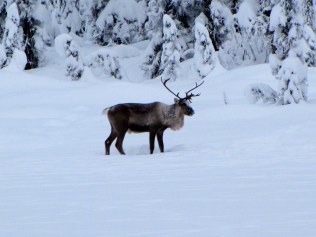
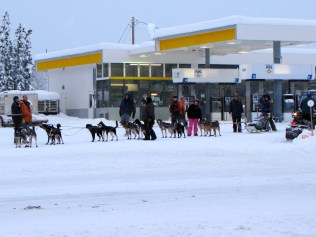
My friend Bonnie Foster and I and her retired leader, Denali, left her home around midmorning, headed for Glennallen. Nice day for a drive, a bit overcast, but the roads were good, and the scenery on the Glenn National Scenic Highway is always spectacular! We saw five moose, and a big semi truck in the ditch just as we got out of the mountains, looked like he got caught in the soft snow when turning into a pullout area.  Always makes me wince to see a trucker in trouble, as one of my sons drives a big rig over Alaskan roads. We found a bunch of caribou just before we got to Glennallen, beautiful animals and they just stood there watching us and let us photograph them for several minutes!
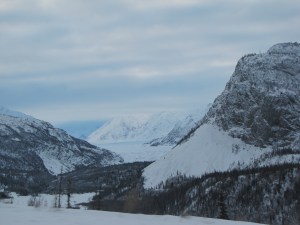
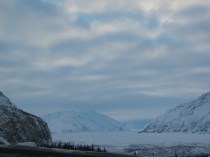
the Matanuska Glacier from the grade above Caribou Creek

When we got to Glennallen we pulled into the Caribou Hotel and saw our friend Susie Rogan hailing us from a window – she and Hans Gatt and their friend John King had driven over from Whitehorse, Yukon Territory for the race. The last time we’d seen Susie was last February in Fairbanks, when she finished her first 1,000 mile Yukon Quest. Of course it may have helped that her handler was four-time Yukon Quest champion Hans Gatt.

We checked in and Susie came over to visit with her sweet little husky sidekick, Goose. Bonnie broke out some goodies, we chatted for a bit and then Hans and John came to join us. So fun to see Hans and Susie again, and to meet John, who was from Australia, but originally from southern Great Britain, so he had a veddy British accent. He began running dogs in 2012, and has run the Yukon Quest 300, coming in 9th with a full team of healthy and happy dogs, and the Percy DeWolfe 200, coming in 7th with all dogs on the line again healthy and in good shape. His goal for the CB300 was to run a challenging 300 mile race trail successfully with his team, to qualify for the Iditarod.

Bonnie is a Yukon Quest veteran of sorts, not that she ran the race, but her dogs did, in 2012, a team made up of retired sled dogs from some of the best kennels, savvy distance dogs who may have been past their prime. but who still felt the thrill of the trail and leapt with excitement when the harnesses amd booties came out. Misha Pederson, the intrepid musher who determinedly drove Bonnie’s Moon Run Kennel team 1,000 miles across northern Alaska and the Yukon, joined us a bit later. Denali, who had co-lead much of the trip, seemed genuinely pleased to see her old friend again, and she spent the evening happily curled up beside her. Misha, a veteran of several mid-distance races, was conditioning a team for another friend, Vern Halter of Dream a Dream Kennels in Willow.

Musher’s Meeting

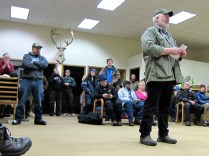
RIchard Dennis addresses the mushers

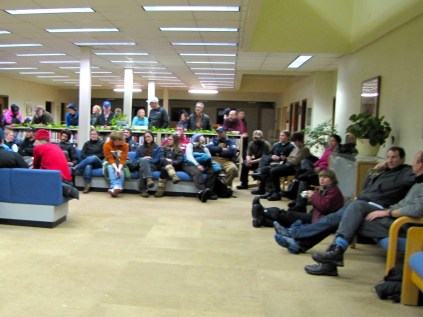
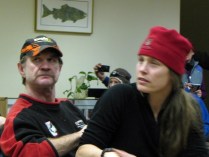
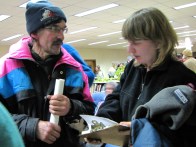
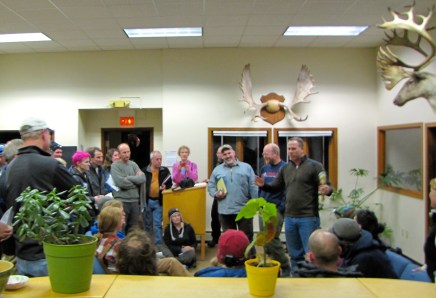
That evening we drove over to the Musher’s Meeting for the orientation. I enjoyed warm hugs from several friends I hadn’t seen since the last race season, and after a few minutes of visiting we settled in for the familiar program of greetings, introductions, trail reports, rules reminders, and what to expect at the start and the various checkpoints. Musher voices rang out in reply from around the large comfortable community college room as race marshall Zack Steer counted down the starting line-up.
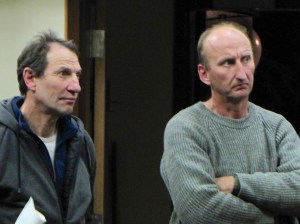
Hans Gatt and John King

Looking around the circle of assembled mushers one could easily distill the knowing faces of the veterans from the bright excited rookies. There were several hardened veterans who’d been here many times before and know each creek by name, and eager rookies wondering what some of the more descriptive names mean in actuality and if the Gakona River open water seen on the video days before will prove troublesome. The carefully coiled enthusiasm of the rookie mushers reminded me of the dogs who stand in harness at the start chute literally vibrating with anticipation at the trail ahead. It wouldn’t be surprising to see one of them mimic the actions of the keyed-up sled dogs who will launch themselves vertically off the ground. The veterans are more restrained in their demeanor, but you can feel the tension building as they eye the fellow veterans they know will run some stiff competition out there. The lion in the room, arguably the best distance musher in the sport, isn’t expected to be in the running for first place this year. Hans Gatt is simply there to support his friend and client, John King.

The Start: Controlled Mayhem
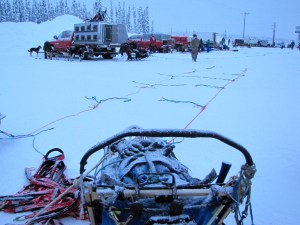
Start morning in Glennallen

The next morning Bonnie and I navigate our way through a hotel full of mushers striding the halls and find the coffee and a hotel breakfast of peach yogurt and Jimmy Dean’s mini sausage biscuits. It’s almost showtime, so we dress quite a bit less than it seems like we should for a sled dog race and make our way across the hotel parking lot and toward the action.

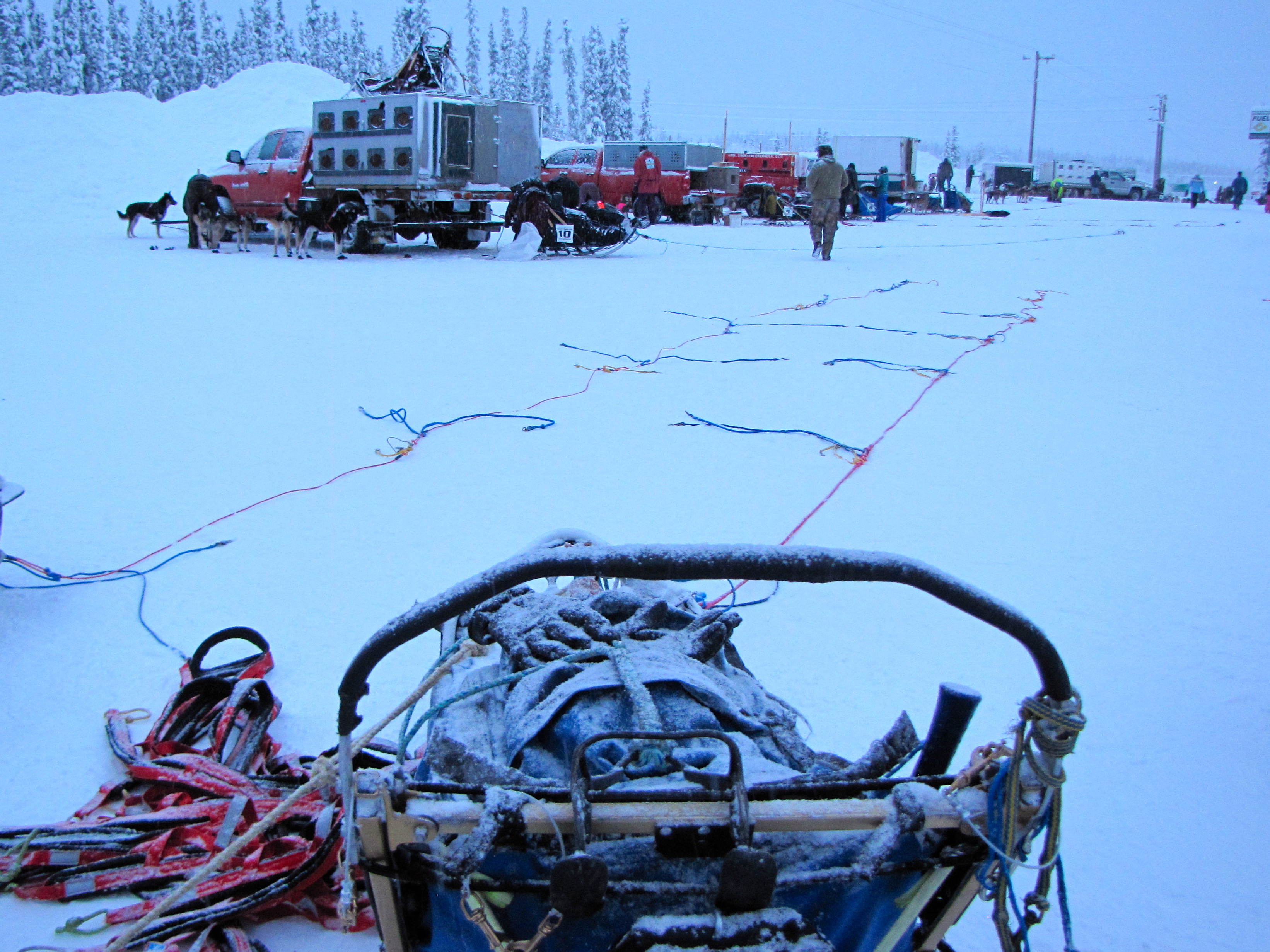
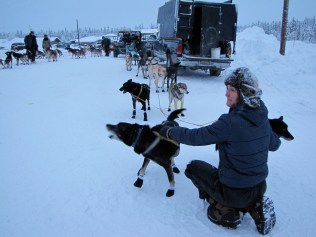
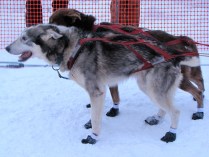
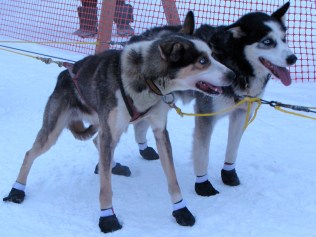
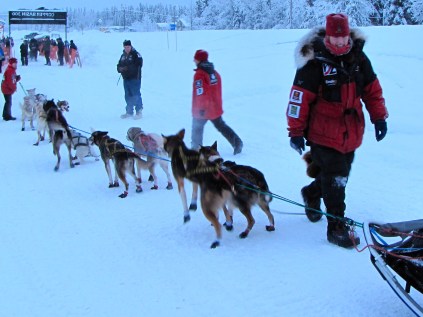
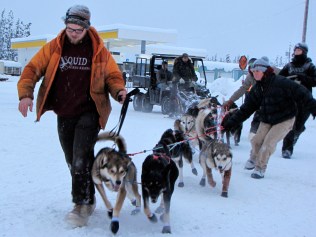
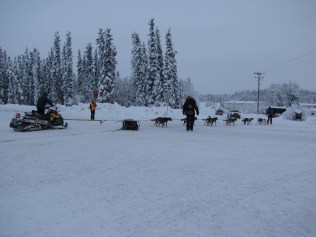
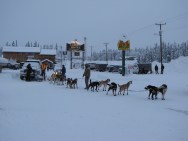
Long gang lines are laid out everywhere, snaking across the ice to their respective dogtrucks. Huskies chained to their trucks are watching intently, waiting impatiently for their turn to be led to the line. As each team is readied a four wheeler or a snowmachine backs into place to help ease the the excited dogs across the ice, across the highway, and down to the start chute.

Ben Harper, Team Redington

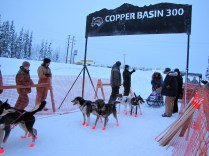
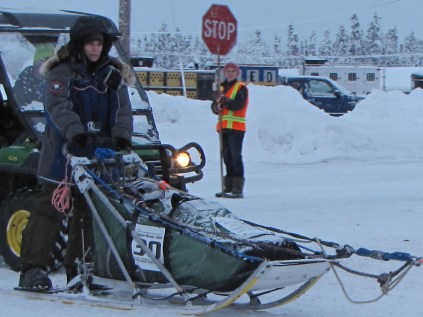
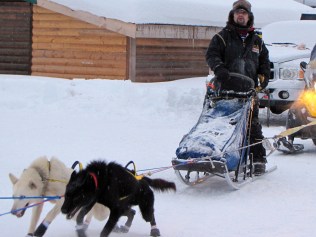
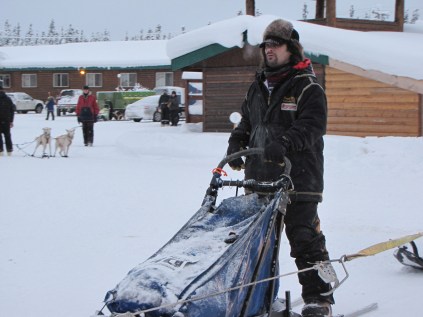
Once in the chute, under the iron banner, the four wheeler detaches and backs away while the musher walks down the line scratching ears, moving dogs back under the gangline and into position, refastening clips, stopping to smile for a friend’s camera, and then at the 30 second signal and he sprints back to his sled for the countdown. Four, three, two, one.. He pulls the right-hand snow hook and says “all right” and they’re suddenly airborne, flying down the trail in hot pursuit of the team ahead as the next team eases into the chute.

On the Road Again

IMG_8108

With all of the teams out on the trail, Bonnie and I headed down to Race Central at the American Legion post and enjoyed a bowl of chili, provided by longtime race sponsor Crowley Fuel. Race judge Kelley Griffin was there and came over to chat while we ate, mostly comparing notes with Bonnie about their chicken herds. We spent a few minutes browsing the posters, then stopped by the grocery store for some last-minute trail food before heading north, hop-scotching the teams and stopping to photograph them at key points such as the Gulkana River bridge, the Mt. Drum pullout overlooking the Copper River, and the historic Gakona Lodge, which is on the National Register of Historic Places. Established in 1904, it is one of the few original roadhouses on the old Valdez-to-Eagle Trail.

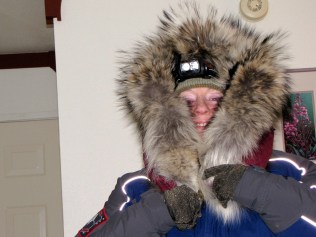
Michelle Phillip's beautiful fur parka ruff

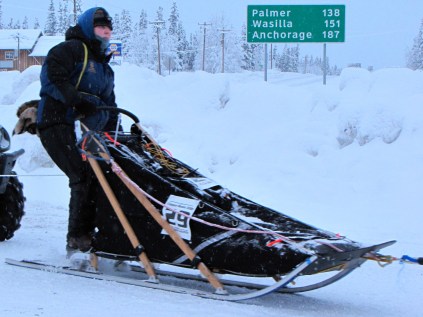
Following the mushers by watching for trail stakes alongside the road, we happen upon two large moose, and then we spot something up ahead, apparently dashing along over the snow in an undulating motion. A weasel? A badger? Wow, it’s a wolverine! I start scrambling for my camera, keeping an eye on the creature bobbling along ahead of us, and then Bonnie starts laughing – we were seeing the beautiful huge ruff on Michelle Phillips’ parka as she ran in the ditch alongside the road! We had a good hearty chortle at ourselves, and then spotted John Schandelmeier up ahead of us…

First Checkpoint: Red Eagle Lodge at Chistochina

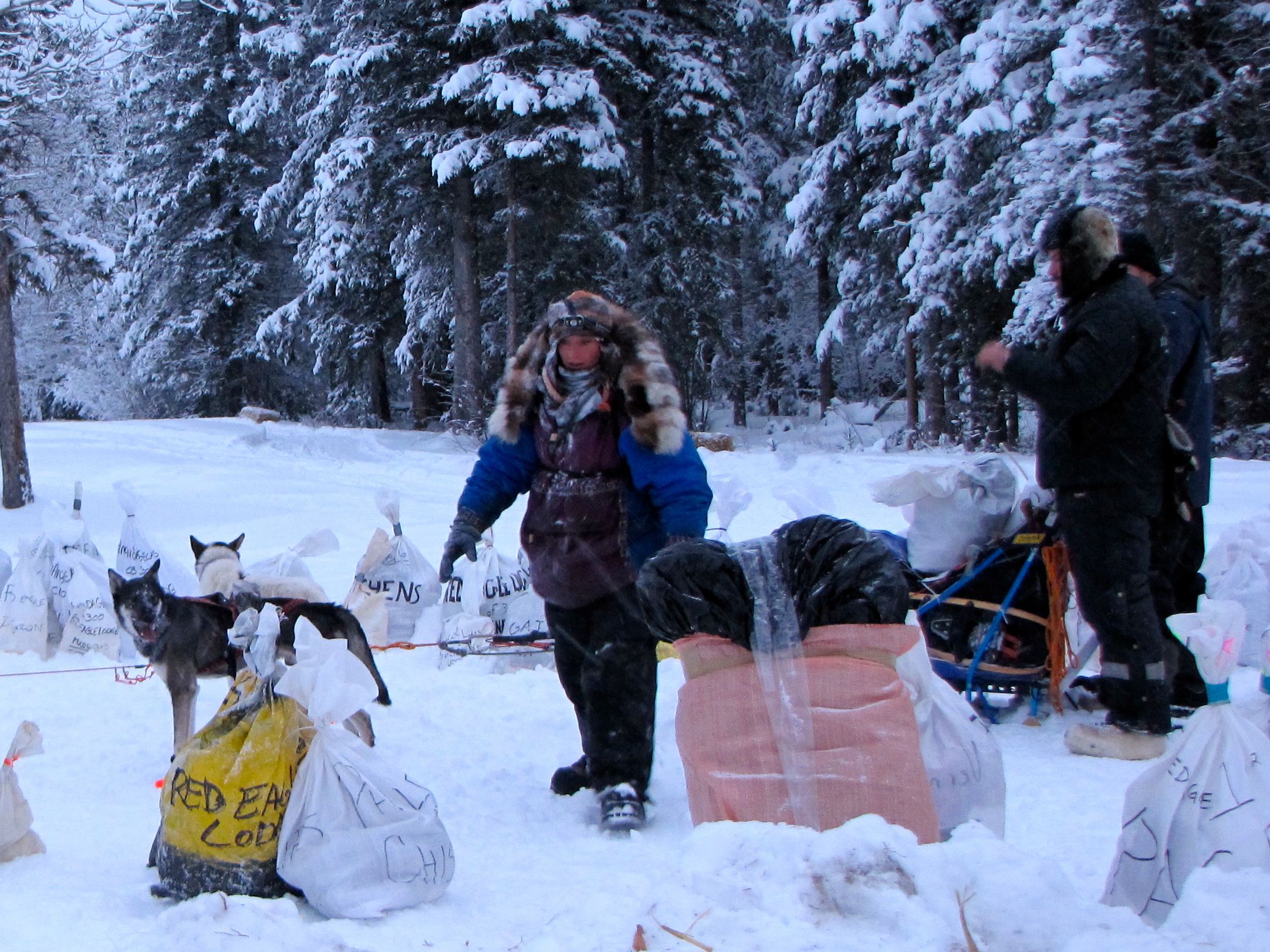
Red Eagle Lodge checkpoint number one

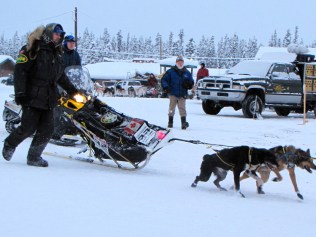
We pulled into the Red Eagle Lodge at Chistochina and watched Nicolas Petit bedding down his team a few yards away. He’d been the third team out of the start chute, and the first one into this first checkpoint. It was beginning to get dark as we watched John Schandelmeier come in and circle wide, then two more teams arrived, and we decided to head over to the check-in point for photographs before John and Hans arrived.
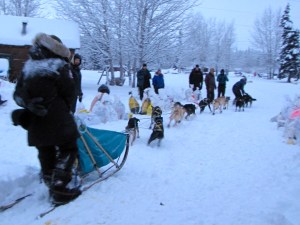
Drop bags lined the chute as teams came in

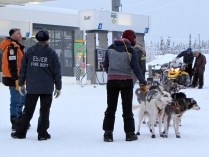
The lodge had a nice set-up for arriving teams, and we chatted with Kelley and a few other friends as team after team came in, loaded their drop bags onto their sleds, and headed for their rest areas. Someone built a fiercely roaring fire in a small round fire ring, but it soon began snapping and hissing in a scary sort of way, huge yellow flames blazing and leaping toward the gathered crowd, who stepped backwards and agreed there must be some type of greasy fuel in the bottom of the fire ring. The somewhat menacing flames spread a cheery glow to the surroundings and soon settled down to allow the crowd to gather close again.
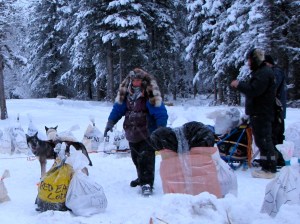
Dragging drop bags

Team after team rounds the turn out in the woods and pulls into the checkpoint to murmurs of approval from the dozen or so people gathered. As handlers and volunteers steady the team and the sled the musher zips open his bag to show his ax, sleeping bag, cooker, etc., then the checker announces “Time?” and another volunteer notes the official arrival time. Someone identifies the musher’s drop bags among those piled to either side of the trail and the musher, handlers, and volunteers advance the team to where they are, the musher loads them onto his sled and then he’s led to a parking place amongst he other teams.

Bonnie and I watch the headlamps wander across the snowy field where the teams are lined out to rest. Four hours, six hours, and then it’s time to wake the sleeping team, feed and booty and check the harnesses of each dog, and then check out, go back and call up the team and glide out of the checkpoint, turn north alongside the Glenn Highway and follow it to Sinona Creek where they cross under the highway, through the closed Posty’s Trading Post, and into the woods, headed over The Hump across county to the Meier’s Lake checkpoint 75 miles away.

Sourdough Creek and Meiers Lake Checkpoints

Brent's dogs at the Sourdough Checkpoint

The next morning when Bonnie and I checked in at race central we were surprised to see that Hans had scratched at the Meiers Lake checkpoint. We headed north, stopping at the historic log lodge at Sourdough Creek, one of the first roadhouses built to accommodate early travelers along the Valdez-to-Eagle Trail, just in time to watch Brent Sass arrive. He pulled into this third race checkpoint with a smile, his big dogs looking great, gathered his drop bags and followed the directions of volunteers to a snowy resting place beside the highway.

Bonnie and I drove north, through the snowy hills carpeted with spiky little twisted trees, to the Meiers Lake checkpoint, where we met up with Vern and Susie. We ate lunch at the lodge and learned the trail had been re-routed because of overflow. We took a few photos of the picturesque and historic Meiers Lake log church, built in 1920, then drove back to Sourdough Creek to watch the teams arriving from up north.

We secured a parking space nosed into a snow berm right in front of the Arctic Oven tents and the drop bags, an excellent vantage point from which to watch the teams checking in. Friends would come by with updates and information, or just to chat, Susie and Hans joined us for crackers and cheese and some fascinating race analysis, and we enjoyed having a ringside seat to the whole show. Eventually we decided to head back to Glennallen and get some sleep. Stopped at race headquarters for an update, chatted a bit, then back to the hotel.

The next post, 2014 Copper Basin 300, Part Two, is just photos from the trail.


Posted in Sled Dog Races | Tagged , , , , , , , , , , | Leave a comment

Long Hard Trails and Sled Dog Tales

LongHardTrailsLong Hard Trails and Sled Dog Tales is a memoir of sorts, an adventure story to be sure, and a look at what it’s like to follow a champion sled dog racing team across thousands of miles of Arctic wilderness. Award-winning author Helen Hegener hitched her wagon to a star: The legendary four-time Iditarod and Yukon Quest winner Lance Mackey, beginning with his fourth bid for the Yukon Quest title in 2008.

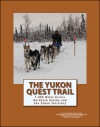
Lance into DCFor the next several years she followed Lance and dozens of other mushers, many of whom became close friends, across Alaska and the Yukon Territory. She founded Northern Light Media, which produced the DVD Appetite and Attitude: A Conversation with Lance Mackey, and published many books, including The First Iditarod, The Yukon Quest Trail, The All Alaska Sweepstakes, Alaskan Sled Dog Tales, and others. She also produced two Mushing History Conferences, and was among the founders of the Northern Lights 300 sled dog race from Big Lake to Finger Lake and return.

HelenIn this book, published in the winter of 2014, Helen shared her adventures paralleling the sled dog trails, with extensive quotes from the notebooks and journals she kept while traveling. But going beyond the exciting sled dog races, she also gives readers the backstory of her life as founder and co-publisher of a leading publication in alternative education, and the riveting nationally-watched lawsuit which cost her that business and became the ‘long hard’ part of the trail.

Excerpts from each chapter of the book are shared at the book website, illustrated with photos (which do not appear in the book). Click the titles to read each chapter excerpt:

Chapter 1: McCabe Creek It’s three AM in the middle of nowhere and it’s my turn to watch for them. I scan the dark snowy landscape outside the car, note that all the black shadows are still in their proper places, and go back to watching the northern lights shimmer across the sky.

Chapter 2: Bannon Creek I missed a lot of school when I was growing up, and the last grade I actually completed was the sixth – barely. My attendance record was shot full of holes, and things went downhill from there.

Chapter 3: Dawson City – If I slowed my walk down and closed my eyes, I could almost imagine it was a hundred years ago, and the mushers thronging the streets were freighters, miners, mail carriers, fresh off a long hard trail and looking to make deliveries or to restock their meager supplies before setting out again on another trail, for another lonely snowbound settlement.

Chapter 4: Pelly Crossing Arriving at the Pelly checkpoint shortly after midnight, Anderson’s dogs appeared exhausted. They laid down and waited with their noses on the snow for him to go through his drop bags and fill his cooler with hot water. When Mackey arrived half an hour later his team looked more lively, but as he rummaged through his drop bags and snacked the team, Lance was still concerned about having cut their rest times to stay in the running with Ken.

Chapter 5: Wauconda The decision to produce a video about the champion dog musher Lance Mackey was made in late 2007, as other opportunities for our new business were also breaking. At dinner one evening our friend Theresa Daily asked if we’d like to go to Nome as part of the media team for the centennial running of the All Alaska Sweepstakes.

Several more chapters are excepted at the book’s website.

Posted in Books | Leave a comment

Along Alaskan Trails

Along Alaskan Trails, Adventures in Sled Dog History, by Helen Hegener, is a collection of true stories about Alaskan sled dogs and the role they played in the development of the north, with dozens of historic photos from the archives of the Alaska State Library, the University of Alaska Fairbanks, and other sources.

The history of Alaska was in large part written behind a team of sled dogs. Or, more accurately, thousands of teams of sled dogs. Man’s dependence on these canine workhorses of the north can be seen in photo after photo: A dog team carrying passengers on the Richardson Trail, a dog team hauling freight across the Iditarod Trail, two dog teams loaded with the U.S. Mail and bound for Anchorage from Seward, a dog team on patrol from Fort Gibbon near Eagle, a dog team making its way along the frozen Yukon River to the next missionary stopover…

Among the tales shared in this book is the story of an intrepid Japanese musher who blazed a wide swath across Alaska, an Archdeacon who wrote the classic Ten Thousand Miles with a Dogsled, legendary mushers such as Scotty Allan and Leonhard Seppala, Arctic explorers like Ernest de Koven Leffingwell, and intrepid adventurers like Slim Williams and Mary Joyce.

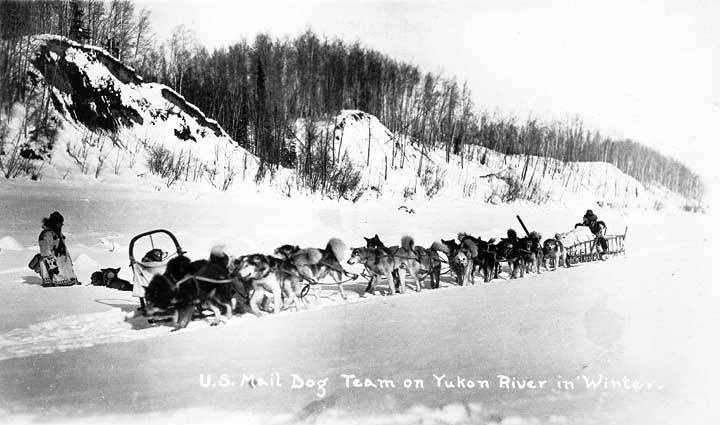
U.S. Mail team on the Yukon River. Photo: University of Alaska Fairbanks, John Zug Collection UAF 1980-68-252

And the dogs! From Baldy to Balto, Togo to Wolf, Chinook to Rembrandt, these are the dogs who blazed across Alaskan trails and into the history books. From the fiercely-argued conflict between sled dogs and reindeer, to the spooky apparitions along the Iditarod Trail, this book captures the fascinating stories of the dogs of the north.

The history of Alaska would be very different without the criss-crossing trails of thousands of sled dog teams. Sifting through hundreds of photos of Alaskan dog teams makes clear their important role in the history of the northland. Before cars and trucks, there were sled dogs. Before ships, trains, and airplanes, there were sled dogs. In every part of this great land, from the misty fjords of southeastern Alaska to the farthest northern tip of the continent, sled dogs were the most dependable – and often the only – form of transportation. The dog team made travel and moving loads over otherwise impassable trails possible. In The Cruelest Miles (2003, W.W. Norton & Co.) Gay and Laney Salisbury wrote: “On the Alaskan trail, sled dogs becsme partners in a game of survival. Drivers depended on their dogs so that they could make a living as freighters, mailmen, and trappers, and relied on the animals’ skill and intelligence to get them safely across the rough, dangerous terrain.”

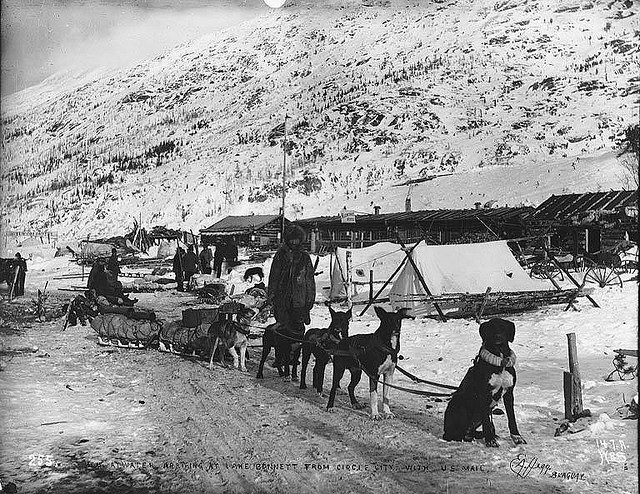
mail sled dog team

Ben Atwater arriving at Lake Bennet from Circle City with U.S. Mail, 1909.

Now their stories are gathered and shared in this splendid collection of well-researched essays and historic photographs.

Along Alaskan Trails, Adventures in Sled Dog History, by Helen Hegener. Published in July, 2012 by Northern Light Media (ISBN 978-0-9843977-2-3). Available from Amazon and other online book sellers, or through your favorite local bookstore.

Posted in Books | Tagged , , , , , , , , , , , , , , , , | Leave a comment

2013 Iditarod: Buser’s Bold Run

Martin Buser at the Ceremonial Start on 4th Avenue, Iditarod 2013. Photo by Albert Marquez/Planet Earth Adventures, LLC

Martin Buser at the Ceremonial Start on 4th Avenue, Iditarod 2013. Photo: Albert Marquez/Planet Earth Adventures, LLC

The 2013 Iditarod got off to a blazing start with four-time champion Martin Buser setting a blistering pace out of Willow. Leaving in the first place position with bib #2 (#1 is honorary and does not race), Buser ran his 16-dog team straight through the night, passing checkpoint after checkpoint and surprising volunteers with his early arrivials in a bid to stay out in front of the pack.

In a second surprise move his former handler,Matthew Failor, driving another team of Buser’s dogs, sped into second place after starting near the end of the pack with bib #61. A 2012 finisher, Failor recently finished the grueling 1,000-mile Yukon Quest, and as he worked at a checkpoint alongside Martin and Lance Mackey, Failor quipped to a reporter, “Between the three people here, we have eight Iditarod championships!”

Matthew Failor, 2013 Yukon Quest. Photo by Eric Vercammen/Northern Light Media

Matthew Failor, on his way to Fairbanks, 2013 Yukon Quest. Photo by Eric Vercammen/Northern Light Media

It was classic Failor humor, as Martin has four wins, and Lance has four. Matthew? None yet.

This is Martin Buser’s 30th Iditarod, and he knows the trail better than most mushers. 100 miles into the race he was still clocking an average of 9.3 mph, and as he finally rested at the Rohn checkpoint, veteran Iditarod musher Perry Solomonson commented to Facebook fans, “Are you following the Iditarod? Martin Buser just ran 188 miles with less than 2 hours rest, arriving into Rohn, 19 hours after leaving the Willow restart yesterday at 2:00PM. Being the first out, he’s taking full advantage of great trail conditions without any tracks in front of him. By doing this incredible LONG run, he’ll try to stay one checkpoint ahead of ALL competitors. The race has never been won with this early move! We’ll see how this plays out.”

Happy Trails Kennel near Big Lake, Alaska, is home to Martin and his wife Kathy Chapoton, a teacher, and their sons Nikolai and Rohn (both named after Iditarod checkpoints). Born in Winterthur, Switzerland, in 1958, Martin began racing sled dogs in 1975 at the age of 17. Four years later he moved to Alaska, and began working and training with long-time Alaskan mushers Earl and Natalie Norris.

Leaving the Ceremonial Start on 4th Avenue, 2013 Iditarod. Photo by Albert Marquez/Planet Earth Adventures, LLC

Leaving the Ceremonial Start on 4th Avenue, 2013 Iditarod. Photo by Albert Marquez/Planet Earth Adventures, LLC

Martin ran his first Iditarod in 1980, placing 22nd. He placed third in 1988, second in 1991, and in 1992 he won his first Iditarod championship. He won again two years later in 1994, placed second in 1995, third in 1996, and won again in 1997. He came close again with a second place finish in 1999, but it was 2001 before he took his fourth title. Over the past few years Martin has stayed in the top twenty, but only barely, with a 19th place finish in last year’s race. There were those who thought the champ’s reign was over, but they didn’t reckon with his steady, calculating presence. He was most likely just waiting for the stars to align, and it looks like this year they might all fall right into place.

The first star is Martin himself: Not only is he a four-time champion, he’s run the race 29 times, and has never scratched. He’s placed in the Top Ten 14 times, not even counting his four championships. He’s won almost every award the Iditarod gives, including multiple receipts of the Leonhard Seppala Humanitarian Award, which recognizes one musher for providing exemplary dog care and is considered the highest honor a competitor can receive.

Emily Schwing, KUAC Fairbanks, interviews Martin at the restart. Photo: Albert Marquez/Planet Earth Adventures, LLC

Emily Schwing, KUAC Fairbanks, interviews Martin at the restart. Photo: Albert Marquez/Planet Earth Adventures, LLC

The second star is his dogs: They have proven over the years to be incredible athletes; Martin is the runner-up for fastest finish time in Iditarod history. And Martin’s son Rohn, who had been entered and training for this year’s race, withdrew a few days before the start, combining his dogs with his dad’s to give Martin the strongest team possible. And impressively, Matthew Failor joining Martin at the Rohn checkpoint with the kennel’s B team neatly underscores the toughness and speed of the famed Buser Dogs.

The third star is the trail: Buser’s dogs are known to love a fast trail, and Alaska Dispatchreporter Craig Medred called it “…a fast track to Nome. The early trail running some 150 miles from the Winterlake Lodge at Finger Lake up and over the Alaska Range to the village of Nikolai appears to be in the best shape of modern Iditarod history.”

The fourth star may well be the weather: If a storm moves in and cuts off the lead teams from the rest of the pack, the mushers out front can breathe easier and perhaps even let up on the pedal a little. Races have been won and lost dependent on the vagaries of the weather.

Martin's BuserDogs display an unusual configuration leaving the Willow ReStart, 2013 Iditarod. Photo by Albert Marquez/Planet Earth Adventures, LLC

Martin’s BuserDogs display an unusual configuration leaving the Willow ReStart, 2013 Iditarod. Photo by Albert Marquez/Planet Earth Adventures, LLC

The most important part of the equation is, of course, the dogs. Trapper Creek musher Joe May, who won the 1980 Iditarod, and won the Sportsmanship Award in the inaugural Yukon Quest several years later, also shared his perspective in a Facebook comment: “Many mushers have a dog or two or several in the team capable of this kind of run without getting into the dogs reserves. No one to my knowledge has ever put an entire team of them together. If Martin has done that it will be a first. If the run was done on the strengths of his ‘core’ at the expense of the ‘soldiers’ there will be a price to pay. The old adage of ‘don’t ever let them get tired’ is as valid today as it was in 1973. I wish him well but am dubious.”

Five-time Iditarod finisher Zack Steer is also dubious. In an article for Alaska Dispatch, Is speedy Buser afflicted with Iditarod Amnesia? Or just cagey?, Steer recounted Buser’s past mistakes and opined, “He’s is going ‘all in’ early on in the race and making a statement to the other racers that he is the team to beat. I contend the other teams should call his bluff and let him go. History has shown this to be a bad way to play your cards.”

2012 Iditarod champion John Baker has other thoughts, however. In an interview for the Anchorage Daily News he told reporter Kyle Hopkins: “My buddy Martin is doing something different, which is neat to see. …If anybody’s going to do that, he has the team for it. He wants to win. I love that about him.”

Posted in Sled Dog Races | Tagged , , , , , , , , , , , , , , , , , , , , , , , | Leave a comment

Following the 2013 Yukon Quest

Dogs resting at the Mile 101 Checkpoint. Photo by Albert Marquez/Planet Earth Adventures, LLC

Dogs resting at the Mile 101 Checkpoint. Photo by Albert Marquez/Planet Earth Adventures, LLC

The 2013 Yukon Quest International Sled Dog Race is history, and mushing fans have already turned their attention to the Big One, the Iditarod, set to begin in Anchorage on March 2nd, with a Re-Start on Willow Lake the next day.

Many teams from the Yukon Quest trail will be going on to run the Iditarod, sometimes the same musher, sometimes another musher from the same kennel; and sometimes, as with first-place finisher Allen Moore and his handler/wife Aliy Zirkle, it will be both. Aliy, who won the Yukon Quest in 2000 and is still the only female YQ champion, finished second in last year’s Iditarod, and this year she and Allen will both be going for the Iditarod winner’s circle.

This year’s Yukon Quest, one of the mildest on record with above-zero temperatures for much of the race, kept fans on the edges of their seats right from the take-off in Whitehorse, and all the way to the finish in Fairbanks. The primary glory for the non-stop excitement rightly goes to the front-runners, Hugh Neff, Allen Moore, Brent Sass and Jake Berkowitz. Those four intrepid mushers set a blistering pace and kept race-watchers endlessly refreshing their tracker maps and asking each other, “how long can they keep this up?”

Allen Moore, 2013 Yukon Quest Champion. Photo by Albert Marquez/Planet Earth Adventures, LLC

As it turned out, they kept it up all the way, setting a new race record* and adding some great ‘tales of the trail’ to the colorful lore of this legendary race.

Anyone who followed the race will long remember the winner, Allen Moore of SP Kennels, standing in the finish chute and casually asking, with his ever-charming smile, “So where’s everybody at?”

There was four-time champion Lance Mackey’s startling dropping of four dogs at the second checkpoint, and his subsequent scratching from the race. There was the surprising change of route deleting the often-treacherous American Summit… There was the totally dauntless Brent Sass slowly but determinedly marching up Eagle Summit ahead of Jake Berkowitz’s team, and then Jake and Brent standing together on the finish podium, lofting their beers at one another. And then there was Susie Rogan’s tracker, veering wildly off-course and showing a steady trek away from the trail, and then slowly turning around… and finally she mushed under the finish banner as green-hued northern lights danced overhead! After the finish formalities, the interviews and the photographs, her partner Hans Gatt, a four-time Yukon Quest Champion, motioned her into the sled, told the handlers to step back and “let the dogs go,” and he drove their team out of the chute and down the river to their dogtruck.

Susan Rogan and Hans Gatt, 2013 Yukon Quest finish. Photo by Helen Hegener/N

The mushers who travel in the middle and the back of the pack don’t garner the same world-class media attention as the first few finishers, but many of them don’t mind that, because they have different aspirations, different goals. Simply finishing with a happy and healthy dog team is a major accomplishment, and something many of these men and women will never do again. Taking a dog team 1,000 miles is expensive, in multiple and sometimes unexpected ways.

Successfully finishing the Yukon Quest is a bucket list achievement for some, while for others it’s simply a chance to travel through some of the most spectacular country on earth with some of their best friends, both canine and human. The fierce rivalries at the front of the race are rarely seen in the rest of the event, as mushers and their teams settle into the serious work of moving on down the trail.

*The 2013 Yukon Quest trail was shortened by the detour around American Summit, which plays into the total race time.

Posted before the 2013 race:

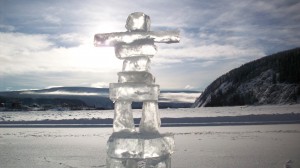
Inuksuk on the Yukon River, Dawson City, 2008 Yukon Quest. Photo by Helen Hegener/Northern Light Media

Inuksuk on the Yukon River, Dawson City, 2008 Yukon Quest. Photo by Helen Hegener/Northern Light MediaThe 30th anniversary running of the Yukon Quest has brought it all together for an exciting event, and as the mushers make their way over the Yukon trails to Dawson City, their fans from around the world are finding plenty to help them keep track of their favorite teams.

There are some world-class media covering the race, starting with Mark Gillett and his crew, who galvanized race fans last year with their beautifully edited videos such as The StartThe Story, and the fast-paced and funThe Race is On. This year they’re already showing their chops again with their first video, YQ 2013 The Start.

There are many other videos showcasing the mushers, each a glimpse into the personal lives of the men and women who choose this lifestyle with huskies and sub-zero temperatures and northern lights and the pure unbridled joy of living in the north country. Check out the beautiful Wild and Free Life about perennial favorite Brent Sass. SP Kennels, home of 2012 second-place winner Allen Moore and the 2000 Yukon Quest Champion Aliy Zirkle, has a multi-year archive of great mushing videos. And four-time champion Lance Mackey has a crackerjack media team this year, keeping fans updated via Facebook and theComeback Chronicles, and posting some delightful videos such as the secrets of what’s in Lance’s Yukon Quest sled. The official Yukon Quest videos can be found at YouTube.

“The visibility worsens and now Bruce cannot see his leaders in the swirling merger of snowpack and wind. He searches anxiously for a glimpse of a wooden stake that will tell him that his dogs have not wandered off the trail, perhaps to the edge of a cliff. Bruce is not conscious of time or of distance, but only of the wind in his face. The dogs appear to be moving forward, but there is no way to measure progress.” ~John Balzar, Yukon Alone

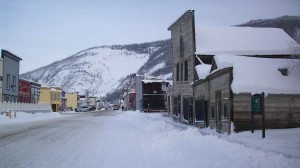
Dawson City, 2008 Yukon Quest, photo by Helen Hegener/Northern Light Media

Dawson City, 2008 Yukon Quest, photo by Helen Hegener/Northern Light Media

The premier source of information, of course, is the Yukon Quest website and their frequently-updated Facebook page. The website has all the musher profilescurrent race updateslive tracking, and great resources such as a listing of all the past champions and a very informative Musher’s Guide to the Yukon Quest Trail. There’s a brief history of the Yukon Quest, a fly-over trail map, and profiles of the race officialsand veterinarians.

Articles about the Yukon Quest can be found in a wide variety of publications, from theFairbanks Daily News-Miner to the Whitehorse Star, the respective newspapers of the two race-anchoring cities. In Alaska the Team and Trail column in Alaska Dispatch tracks sled dog races, while back in the Yukon the aptly-named Yukon News often features news of the race. The Anchorage Daily Newsruns race updates daily, with a special section on sled dog racing.

At the Dawson City dog camp. 2008 Yukon Quest, photo by Helen Hegener/Northern Light Media

At the Dawson City dog camp. 2008 Yukon Quest, photo by Helen Hegener/Northern Light Media

A good in-depth examination of the Yukon Quest is available at the online encyclopedia,Wikipedia: “Because of the harsh conditions, the Yukon Quest has been called the ‘most difficult sled dog race in the world‘ and the ‘toughest race in the world.’”

Features at Wikipedia include a detailed history of the race, a map and a checkpoint-by-checkpoint description of the route, a bit about the expected weather, the participants, the dogs, the entry requirements, the rules, awards, penalties, the Yukon Quest 300 and the Junior Yukon Quest.

“Iditarod has stiffer competition, but the Quest trail is vastly harder, it’s not just the mountains. It’s theYukon River itself. Iditarod only has about a hundred and thirty miles on the Yukon, the Quest stays on the river closer to four hundred miles.”    ~Brian O’Donoghue, Honest Dogs

In an article for the Yukon Quest website, The Historic Trails of the Yukon Questsled dog historian Jeffrey Dinsdale, a volunteer writer for the 2013 race, recalls the names of some of the early mushers on the trail: “Mike Mahoney … travelled north from Dawson City all the way to Fairbanks, as did other dog freighters like Arthur Walden; ministers like Hudson Stuck; mail carriers like Charlie Biederman, Percy de Wolfe, and Ben Downing; news reporters like Tappen Adney; and traders like Jack McQuesten. In the process they firmly established the winter transportation routes between Dawson City, Forty Mile, Eagle, Circle, Central and Chatanika, the communities along the present day Quest trail that travels over both Eagle and Twelve Mile summits.”

Northern Light Media will be on the Yukon Quest trail again this year, meeting the teams at the northernmost checkpoint, Circle City on the Yukon River. In the meantime, here’s to fast trails and happy tails!


Posted in Sled Dog Races | Tagged , , , , , , , , , , , , , , , , , , , , , , | Leave a comment

2013 Northern Lights 300

24-time Iditarod finisher DeeDee Jonrowe at the starting line at Deshka Landing. By Donna Quante/Husky Productions

24-time Iditarod finisher DeeDee Jonrowe at the starting line at Deshka Landing. By Donna Quante/Husky Productions

The 2013 Northern Lights 300, which finished on Monday, set a blazing pace from Big Lake to Finger Lake, while keeping fans at rapt attention with some very surprising developments along the trail. It was a race which generated some compelling ‘tales of the trail’ for Monday evening’s banquet, and as the mushers told their stories to an appreciative and joy-filled audience, there were still a few sighs of relief from those who’d been behind the scenes when they happened.

On January 11, just a week or so before the race start, warm weather was causing concern and race organizers were working on back up plans for a trail if plan A (to Finger Lake via same trail as last year) fell apart. A week later, January 17, things were still up in the air and the NL300 Facebook page noted, “Our number one priority is a safe race trail and our number two priority is getting this qualifying race run. Keep checking this page for more information.”

Implementation of the backup plan was announced on January 21: “Due to trail conditions, we have made some changes to the race course.”

Ray Redington Jr., grandson of Joe Redington, leaves the NL300 start chute, photo by Julia Redington

Ray Redington Jr., grandson of Joe Redington, leaves the NL300 start chute, photo by Julia Redington

The start was moved from Martin Buser’sHappy Trails Kennel in Big Lake to Deshka Landing, just west of Willow on the Susitna River. From there the trail more or less followed the Big Su to the mouth of the Yentna River, then up the Yentna to Yentna Stationfor a four-hour layover, then upriver to Skwentna, over the hills and across Shell Lake to Finger Lake, where the teams would take a mandatory six-hour rest. Returning down the same route to Yentna, another six-hour rest, and then to the finish at Happy Trails Kennel, around 47 miles.

Moon in the sunset over the Yentna River, about two miles below Yentna Station. Photo by Martin Buser.

Moon in the sunset over the Yentna River, about two miles below Yentna Station. Photo by Martin Buser.

There were concerns about this new trail being where the Iron Dog snowmachiners were practicing for their upcoming race, so the media was alerted with a press release. News media from the Mat-Su Valley Frontiersman to Alaska Magazine picked up the release and word spread quickly and effectively throughout the local snowmobiling community. Mushers were cautioned to keep their headlamps on at all times through certain parts of the trail: “There are some very tight sections of trail on this section where head on passes are going to take some serious cooperation should they occur. For safety’s sake, put the race aside and work with each other to make the pass safely.”

The race started on Friday morning at Deshka Landing, just west of Willow, and photographers Julia Redington and Donna Quante captured the excitement of team after team leaving the starting area smoothly. Donna Quante, of Husky Productions, shared her beautiful images of every team leaving for Finger Lake. With all 30 teams successfully launched, the race organizers settled in to wait for updates from the first checkpoint.

Mushers tend their dogs at the Finger Lake checkpoint. Photo by Mandy Dixson, Winterlake Lodge

Mushers tend their dogs at the Finger Lake checkpoint. Photo by Mandy Dixson, Winterlake Lodge

The first updates came in around 2 pm, mushers started arriving at Yentna Station for their mandatory four-hour layover. As the mushers headed upriver to Skwentna and Shell Lake, the temperature started dropping severely; before the race was over there would be reports of close to 45 below. There were many reports of northern lights blazing across the sky, which no doubt delighted the mushers and checkpoint volunteers, but the interference generated by the aurora “noise” made it difficult to receive updates, so the leaderboard sat empty until the front-running teams started arriving at Shell Lake around 11 pm. Checkpoint volunteer Christopher Michael met the outgoing mushers, took their bib numbers and called race central, and the time for team after team was posted to the race’s Facebook page. Race volunteer Emily ‘Alaska’ Krol posted on Facebook: “Full moon. Stars bright. Crystal clear sky. Beautiful aurora. ‘Tis a gorgeous night.”

FBpawBrder-150x150On the Facebook page for the Northern Lights 300, fans were asked for a show of hands every so often, and it was fun to see a broad base of armchair mushers who were watching the teams, hailing from all over the globe and reflecting an international interest in the sport, along with mushers in the race from points as far away as Brazil and Australia. In addition to locations all over Alaska and in dozens of other states, mushing fans chimed in from Australia, Germany, Holland, Norway, Switzerland, Spain, Belgium, Canada, France, New Zealand, and even South Africa!

FingerLake-225x300Seventy-five miles later, at Yentna Station, Ray had whittled Nicolas’s lead down to one minute, they arrived at 1:46 and 1:47 respectively. DeeDee arrived at 2:38; and Kelly Maixner, with a 16-dog team, had moved into fourth place, arriving at 3:00. The last leg of the race, approximately 47 miles to Martin Buser’s Happy Trails Kennel, was all that remained after another mandatory six-hour layover.

Martin Buser prepares the "No Man's Land" sign, photo by Annette Fee

Martin Buser prepares the “No Man’s Land” sign, photo by Annette Fee

Nicolas Petit pulled his snowhook and headed for Happy Trails sharply at 7:46 pm with 12 dogs, Ray Redington did the same one minute later at 7:47, leaving with a team of 11 dogs. Dee Dee Jonrowe left at 8:38 pm, still with all 16 dogs in harness. A text message came into race central that two teams were spotted at Susitna Station, 30 miles out, at 10:34 and 11:00. Theories about what that meant were tossed around, with the most popular being voiced on the Facebook page by veteran musher Aaron Burmeister  of Nenana: “I know that Ray wouldn’t let Nicolas get that far ahead so I am betting Ray went by right behind Nicolas with his head lamp off and that was DeeDee catching up from behind 25 minutes later…”

Volunteers waiting at Happy Trails Kennel stood in the sub-zero temperatures and watched into the darkness for a headlamp, listened for any telltale sound of a musher running without one. At 12:35 am the word came and a post went up on Facebook: “DOGTEAM!” A moment later another announced “Two teams coming in…” Finally, at exactly 37 minutes after midnight, Ray Redington Jr. drove his team across the finish line to claim first place! Nicolas Petit arrived four minutes later, at 12:41 am; and DeeDee Jonrowe drove her 16-dog team across the finish at 1:45 am. The 2013 Northern Lights 300 had been won by Redington Kennels!

A frosty Ray Redington Jr. takes first place in the 2013 Northern Lights 300, photo by Annette Fee

A frosty Ray Redington Jr. takes first place in the 2013 Northern Lights 300, photo by Annette Fee

Mushers continued to arrive throughout the day Sunday, happy and smiling mushers congratulating the volunteers on a terrific race with great trails. There were many comments about the Northern Lights 300 once again being bitterly cold, but most agreed that in this sport that comes with the territory. More than one musher commented that the NL300 is good training for the always-sub-zero Yukon Quest!

As the morning progressed, with mushers arriving every so often, it began to dawn on the race manager, Sue Allen, that one musher was missing. She began asking mushers who’d arrived if they’d seen her, she called checkpoints, talked to volunteers and gathered as much information as possible. A report that the veteran musher, Miriam Osredkar, had not been feeling well at Yentna caused concern; when a musher isn’t feeling well there are many things which can quickly go wrong, exacerbated by temperatures which were still hovering around 20 below. Finally, at 12:45 am, after studying area maps and considering all the possibilities, the race manager gave the word to enlist help in finding her. Pilots were contacted for air support, Trail Boss Lou Shrader headed back out onto the trails to search, Martin Buser harnessed a dogteam and started down the trail…

A dropped dog relaxes at Happy Trails Kennel, awaiting pickup, photo by Helen Hegener/Northern Light Media

A dropped dog relaxes at Happy Trails Kennel, awaiting pickup, photo by Helen Hegener/Northern Light Media

A news release was sent out to media: “PLEASE READ: The NL300 is searching for a missing musher and team. Miriam Osredkar is driving a 12 dog team, she left the Yentna checkpoint around 3 am Sunday morning and she is several hours overdue at the finish at Martin Buser’s Happy Trails Kennel in Big Lake. She is wearing a blue coat, and she is driving a tail dragger sled with a grey and green sled bag. If you have any information about her please call….”

Within minutes the news release had appeared in so many places that the race manager received a phone call from an Associated Press reporter asking for details. Ten minutes later Miriam mushed her team into Happy Trails, smiling and elated at finishing. She’d mushed her team all the way back to the start at Deshka Landing, and upon realizing her mistake, turned around and mushed right back downriver to Happy Trails! She was fine, her dogs looked great, and she said the trail had been just beautiful!

Race Manager Sue Allen and Trail Boss Lou Schrader, photo by Helen Hegener/Northern Light Media

Race Manager Sue Allen and Trail Boss Lou Schrader, photo by Helen Hegener/Northern Light Media

Miriam’s wasn’t the only ‘tale of the trail’ to come out of the race. There was the loose dogteam which checker Christopher Michael chased down and saved at Shell Lake; there was the puzzling zigzag trail of one of the few teams which had a tracker on board as it wandered from one side of Shell Lake to the other and back again; there was the trail sweep who blew a piston on his snowmachine at the far end of the trail and ended up being towed 134 miles by his brother, the other trail sweep; and then there was the musher whose team quit at Finger Lake, so the musher, not wanting to necessitate checkers remaining at their checkpoints for him alone, called in and announced that he was scratching. The next day all the checkpoint volunteers were flown out, and he started the long trek home with his team.

Angie Taggart, photo by Annette Fee

Angie Taggart, photo by Annette Fee

Race officials tracked his progress via residents who lived on the lakes and rivers along his trail, and updates were made to the Facebook page as he made his way downriver. Just before midnight on Sunday evening he mushed into Yentna Station, settled his team for the night, and “…got a hot meal and is resting in a nice warm cabin.” The next morning he harnessed his team and continued his journey to the finish.

At the Awards Banquet that same evening, the race manager announced that the final musher had done everything the 29 teams in front of him had done, and he’d done it all right, it just took him longer. So the decision was made to reinstate his team and he was officially named the 30th place finisher of the 2013 Northern Lights 300. 30 teams started, 30 teams finished, and all 17 teams needing a qualifying run for either the Iditarod or the Yukon Quest received their certificates.

Frosty dogs. Photo by Annette Fee.

Frosty dogs. Photo by Annette Fee.

There was one last ‘tale’ to tell at the banquet. On the way to the dinner, one of the trail sweeps, Chris Hegener, found a dogsled in the middle of the Parks Highway. Dodging traffic to load it into his truck, he asked about the owner at the banquet, but no one had lost a dogsled… Finally someone recognized the sled; it turned out to belong to a longtime Iditarod veteran who had been training in the area over the weekend. Even after the race was over, and even having lost his snowmachine on the race, the intrepid Northern Lights 300 trail sweep was still doing his job!

Posted in Sled Dog Races | Tagged , , , , , , , , , , , , , , , , , , , , , , , , , | Leave a comment

Appetite and Attitude: Lance Mackey
 

VIDEO CLIP BELOW

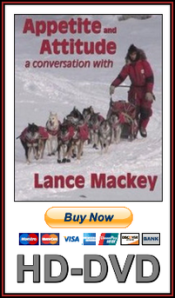
Lance 2012Appetite & Attitude Buy NowIn 2008 Northern Light Media produced the documentary Appetite and Attitude: A Conversation with Lance Mackey, about the world’s preeminent long distance sled dog racer, who made racing history when he won two 1,000 mile races back-to-back, the Yukon Quest and the Iditarod, with most of the same dogs – an incredible feat of endurance, long considered almost impossible, which changed how mushers think about what their dogs are capable of achieving. Lance then went on to win both races a total of four times each, including an unprecedented four consecutive Iditarod wins in 2007, 2008, 2009, and 2010. He is truly one of the greatest mushers who ever lived. In this video, filmed as his meteoric career was just beginning, Lance talks about the factors which he attributes to his spectacular success.

Lance and his leader, Larry, with two excited Whitehorse fans the morning after winning the 2008 Yukon Quest

Lance and his leader, Larry, with excited Whitehorse fans the morning after winning the 2008 Yukon Quest. NLM photo.

An excerpt from an early review of this DVD said, “For die hard Lance fans, like myself, its mesmerizing. He is amazingly candid and open. He offers up insights about the sport that few of us would imagine. He tells us a lot about his own thinking and how he processes observations of dog and musher behaviors.” -Sarida Steed-Bradley, Texas

Lance’s lead dog Larry, photo by Northern Light Media

Lance’s indomitable lead dog, Larry, is the only dog in the world to win the coveted Golden Harness Award from both of these grueling races. For his achievements Lance was nominated for a 2007 ESPY – Excellence in Sports Performance Award, and in 2008 he was named Sports Illustrated’s#2 Toughest Athlete in the World.

Lance, a cancer survivor, comes from a family of sled dog racing champions. His father Dick Mackey helped create the world’s most famous race, the 1,049 mile Iditarod Trail Sled Dog Race, in 1973. Five years later his father won the race by one second in a world-famous photo finish.

Lance makes his home – Comeback Kennels – near Fairbanks, Alaska. In this video Lance talks about his dogs, his races, his family legacy and his dreams for the future! Videography by Donna Quante (producer/videographer: Pretty Sled Dogs) brings a special touch to this video.

Appetite & Attitude Buy Now• Appetite & Attitude: A Conversation with Lance Mackey 45 minute HD-DVD. $25.00 postpaid (US only, foreign orders please use Amazon). To order via check or money order, mail to Northern Light Media, PO Box 298023, Wasilla, Alaska 99629. To order via credit card or Paypal click on the linked cover image.


Posted in DVD & Video | Tagged , , , , , , , , , , , , , , , | Leave a comment

All Alaska Sweepstakes

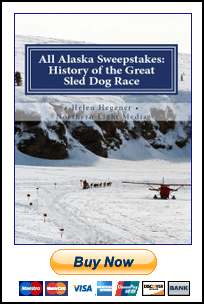
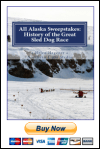
Sweepstakes Buy NowThe historic All Alaska Sweepstakes is the subject of All Alaska Sweepstakes: History of the Great Sled Dog Race, by Helen Hegener, now in a new edition, revised with 60 pages of new content and photographs. Hundreds of beautiful photos by Jan DeNapoli, Joe May, Donna Quante and others tell the story of the sixteen Alaskan mushers who entered their teams, each hoping to have their name engraved on the Sweepstakes trophy beside the great mushing legends “Scotty” Allan and Leonhard Seppala. And, of course, they were racing for the richest purse ever offered for a sled dog race: $100,000.00 winner-take-all!

The All Alaska Sweepstakes is the oldest organized sled dog race in the world, with records kept by the Nome Kennel Club dating back to the first race in 1908. The route from Nome, on the south side of the Seward Peninsula, to the small community of Candle on the north side and return, is 408 miles, following the telegraph lines which linked camps, villages and gold mining settlements on the Peninsula. This route’s established communication lines allowed those betting on the outcome to track the race more easily from the comfort of saloons like the famed Board of Trade in Nome, where the Nome Kennel Club had been founded the previous year.

Scotty Allan & Baldy

A.A. “Scotty” Allan describes the route to Candle in his classic book Gold, Men and Dogs (G.P. Putnam’s Sons, 1931): “It was selected because the trail to it from Nome goes over all kinds of country, from sea ice to high mountains, with rivers, tundra, timber, glaciers, and everything else in the way of mental and physical hardships en route. We knew there wouldn’t be any doubt about the excellence of a dog or driver that covered it.”

With colorful drivers like “Scotty” Allan and Leonhard Seppala, who each won the race three times, the All Alaska Sweepstakes was an eagerly anticipated annual event until the gold mining dropped off and Nome’s population dwindled, along with local interest in sled dog racing. In 1983 the Nome Kennel Club sponsored the 75th Anniversary race, and Rick Swenson took home the $25,000.00 purse. Then, in 2008, for the 100th Anniversary of the event, the Nome Kennel Club offered the richest purse ever for a sled dog race: $100,000.00 winner-take-all.

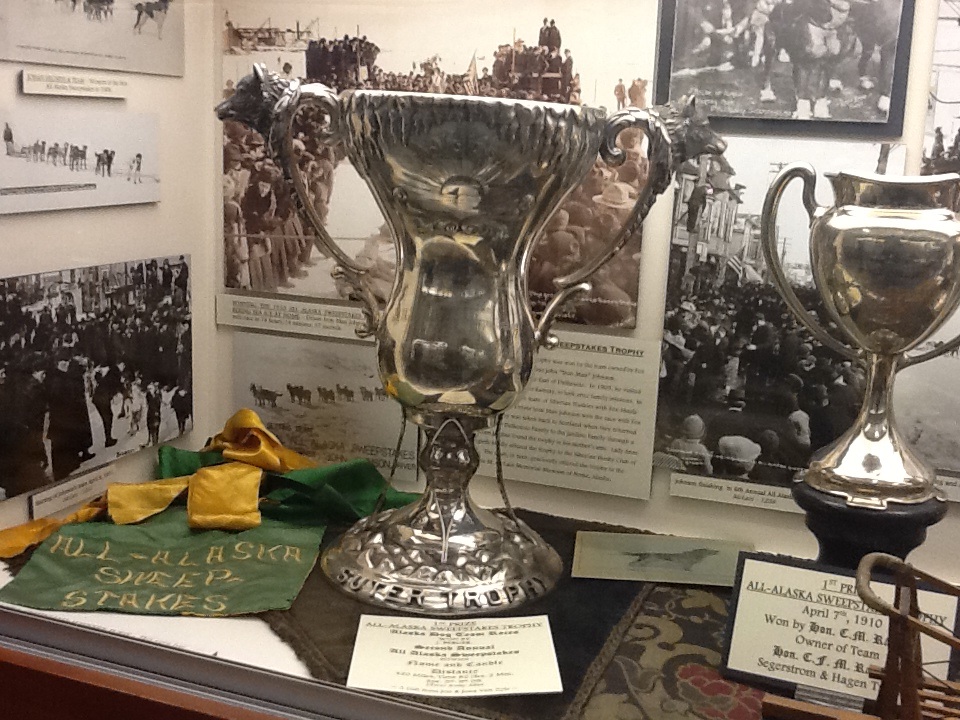
Trophies from the 1909 and 1910 races at the Carrie McLain Museum in Nome

The All Alaska Sweepstakes, 2008 Centennial Race begins with a look at the colorful history of the race, tracing its gold rush roots and highlighting the stories of intrepid mushers like Leonhard Seppala and “Scotty” Allan, “Iron Man” Johnson and Fox Maule Ramsay, and the heroic dogs like Baldy, Togo, and Fritz. For the Centennial Race some of Alaska’s best-known mushers entered: Lance Mackey, Jeff King, Mitch Seavey, Sonny Lindner, Ramy Brooks, Jim Lanier, Cim Smyth, Aaron Burmeister, Ed Iten, Hugh Neff, and Mike Santos. And then there were the mushers who entered simply to be a part of the history of the race: Kirsten Bey, Cari Miller, Fred Moe Napoka, Connor Thomas, and Jeff Darling, whose musher profile noted that he’d entered “for the historical value and a chance to see some countryside he might not otherwise be able to see by dogteam.”

Mitch Seavey wins the 2008 Centennial running of the All Alaska Sweepstakes (photo by Jan DeNapoli)

The photo-rich, full color book covers the race from the preliminary festivities such as the crowning of the Sweepstakes Queen, Janice Doherty, and the mushers’ bib drawing, to the historically-themed finisher’s banquet and the awards, not only of the beautiful championship trophy, but also the Alec “Scotty” Allan Humanitarian Award, and the Percy Blatchford “Spirit of the Race” award. Descriptive commentaries by Race Marshal and Lead Judge Al Crane; leaderboard designer and champion musher Jodi Bailey; and dedicated race fan Marcia Claesson, who shared how the race was tracked by mushing enthusiasts from around the world, add depth and perspective to the exciting narrative of this iconic race.

“One of the pilots in Candle asked me if I’d seen any wolves, and I said no, and he said there was a big pack of wolves headed this way. I was about two hours out of Candle on my way to Gold Run and I see all these green eyes about fifty feet off the trail, a hundred yards ahead of me. So I had my headlight on bright and I’m looking at these eyes… My .44 was in my sled so I unzipped my sled bag and I’m looking, there’s a lot of sets of eyes looking at me…” ~ musher Aaron Burmeister sharing tales of the trail at the Finish Banquet.

Sweepstakes Buy Now• All Alaska Sweepstakes, History of the Great Sled Dog Race. Softcover 8.5″x 11″, published in 2013 by Northern Light Media, with 60 pages of new photos and content (originally published in 2010). ISBN 978-0-9843977-0-9 • 160 pages, over 350 photos. $29.00 postpaid (US only, foreign orders please use Amazon). To order via check or money order, mail to Northern Light Media, PO Box 298023, Wasilla, Alaska 99629. To order via credit card or Paypal, click on the linked cover image.

Posted in Books | Tagged , , , , , , , , , , , , , , , , , , , , , , , , , , , , , , , , , , , , , , , | Leave a comment

Yukon Quest Album

The Yukon Quest International Sled Dog Race spans some of the harshest winter territory on the planet: 1,000 miles between Fairbanks, Alaska and the city of Whitehorse in Canada’s Yukon Territory. Known as ‘The World’s Toughest Sled Dog Race,’ it’s an event like no other. Run every February, the race is phenomenally challenging, crossing four mountain ranges, including the dangerous and intimidating 3,685-foot Eagle Summit, as it loosely follows the course of the mighty Yukon River.

First run in 1984, the Yukon Quest follows historic mail delivery and transportation routes between Fairbanks, Dawson City, and Whitehorse, the same routes followed by the stampeders in the 1890′s Klondike Gold Rush. The idea originated in April, 1983, during a bar-room discussion among four Alaskans who envisioned an endurance race in which racers would rely on themselves and survival would be as important as speed. The route follows the Yukon River for much of its course and travels over four mountains: King Solomon’s Dome, Eagle Summit, American Summit, and Rosebud

Mike Ellis’ team races under the Nordale bridge in the 2010 running

Summit. Its length is farther than the distance between Seattle and Los Angeles, and the distance between some checkpoints is the breadth of Ireland. Racers endure ice, snow, and extreme cold. Wildlife is common on the trail, and participants sometimes face challenges from moose and wolves. Because of the harsh conditions, the Yukon Quest has been called the “most difficult sled dog race in the world”and the “toughest race in the world.”

Hans Gatt’s team crosses Chena Hot Springs Road in the 2010 race

Helen Hegener has followed the race since 2007, traveling thousands of miles from checkpoint to checkpoint through Alaska and the Yukon Territory in Canada, and in this Yukon Quest Album she shares her favorite stories and photos from this premier sled dog race. A free preview of the first 15 pages of the book is available at the link.

Yukon Quest Album, by Helen Hegener, published in January, 2011 by Northern Light Media. 80 pages, landscape format, softcover edition $36.95, hardcover edition (with dustjacket) $45.95, hardcover edition (with imagewrap cover) $48.95, plus shipping.

Posted in Books | Tagged , , , , , , , , , , , , , , , , , | Leave a comment