The 1973 Iditarod

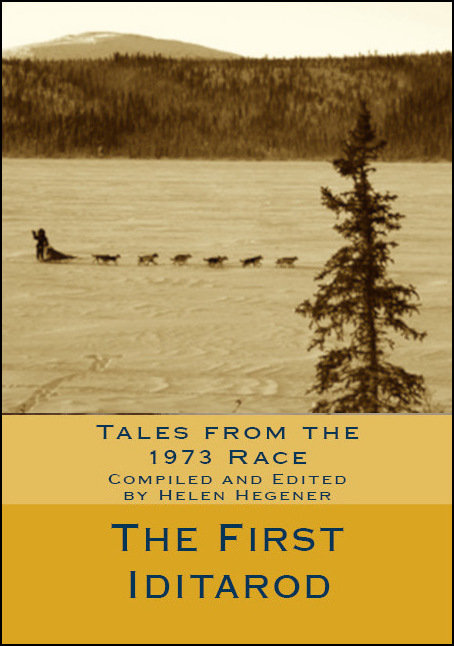
1973 IditarodThe First Iditarod: Mushers’ Tales from the 1973 Race, by Helen Hegener. Published in March, 2015 by Northern Light Media. 156 pages. ISBN-13 978-0-9843977-6-1 Format 6″ x 9″ perfect bound, text only, no photos. $20.00 plus $5.00 shipping and handling to U.S. addresses only. Additional postage required for foreign orders.
Postal orders can be mailed to Northern Light Media, Post Office Box 298023, Wasilla, Alaska 99629. Thank you!

Posted in Alaska History, Books | Tagged , , , , , , , , , , | Leave a comment

Yukon Quest Checkpoint 101

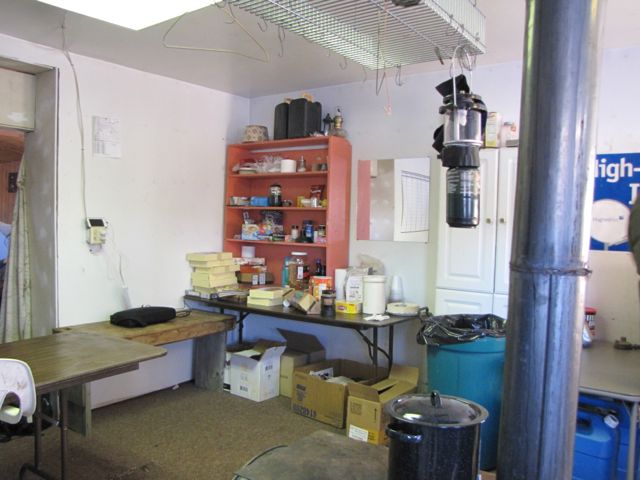
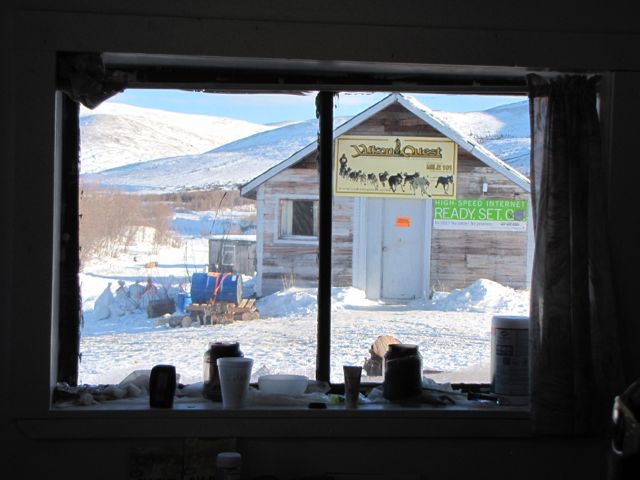
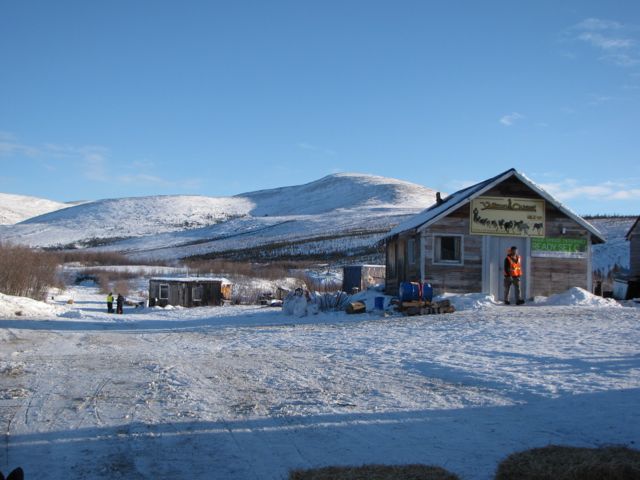
IMG_7531Driving up the western flank of the White Mountains one passes the colorful Yukon Quest checkpoint of 101, so named because it is, in fact, 101 miles from Fairbanks on the 161-mile long Steese Highway. Starting out as only a dog drop for the race, the site was granted full checkpoint status a few years ago.

The checkpoint sits at the base of the climb to Eagle Summit, about which Hudson Stuck wrote in 1916: “The Eagle Summit is one of the most difficult summits in Alaska. The wind blows so fiercely that sometimes for days together its passage is almost impossible. … The snow smothers up everything on the lee side of the hill, and the end of every storm presents a new surface and an altered route. … there is no easier pass and no way around.”

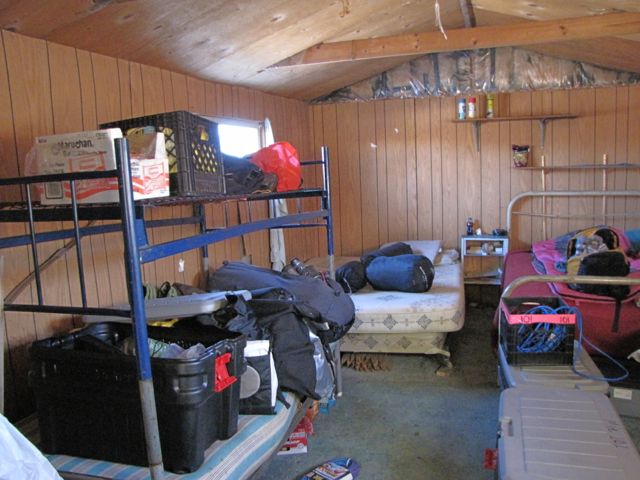
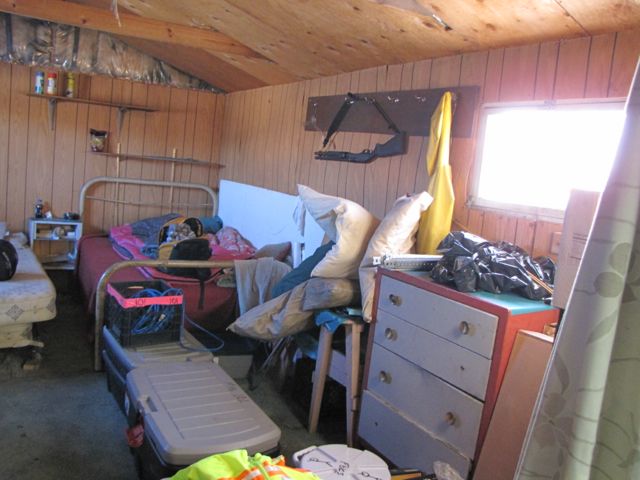
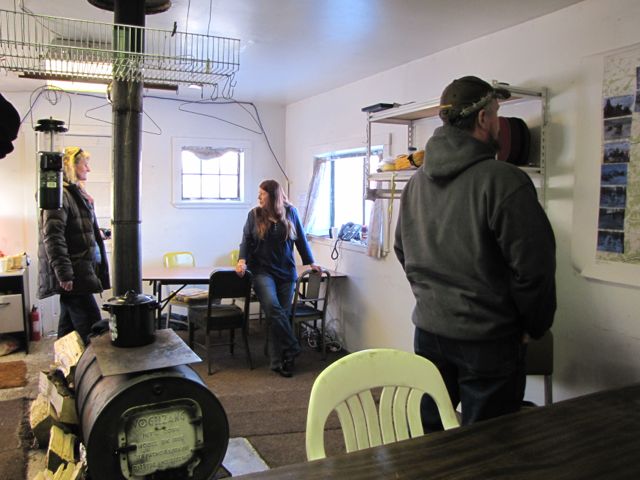
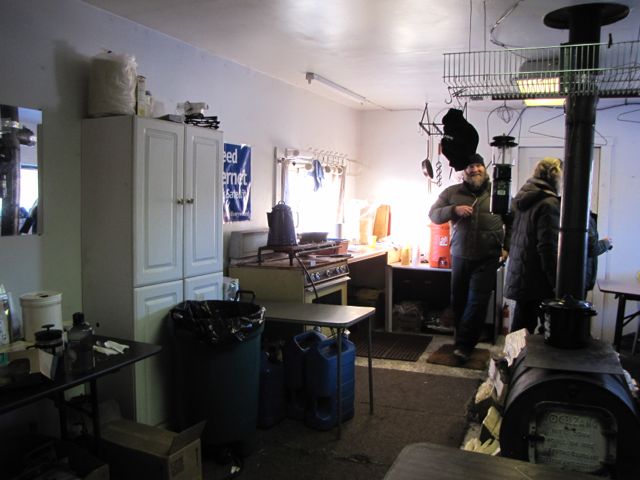
My friends and I stopped at the 101 checkpoint on this year’s Yukon Quest, and I snapped a few photos [All photos by Helen Hegener/Northern Light Media]:

Entry corner and wood stove

Entry corner and wood stove

The kitchen and cooking area of the main cabin.

The kitchen and cooking area of the main cabin.

Back corner of the kitchen area

Back corner of the kitchen area

Bunkroom, to the left

Bunkroom, to the left

Bunkroom, to the right

Bunkroom, to the right

Communications shack from the main cabin

Communications shack from the main cabin

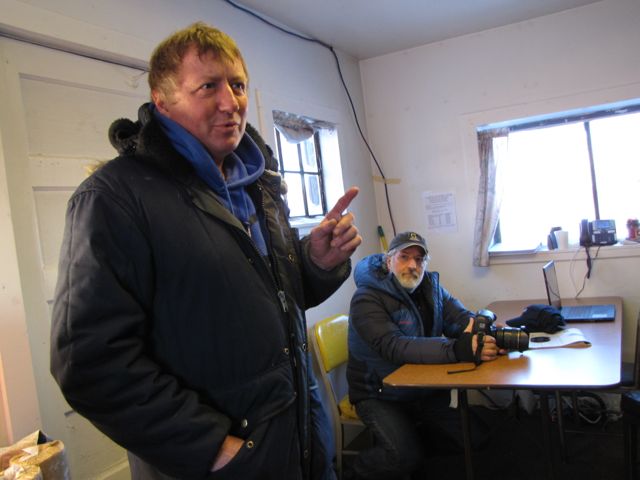
Longtime checkpoint manager Peter Kamper, photographer Albert Marquez at the table..

Longtime checkpoint manager Peter Kamper, photographer Albert Marquez at the table..

IMG_6999


Posted in Sled Dog Races | Tagged , , , , , | Leave a comment

Leonhard Seppala’s Cabin

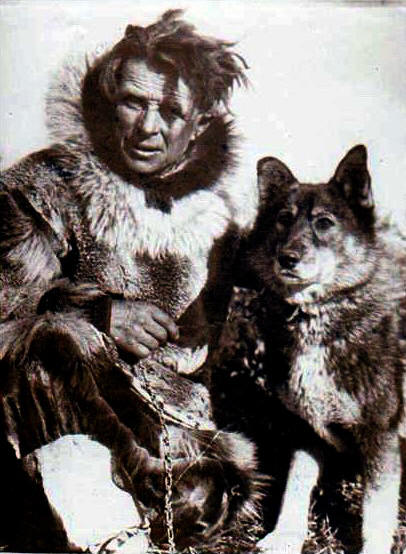
Leonard Seppala with his lead dog Togo

Leonard Seppala with his lead dog Togo

The legendary Alaskan dog musher Leonhard Seppala, who won the All Alaska Sweepstakes three times and played a key role in delivering the life-saving serum to Nome in 1925, lived in many places, from Norway to Nome, Maine, and Seattle, and, for a time in the 1930’s and ’40’s, in a log cabin on a hillside in Chatanika, northeast of Fairbanks.

Fascinated by this bit of information, my friend Albert Marquez and I spent a long time searching and researching the location of this cabin, and Albert communicated with the noted artist and writer Ray Bonnell, who writes a history column for the Fairbanks Daily News-Miner.

In his splendid book, Sketches of Alaska, Ray Bonnell describes the cabin near the Fairbanks Exploration Company’s Chatanika Gold Camp:

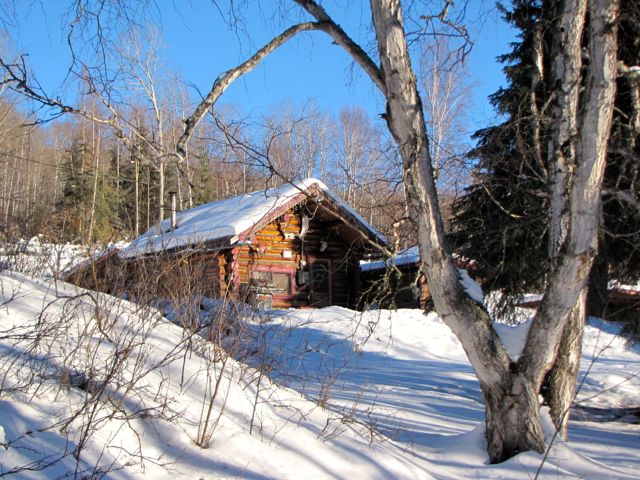
Leonard Seppala's cabin

Leonhard Seppala’s cabin at Chatanika

“According to ‘Historic Resources in the Fairbanks North Star Borough,’ the Seppalas built a small 16-by-16-foot log cabin in the early 1930s just east of the newly established FE Company camp at Chatanika. They expanded the cabin over time. Photos from the 1940s show the cabin with a shed addition to the rear, along with a white picket fence and a huge flower garden. Later another small cabin was tacked onto the addition’s east end.”

Ray was kind enough to share the location with Albert, and on our way to the Yukon Quest checkpoints of Central and Circle we stopped to take a look and get some photos of the F.E. Gold Camp and Seppala’s cabin. As Ray noted in his article, there have been additions made to the original small cabin, but there is no mistaking the structure, which sits on a rise above the old road, with beautiful old birch and spruce trees in front of it.

F.E. Co. Gold Camp at Chatanika

F.E. Co. Gold Camp at Chatanika

The Historic Fairbanks Exploration Company Gold Camp, listed on the National Register of Historic Places, is about 23.5 miles out of town on the Old Steese Highway. It was built between 1923-25 as the original bunkhouse and dining hall for the men who worked on Chatanika’s old Gold Dredge 3.

The gold dredge is still there, and so are lots of mining equipment. It has been estimated that $70 million dollars was removed by the FE Gold Co. there between 1926 and 1957. At that time, the camp was larger than Fairbanks with over 10,000 residents.

Another cabin near the F.E. Co. Gold Camp.

Another cabin near the F.E. Co. Gold Camp.

A Wikipedia listing details the gold camp today: “The Chatanika Gold Camp is a historic gold mining camp at Mile 27 3/4 of the Steese Highway in Chatanika, Alaska. The camp is set on about 49 acres (20 ha) over looking Cleary Creek, and consists of thirteen buildings as well as a scattering of old mining tools and equipment. The largest of the buildings are two bunkhouses, finished in corrugated metal. The camp was built in 1925 by the Fairbanks Exploration Company (FEC), which also dug the nearby Davidson Ditch to supply water for the operation of the gold dredges. The Chatanika Camp was the largest of the FEC’s mining camps in the Fairbanks area. Five of the surviving buildings date to the initial construction period. The camp was listed on the National Register of Historic Places in 1979.”

Seppala's cabin again

Seppala’s cabin again

Also at the Wikipedia site is an article about the Davidson Ditch, a 90 mile conduit built in the 1920s to supply water to gold mining dredges in central Alaska. It was the first large-scale pipeline construction project in Alaska, designed to divert water from the Chatanika River at a point below the junction of Faith and McManus Creeks to hydraulic sluicing/stripping operations at Cleary and Goldstream, just north of Fairbanks. Ray Bonnell wrote a very interesting article about the pipeline.

A gold dredge near the F.E. Co. Gold Camp

A gold dredge near the F.E. Co. Gold Camp

Within the lengthy Wikipedia history of its construction is this note about the famous musher: “In the first year after the ditch’s opening in May 1928, it was beset by problems. Numerous leaks and breakages occurred, often causing work stoppages at the dredges and mining operations that relied on its water. Eventually, FE Co. managers instituted a 24-hour watch of Davidson Ditch. Watchmen were employed to patrol its length, perpetually examining it for leaks and problems. In the winter, it was patrolled by dog team. Famed musher Leonhard Seppala was employed in this capacity by FE Co. and was named the chief watchman of the ditch. Seppala had telephone lines laid between watch cabins stationed every 15 to 20 miles along the route. These allowed for quick repairs in the event of damage or for quick reaction if the water level became too high.”

Seppala’s cabin was located just east of the F.E. Gold Camp, along the old Chatanika Highway. It is privately owned.

Leonhard Seppala mushing dogs near Chatanika, circa 1947:

Posted in Alaska History | Tagged , , , , , , , , | Leave a comment

2015 Northern Lights 300

Section of an artwork at Happy Trails Kennel. [Photo by Helen Hegener/Northern Light Media]

Panel section of an artwork piece at Happy Trails Kennel. [Photo by Helen Hegener/Northern Light Media]

The 2015 Northern Lights 300 sled dog race from Big Lake to Finger Lake drew a diverse field of mushers from many areas of Alaska, with some mushers racing to qualify for the long distance Iditarod and Yukon Quest races, some putting training runs on teams they were entering in the bigger races, some just putting more miles on themselves, and a few simply out to have a good time on the trail with their teams and their fellow mushers.

Northern Lights 300 trail stake. [Photo by Lou Schrader]

A Northern Lights 300 trail marker.         [Photo by Lou Schrader]

After several worrisome weeks of warm weather and no snow, conditions which necessitated the cancellation of the 2014 Northern Lights 300 and had already affected other 2015 races, the planets finally aligned and a few days of snow and colder temperatures left the trail in good condition for the race. Trailmaster Lou Schrader made numerous trips to secure and safety-check the trail before the race, and he placed over 1,500 stakes to mark the route for the mushers, noting in a report that the line of stakes crossing Flathorn Lake “looked like a picket fence.”

Hauling straw on the Yentna River. [Photo by Barry Munsell, who says they're available to haul straw and supplies for other races]

Hauling straw on the Yentna River. [Photo by Barry Munsell, they’re available to haul straw and supplies for other races]

Volunteers swung into action during the week before the start, hauling supplies to the remote checkpoints at Yentna Station, Talvista Lodge, and Finger Lake, spaced approximately 50 miles apart. Roger Phillips reported that he and his wife hauled nearly 8,000 pounds of food, gear, tents, heaters, and cases of Heet with two snowmachines and five freight sleds, a herculean effort pulled off by just the two of them. Three huge freight sleds loaded with bales of hay were freighted to the checkpoints by Barry Munsell and his friends Richard Place and Stan Smith, and all of the details which lead up to running a mid-distance sled dog race into remote country were taken care of by the experienced race crew under the direction of longtime Race Manager Sue Allen.

A dog gets a vet check the day before the race. [Photo by Albert Marquez/Planet Earth Adventures]

A dog gets a vet check the day before the race. [Photo by Albert Marquez/Planet Earth Adventures]

Veterinarians checked the health and well-being of the dogs the day before the race start, and early on the morning of Friday, January 23, the mushers gathered in the visitor’s center at Martin Buser’s Happy Trails Kennel in Big Lake for the mandatory drivers’ pre-race roll call and race briefing. Martin Buser welcomed everyone to his marvelous musher-friendly facility, and the race officials shared last-minute comments and information, a rundown of the trail conditions, and what to expect at the checkpoints. There was an interesting twist to the race: During the meeting, each musher submitted their projected finish time in total hours and minutes, and the musher who came closest to their projected finish time would receive a full refund of their entry fee. The point was to help mushers learn to plan their race ahead of time, and many would come very close to their estimated arrival times.

The dogs are ready to race! [Photo by Albert Marquez/Planet Earth Adventures]

The dogs are ready to race! [Photo by Albert Marquez/Planet Earth Adventures]

At noon the first team, driven by Noah Pereira, ran under the Start banner and headed west, across the Little Susitna River, over the broad frozen expanse of Flathorn Lake, and onto the Big Susitna River for the run north to the Yentna River and the first checkpoint at Yentna Station. That night a notice was posted to the race’s web site and Facebook page at 10:40 pm: “Due to very poor trail conditions north of Talvista, with deep fresh snow and winds, the race has been placed on hold in Yentna Station until the trail conditions can be further assessed and the race marshal can decide how we shall proceed.” For an hour the families, handlers, fans and other race-watchers held their collective breath. Then finally came the decision: “Race Marshall Bud Smyth evaluated trail conditions, which included deep fresh snow and high winds along the trail north of Talvista overnight Jan. 23, and gave the OK for teams to head back on the trail at 12:50 a.m., Jan. 24.”

Race Marshal Kevin Saiki helps bring a team into the checkpoint [Photo by Albert Marquez/Planet Earth Adventures]

Through blowing and swirling snow, Race Marshal Kevin Saiki helps bring a team into the Finger Lake checkpoint [Photo by Albert Marquez/Planet Earth Adventures]

The race was back on. Race officials decided the teams’ wait time in Yentna would count toward their required 15 hours of rest, but mandatory six-hour stops were still required at Finger Lake and Yentna Station on the return run. The teams checked through Talvista Lodge and then settled into the third leg of the race, a 50-mile run to the halfway point at Finger Lake. At 3:25 am the race’s Facebook page announced, “We are not receiving updates from the Finger Lake checkpoint because they have shut down their generator for the evening, a point we had not factored into our race plans!

A team comes into the Finger Lake checkpoint. [Photo by Albert Marquez/Planet Earth Adventures]

A team comes into the Finger Lake checkpoint. [Photo by Albert Marquez/Planet Earth Adventures]

Yukon Quest and Iditarod veteran musher Jodi Bailey was putting a training run on some young dogs from her Dew Claw Kennel, in Chatanika, and she wrote a good assessment of the trail on her blog after the race, saying it was “….a good challenge for the young dogs. In 300 miles they got a little taste of what the Iditarod has to offer them. Varying trail conditions, from low snow to blown in drifts, icy conditions on vast lakes, twisty turny technical trail on the way into Finger Lake, headwinds, tail winds, warm afternoons and cold nights. Busy checkpoints with teams parked together, coming and  going, resting on different schedules.  I could not have asked for a better smorgasbord of situations for my team.”

Teams at Finger Lake. [Photo by Albert Marquez/Planet Earth Adventures]

Teams resting on the lake at the Finger Lake checkpoint. [Photo by Albert Marquez/Planet Earth Adventures]

The teams began leaving the Finger Lake halfway point early Saturday evening, heading back down the river to Talvista Lodge and Yentna Station. The front-running teams were Darrin Lee of Chistochina; the Berington sisters, Anna and Kristy, of Kasilof on the Kenai Peninsula; Charley Bejna, a self-described adventurer, born and raised in Addison, Illinois, who has raced and finished several mid- and long-distance races, including the 2014 Iditarod; and Chatanika musher Jodi Bailey. As the mushers left the halfway point headed for home, it was remarked that there were very few dropped dogs, and the trail was well-marked and in good condition, both reports which race organizers like to hear.

Dropped dogs at Finger Lake awaiting their ride home. [Photo by Albert Marquez/Planet Earth Adventures]

Dropped dogs at Finger Lake awaiting their ride home. [Photo by Albert Marquez/Planet Earth Adventures]

Race fans were treated to dozens of beautiful photographs taken by Alaskan adventure guide Albert Marquez, of Planet Earth Adventures, who flew to Finger Lake and captured dynamic images at the checkpoint of the teams crossing the windblown lake, the mushers hauling drop bags, boiling water and tending to their dogs, tired dogs resting on straw beds, dropped dogs being loaded into planes for the trip home, and the faces of the mushers at the halfway point in the race. Albert’s superb photographs added an exciting dimension to the race for everyone involved, and the spike in Facebook activity was notable, with over 70,000 interactions on the race’s Facebook page.

Northern lights over the Yentna River. [Photo by Tom Jamgochian]

Northern lights over the Yentna River, Yentna Station checkpoint. [Photo by Tom Jamgochian]

Another splendid photographer was on the trail with his camera, Tom Jamgochian of Nome, who captured a breathtaking photo of the northern lights over the Yentna River at the Yentna Station checkpoint. Tom wrote about the photo: “The view today at 1:30 am at Yentna Station. My dogs were resting after a 76 mile run from Finger Lake. I had to wake them up shortly for the last 50+ mile push. It was 24 below and dropping – most were none too happy to be aroused from their straw beds.”

Mt. Susitna glows pink in the sunrise as Tom Jamgochian approaches the finish line. [Photo by Albert Marquez/Planet Earth Adventures]

Mt. Susitna glows pink in the sunrise as Christine Roalofs approaches the finish line. [Photo by Albert Marquez/Planet Earth Adventures]

The run back down the Yentna River put the first teams into Yentna Station at 3:08 Sunday morning: Anna Berington, followed by her twin sister Kristy one minute later, and Charley Bejna six minutes later. Half an hour later Darrin Lee arrived, and twenty minutes after him were Jodi Bailey and her team of youngsters. Robert Redington was the sixth team into the last checkpoint, and then it would be three hours before the next team arrived. At 7:42 am, after a 4 hour and 34 minute rest, Anna Berington left the checkpoint with 11 dogs, followed by Charley five minutes later with 10 dogs and her sister Kristy a minute after him with 11. Somewhere on the trail Kristy would pass her sister Anna to take first place, with Anna placing second two minutes later and Charley coming in a half hour after her for third place, a nice sweep for the twin sisters and their close friend.

First place musher Kristy Berington gives one of her dogs a kiss. [Photo by Albert Marquez/Planet Earth Adventures]

First place musher Kristy Berington gives one of her dogs a kiss. [Photo by Albert Marquez/Planet Earth Adventures]

Teams continued arriving at the finish at Happy Trails Kennel throughout the day, that evening, and well into Monday. Finally, at 4:25 pm Monday afternoon, three-time Northern Lights 300 veteran Ellen Halverson of Wasilla drove her team across the finish line. The race was over. Race Manager Sue Allen put her thoughts into words with a post to the race’s Facebook page: “How do I thank the hundreds of you that made this such an awesome race… Mushers, Kathy and Martin, trail breakers, trail sweeps, trail stake/ tent pole/dog tag makers, lodge owners/staff, vets, checkers, pilots, dropped dog helpers, website and update people, food prepares, photographers, start helpers, application takers, and dozens or others, handlers and the dogs who are so awesome to do what they do! There is nothing I can do to truly thank you but to say it…’Thank you.'” Complete race statistics can be found at the Northern Lights 300 website.

Posted in Sled Dog Races | Tagged , , , , , , , , , , , , , , , , , , , , , , , , , , , , , , , , , , | Leave a comment

BLM Idita-Tweet Chat

Jodi Bailey and Dan Kaduce and their Idita-rider, Daniel Faltyn, coming into Campbell Airstrip... (photo by Helen Hegener/Northern Light Media)

Jodi Bailey and Dan Kaduce and their Idita-rider, Daniel Faltyn, coming into Campbell Airstrip… (photo by Helen Hegener/Northern Light Media)

The BLM Alaska will be hosting a “Women of the Iditarod” Tweet Chat on Wednesday, Jan. 28, from 9 to 11 a.m. (AKST; 1 to 3 p.m. EST), focusing on women mushers, the history of women mushers, the Iditarod National Historic Trail, and women running the Iditarod Trail Sled Dog Race.


Karin Hendrickson assists a vet checking her dogs. (photo by Eric Vercammen/Northern Light Media)

Karin Hendrickson assists a vet checking her dogs. (photo by Eric Vercammen/Northern Light Media)

Several veteran and rookie Iditarod mushers will be answering questions about the race, and about mushing, including Aliy Zirkle, Jodi Bailey, Dan Kaduce, Liz Parrish, Alan Peck, Karin Hendrickson, Lisbet Skogen Norris, and Heidi Sutter. BLM’s Kevin Keeler, federal administrator for the Iditarod National Historic Trail, and Helen Hegener, author, historian, and publisher at Northern Light Media, will participate live from BLM Alaska for the event.


Two dogs at Rainy Pass, 2012 Iditarod [photo by Eric Vercammen/Northern Light Media]

Two dogs at Rainy Pass, 2012 Iditarod [photo by Eric Vercammen/Northern Light Media]

The chat will run on BLM Alaska’s website and social media accounts. To participate in the tweet chat, visit www.twitter.com/BLMAlaska and use hashtag #blmiditachat on Jan. 28. Questions for the mushers can also be submitted in advance, before Friday, Jan. 23, via email to blmalaska@blm.gov or as direct messages on Twitter to @BLMAlaska.

Don’t forget to come view the Ceremonial Start of the 2015 Iditarod Sled Dog Race at the BLM Campbell Tract in Anchorage, Saturday, March 7, 2015, 10 a.m. – 3 p.m.; the Campbell Tract is always a great place to catch the teams in action on the trail!

The Bureau of Land Management in Alaska manages 72 million acres of public land, for the use and enjoyment of present and future generations.

Posted in News & Information | Tagged , , , , , , , , , , , , , , , | Leave a comment

A One-Thousand-Mile Race


Joe Redington, Sr.

Joe Redington, Sr.

Joe Redington, Sr., known as the “Father of the Iditarod,” was born on February 1, 1917, in a tent on the banks of the Cimarron River, north of Kingfisher, Oklahoma, on the famous Chisholm Trail. It was a fitting start for a man who would later spend his life traveling the trails of a far distant land. Redington came to Alaska in 1948, settling on a homestead near Knik with his family. His first ride on a sled dog team was with his new neighbor, Lee Ellexson, who had been one of the last dog team mail drivers on the Iditarod Trail, and the operator of the Happy River Roadhouse, north of Puntilla Lake in Rainy Pass. Ellexson had traveled thousands of miles with a dog team, and his stirring ‘tales of the trail’ captivated the newcomer. Ellexson sold Joe a few dogs, and in less than a year Redington had created Knik Kennels and was feeding 40 huskies.  He also became a proficient enough dog driver to contract rescue and recovery missions for the U.S. Air Force between 1949 and 1957, using his dog teams to reach the sites of aircraft crashes. Harnessing teams of 25 to 30 dogs, Redington hauled hundreds of servicemen and millions of dollars’ worth of salvaged parts from remote areas of Alaska. As he traveled through the outlying villages, Redington began noticing that where there had once been a tough and reliable sled dog team staked behind almost every villager’s home, now there would be a bright yellow snowmachine parked by the door, a development which Redington considered profoundly disappointing.

Legendary musher Leonhard Seppala, for whom the 1967 Iditarod race was named, with his leader, Togo.

Legendary musher Leonhard Seppala, for whom the 1967 Iditarod race was named, with his leader, Togo.

In 1967, a 50-mile sled dog race was run from Knik to Big Lake, in two 25-mile heats over a two-day period and including several miles of the Iditarod Trail. The brainchild of Wasilla historian Dorothy Page, who thought such an event would be an effective way to commemorate the Alaska Purchase Centennial, the Iditarod Trail Seppala Memorial Race was planned for February 11 and 12, 1967. Joe Redington played a large part in making the race happen; besides spearheading the fundraising for the race, Joe and his friend Dick Mackey blazed and reopened nine miles of the long-dormant Iditarod Trail. The race was billed as ‘the biggest event in racing history,’ with an unprecedented purse of $25,000, richer than any purse offered for a sled dog race until then. It attracted mushers from all around Alaska, respected dog drivers such as George Attla, Gareth Wright, Earl Norris, Jerry Riley, Orville Lake, Herbie Nayokpuk, Dick Mackey, and even two champion sprint mushers from Massachusetts: Dr. Roland Lombard and Dr. Charles Belford. Among the 59 teams entered were three Redington teams, driven by Joe and his sons Joee and Raymie. Although many of the mushers who entered were already champions, the race was won by a relative newcomer, Issac Okleasik of Teller, driving a team of big village working huskies.

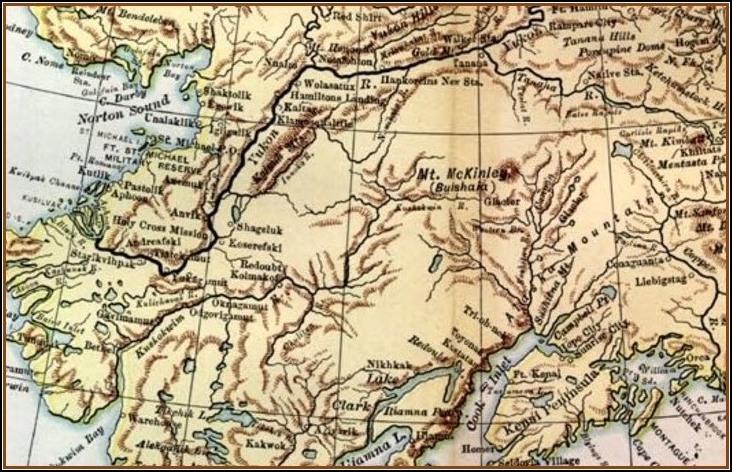
Iditarod country mapWith the 1967 Centennial race deemed an unqualified success, Joe Redington was already planning for a longer and much grander event, a one-thousand-mile race following the historic Iditarod Trail. In 1969, when a second, less-successful race was once again held from Knik to Big Lake, Joe Redington promised that there would be a long-distance race to Nome by 1973, with the unheard-of purse of $50,000. Several major obstacles stood in his way, such as trail-clearing and fund-raising, but the biggest obstacle was his fellow race enthusiasts. While almost the entire mushing community had rallied behind the idea of the Alaska Purchase Centennial 50-mile race, the founders and supporters of that 1967 race backed away from the considerably longer event Joe was now proposing, labeling it an ‘impossible dream.’

Undaunted by the skeptics, Joe set to work planning his race. The word ‘impossible’ didn’t seem to be part of his vocabulary.

An excerpt from the forthcoming book, The First Iditarod: Mushers’ Tales of the 1973 Race, by Helen Hegener, to be published in March, 2015 by Northern Light Media.


Posted in Alaska History, Books, Sled Dog Races | Tagged , , , , , , , , , , , , | Leave a comment

The First Iditarod

1973 Iditarod CoverThe book I’m currently working on is the result of several years of researching, interviewing, and writing, beginning with an idea which took shape in 2007. That’s when I learned that a musher from the very first Iditarod Trail Sled Dog Race, Barry MacAlpine, one of those intrepid pioneers who had stood on the runners that morning with his sights set on Nome, 1,000 miles away, had perished in a fire at his cabin, just north of Anchorage.

Only six months before, in early December of 2006, another musher – the legendary “Shishmaref Cannonball, Herbie Nayokpuk – who had also been standing at that starting line in the very first race, had suffered a massive stroke, lapsed into a coma and passed away three weeks later at the Alaska Native Medical Center in Anchorage.

The loss of these two mushing pioneers just six months apart, men whose names I remembered from the very first race, set me to thinking that the stories of the remaining 1973 Iditarod mushers should be recorded. Their memories of that first 1,000-mile race were an Alaskan legacy, part of our state’s colorful history. These men were the only ones who could authoritatively share the first-hand accounts of what it was like to be out there on a trail which had never been traveled in this manner, as a race route, and which many people at the time doubted could still be navigated its full length.

Howard Farley at the 1973 start

Howard Farley at the 1973 start

Over the years an aura has developed around that first race, and most fans know the lore and the rudiments of the story, how it was Joe Redington Sr.’s pie-in-the-sky dream, how he wrangled others into sharing the dream with him and doing the groundwork necessary to make it happen. The history of how the race began can be found in almost every book about the event, because it’s a darned good story, colorful and compelling and full of true-life characters and exciting adventures.

There are also many classic tales which have been told and retold enough times to be become part of Iditarod lore, but there is so much that has remained untold, unwritten, unknown. And so in 2007 I set about tracking down and visiting the remaining mushers from the 1973 race who would share their stories, their memories of what it was like to be one of the original Iditarod pioneers. The bulk of this new book will be comprised of the verbatim words of mushers who made that first journey to Nome in 1973, captured through recorded and videotaped interviews conducted over a span of several years. I am very grateful to the men who shared their long-ago adventures with me.

I am grateful as well for the delightful memories I brought away from our time together, for as I transcribed my recordings for this book, I was once again caught up in each musher’s very contagious sense of wonderment and awe as he described and discussed what he and all of the other mushers had accomplished so long ago. More than once a voice would falter and break, and a long pause would follow. . . . There was a very reverent quality in the way they each shared their memories of that first race.

1973 Iditarod CoverIt was one for the ages.

The Iditarod Trail: Tales from the 1973 Race, by Helen Hegener, publication date March, 2015 by Northern Light Media.

Posted in Alaska History, Books | Tagged , , , , , , , , , | 1 Comment

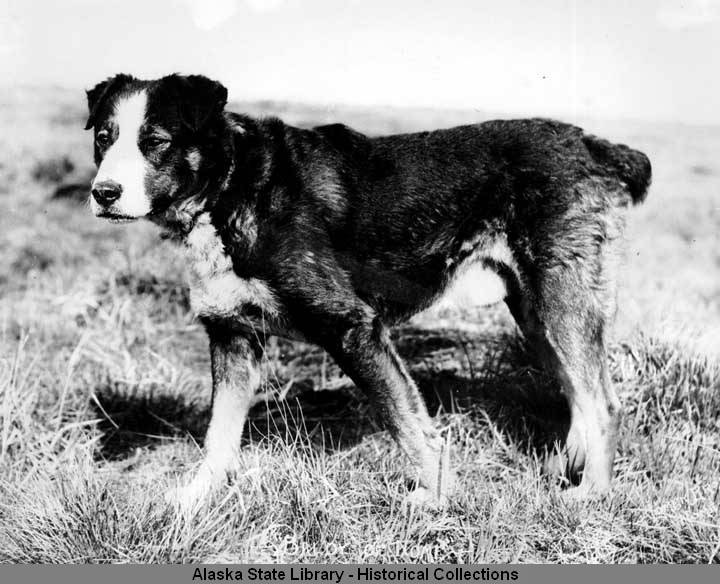
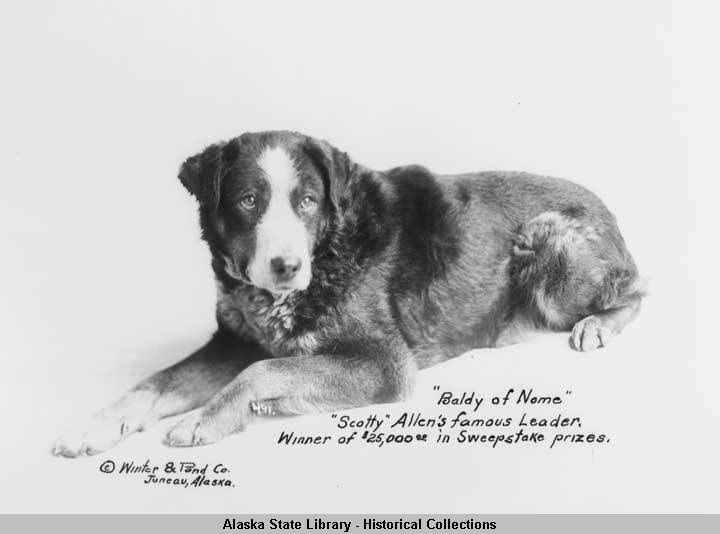
Baldy of Nome

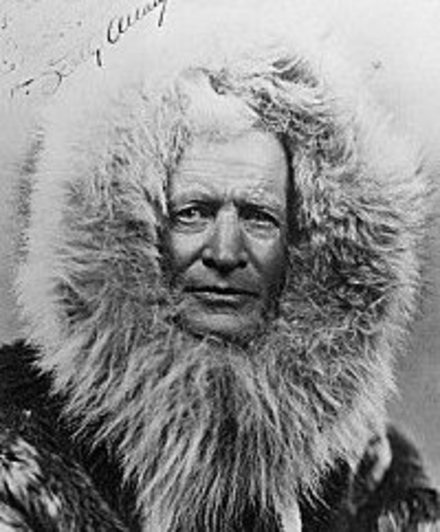
scotty alan

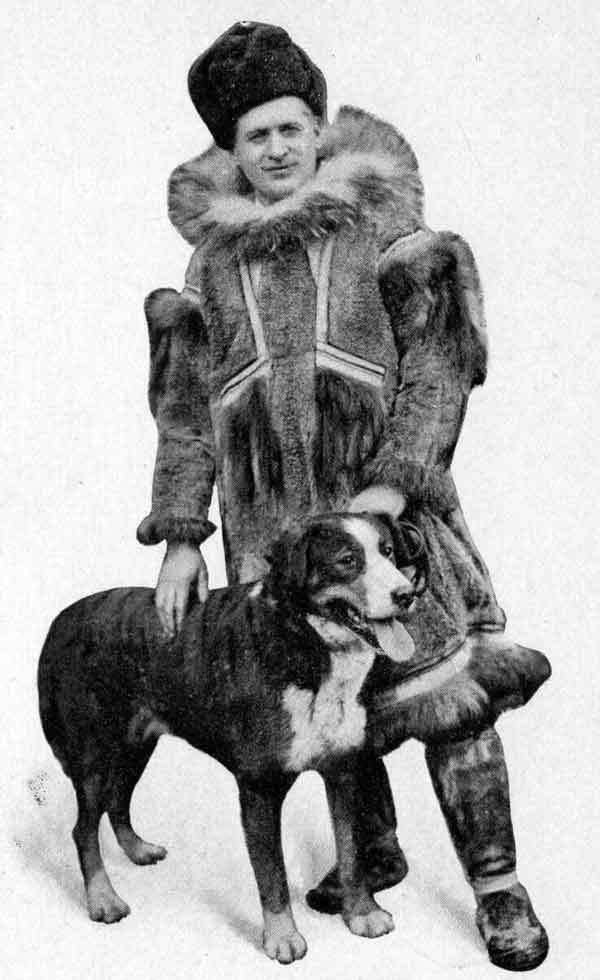
Allan Alexander “Scotty” Allan with Baldy

Scotty Allan’s Legendary Leader

A chapter from Along Alaskan Trails, Adventures in Sled Dog History

In Esther Birdsall Darling’s classic book, Baldy of Nome, a story is told of a driverless dog team in the 60-mile-long Solomon Derby, a race between Nome and Solomon along the coast of the Bering Sea. The young leader of the team, realizing his driver is missing, turns the team around and returns along the trail, searching…

Baldybook2“Far away in the whiteness, Baldy saw a black spot toward which he sped with mad impatience. It grew more and more distinct, till, beside it, he saw that it was his master, lying pale, motionless and blood-stained in the trail. From a deep gash on his head a crimson stream oozed and froze, matting his hair and the fur on his parka. Baldy stopped short, quivering with an unknown dread. There was something terrifying in the tense body, so still, so mute. He licked the pallid face, the cold hands, and placed a gentle paw upon the man’s breast, scratching softly to see if he could not gain some response. There was no answer to his loving appeal; and throwing back his head, there broke from him the weird, wild wail of the Malamute, his inheritance from some wolf ancestor. The other dogs joined the mournful chorus, and then, as it died away, he tried again and again to rouse his silent master. Moment after moment passed, the time seemed endless; but finally the warm tongue and the insistent paw did their work; for there was a slight movement, a flicker of the eyelids, and then Scotty lifted himself upon his elbow and spoke to them.”

A.A. Scotty Allan [Alaska State Library-P307-0333]

A.A. Scotty Allan [Alaska State Library-P307-0333]

   The incident is based on an actual event, when Scotty, leaning over his sled to look at a broken runner, hit his head on an iron trail marker and was knocked unconscious. Scotty Allan’s team, with Baldy in the lead, went on to win the race, and Baldy’s rescue made him a hero. The story is even more remarkable because Scotty Allan’s regular lead dog, named Kid, had passed away only the evening before the race, and Baldy, who had never led in a race before, had been selected to take his place.

Allan Alexander Allan, who’d been known as Scotty since he was a lad, had set out for the Klondike goldfields and found work moving supplies over the dangerous trails to the mining camps, earning a reputation in the Dawson area as a top notch dog driver. When gold was discovered on the beaches of Nome, Scotty, like many others, traveled down the frozen Yukon River some 1,200 miles to the new goldfields. Scotty Allan didn’t strike it rich in Nome, so he focused on his specialty, training dogs. He took in dogs others didn’t want and trained them to race, and he said, “Dogs are the most intuitive creatures alive. They take the disposition of their driver. That is why I never let my dogs know that I am tired. At the end of the day…, I sing to the little chaps and whistle so they always reach the end of the trail with their tails up and waving.”

The Solomon Derby Nome, Alaska, March 2nd, 1914

The Solomon Derby, Percy Blatchford driving an Allan and Darling team, Nome, Alaska, March 2nd, 1914

In 1907, the dog drivers in Nome banded together to form the Nome Kennel Club to improve the care and breeding of sled dogs. Around this same time Scotty reputedly purchased a sled dog named Baldy from a young boy who could no longer afford to care for him. As Scotty wrote in his autobiography, Gold, Men and Dogs, he was one of the founders of the All-Alaska Sweepstakes, the first organized sled dog race, which ran from Nome to Candle, a distance of 408 miles, from the shore of the Bering Sea to the shore of the Arctic Ocean

Allan and Darling Entry, Fifth Alaska Sweepstakes, 1912

Allan and Darling Entry, Fifth Alaska Sweepstakes, 1912

The first All Alaska Sweepstakes race took five days to finish and was won by John Hegness. The next year Scotty Allan and Baldy took first place, repeating the win again in 1911 and 1912, and they placed in the top three a total of eight times. In five other races, they finished either second or third, and they became famous beyond Alaska, all across the United States. Their race entries were followed and reported in national newspapers such as The New York Times.

Allan Alexander "Scotty" Allan

Allan Alexander “Scotty” Allan

As Allan and Baldy gained fame, Allan partnered with his sponsor, Esther Birdsall Darling, to form the Allan and Darling Kennel, which became one of the best-known racing kennels in Alaska. Allan’s dogs were so well known that when the United States entered World War I, the government commissioned dogs from the Allan and Darling Kennel to haul supplies for the French military. Twenty-eight of Baldy’s sons and grandsons were chosen, bringing the total dogs from Nome to over 100. When they were ready to leave Nome, the whole group of dogs were put on a single 350 ft. gangline, and Scotty Allan’s lead dog Spot led the 106-dog team through the streets of town to board the waiting ship.

Baldy of Nome

Baldy of Nome

Scotty Allan would go on to be elected to the Alaska Territorial Legislature in 1917 and 1919, and Admiral Richard Byrd sought out Scotty to train the dogs for Byrd’s 1928 Antarctica Expedition. Scotty and his family moved to California prior to the 1925 Diphtheria Epidemic in Nome, which resulted in the famous Serum Run. They took the venerable old leader Baldy with them, and the famous sled dog lived out the remainder of his days in the warm California sunshine.

Scotty and Baldy

Scotty and Baldy

On April, 15th, 1922 The New York Times reported Baldy’s death to their readers: “Berkeley, Cal., April 14.– Baldy of Nome, famed for the races he won in Alaska, his heroic deeds that have been twenty-eight Malamute sons and grand-put in prose and verse, and for the sons he gave to France for the World War, was buried here today. He died in a dog hospital of old age and his final resting place is under the rose-bushes in the garden of ‘Scotty’ Allan, whose life he once saved. Baldy was 15 years old. He was two years old when Allan ‘mushed’ him through the first of his seven races for the All-Alaska Sweepstakes of 418 miles. With Baldy as the leader, Allan was brought in winner six times.”   ~•~

More about Scotty Allan:

LitSite Alaska – Mushing Legend “Scotty” Allan

Baldy of Nome – download the book or read online

Along Alaskan Trails, Adventures in Sled Dog History (this article is a chapter from the book)

Baldy_of_Nome

Posted in Alaska History, Books | Tagged , , , , , , , , , , , , , | Leave a comment

A Look at The Yukon Quest Trail

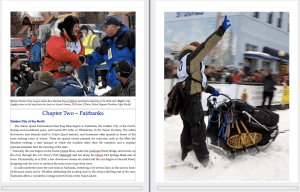
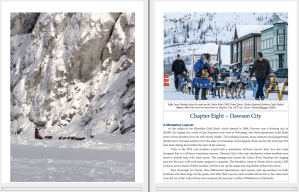
Screen Shot 2014-12-09 at 2.32.07 PMThe newest book from Northern Light Media is a captivating journey traced each February by hardy mushers and their teams of lionhearted sled dogs, traveling, as the subtitle states, ‘1,000 miles across northern Alaska and the Yukon Territory.’ Over frozen rivers and lakes, across mountain ranges, through “valleys unpeopled and still,” as described by poet Robert Service over a century ago, the sled dog teams are on a quest….

The Merriam-Webster Dictionary defines ‘quest’ as “a journey made in search of something,” or “a long and difficult effort to find or do something.” In the case of the Yukon Quest International Sled Dog Race there are a lot of possibilities for what that “something” might be. A championship. The fulfillment of a dream. A testing of oneself, and one’s dogs. A trek through some of the most incredible wilderness to be found anywhere. A promise kept. A bucket list checkmarked. A march through history. An accomplishment which few mushers ever achieve.   An achievement to be proud of.

Screen Shot 2014-12-09 at 1.55.39 PMThe Yukon Quest Trail explains the history and the route of the Yukon Quest, with full-color photographs which give the reader a compelling look at what it’s like to launch out of the starting chute behind a team of lunging huskies, or to be feeding your tired but hungry team when it’s thirty degrees below zero, or to be all alone in a vast mountain valley with only the thin orange-and-black trail markers to show the way. Superlatives become superfluous, but Robert Service found just the right words in his ode to the north country, The Spell of the Yukon:

The winter! the brightness that blinds you,
The white land locked tight as a drum,
The cold fear that follows and finds you,
The silence that bludgeons you dumb.
The snows that are older than history,
The woods where the weird shadows slant;
The stillness, the moonlight, the mystery,
I’ve bade ‘em good-by — but I can’t.

Screen Shot 2014-12-09 at 1.58.26 PMEvery year a large percentage of the mushers who enter the Yukon Quest are those who have been down this trail before, and over the years, this incredible adventure wraps mushers and dogs together with a traveling road show made up of handlers, vets, volunteers, judges, friends, families, fans and the media, as they all travel from checkpoint to checkpoint along the Yukon Quest trail.

There’s a land where the mountains are nameless,
And the rivers all run God knows where;
There are lives that are erring and aimless,
And deaths that just hang by a hair;
There are hardships that nobody reckons;
There are valleys unpeopled and still;
There’s a land — oh, it beckons and beckons,
And I want to go back — and I will.

Screen Shot 2014-12-09 at 2.38.15 PMThere are photos of some of the old teams which originally ran these trails, for there is a palpable sense of history inherent in this great race; the mushers and their dogs literally run in the tracks of some of the greatest sled dog drivers of all time.  As the race website notes,”The race is a living memorial to those turn-of-the-century miners, trappers, and mail carriers who opened up the country without benefit of snowmobiles, airplanes, or roads. It was their strength and fortitude that blazed the Trail over which most of the Yukon Quest travels.”

The combination of history, distances, wilderness, and the sheer physical endurance necessary to make the trek captures the imagination like few other sled dog races can, but the country itself, the land the race takes place in, simply captures one’s heart and soul. Robert Service’s epic poem, about a sourdough longing for the country he left behind, puts words to what many who have traveled the Yukon Quest trail still feel today:

There’s gold, and it’s haunting and haunting;
It’s luring me on as of old;
Yet it isn’t the gold that I’m wanting
So much as just finding the gold.
It’s the great, big, broad land ‘way up yonder,
It’s the forests where silence has lease;
It’s the beauty that thrills me with wonder,
It’s the stillness that fills me with peace.

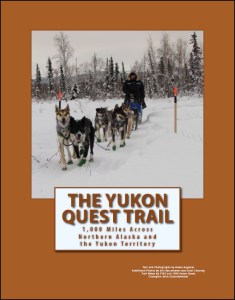
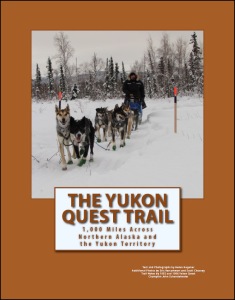
YQ Front CoverThe Yukon Quest Trail: 1,000 Miles Across Northern Alaska and the Yukon Territory, text and photos by Helen Hegener, additional photographs by Eric Vercammen and Scott Chesney; also included: Trail Notes for Mushers by two-time Yukon Quest Champion John Schandelmeier. Published December, 2014 by Northern Light Media. 151 pages, 8.5″ x 11″ format, bibliography, indexed. $29.00 (plus $5.00 shipping and handling).


Posted in Books, Sled Dog Races | Tagged , , , , , , , , , , , , , , , , | 1 Comment

The Yukon Quest Trail

YQ Front CoverThe Yukon Quest International Sled Dog Race spans some of the harshest and most beautiful winter territory anywhere: 1,000 miles between Fairbanks, Alaska and the city of Whitehorse in Canada’s Yukon Territory.

Known as ‘The World’s Toughest Sled Dog Race,’ it’s an event like no other. Run every February, the race is phenomenally challenging, crossing four mountain ranges, including the dangerous and intimidating 3,685-foot Eagle Summit, as it loosely follows the course of the mighty Yukon River.

Dyan Bergan's lead dog at the finish in Fairbanks, 2013. [Eric Vercammen/Northern Light Media]

[Eric Vercammen/Northern Light Media]

Now a new book by Alaskan author Helen Hegener takes readers checkpoint by checkpoint from Fairbanks to Whitehorse, an extraordinary journey in which the author shares insights and details of the trail, along with the incredible history of both the race and the wild and beautiful land it crosses. Over 180 photographs by the author and by photographers Eric Vercammen and Scott Chesney provide an unparalleled look at the trail, the mushers, the dogs and more. Also included are Trail Notes for Mushers, detailing the route in both directions, compiled by two-time Yukon Quest Champion John Schandelmeier.

The Yukon Quest Trail: 1,000 Miles Across Northern Alaska and the Yukon Territory, text and photographs by Helen Hegener, additional photos by Eric Vercammen and Scott Chesney; with Trail Notes for Mushers, by two-time Yukon Quest Champion John Schandelmeier. Published December, 2014 by Northern Light Media. 151 pages, 8.5″ x 11″ full color format, bibliography, maps, indexed. $29.00 (plus $5.00 shipping and handling).


Posted in Books, Sled Dog Races | Tagged , , , , , , , , , , , , , , | Leave a comment