
Volume 5, Number 1
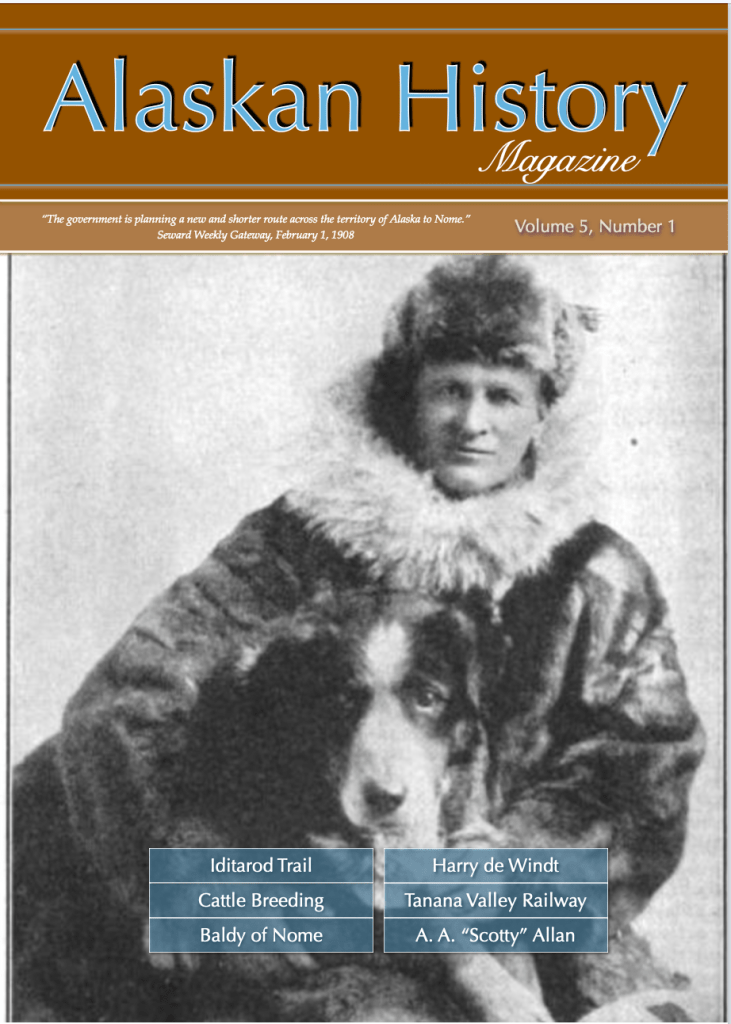
In this issue: Colonel Walter Goodwin and the Iditarod Trail, 1929 Report on Cattle Breeding in Alaska, Harry de Windt on the Yukon River, Falcon Joslin and the Tanana Valley Railway, All Alaska Sweepstakes Champions Baldy of Nome and A. A. ‘Scotty’ Allan.
$12.00 postage paid. 64 pages. 6″ x 9″ b/w format. No ads, just history. Mails the first week of 2026. Back issues and subscriptions available.
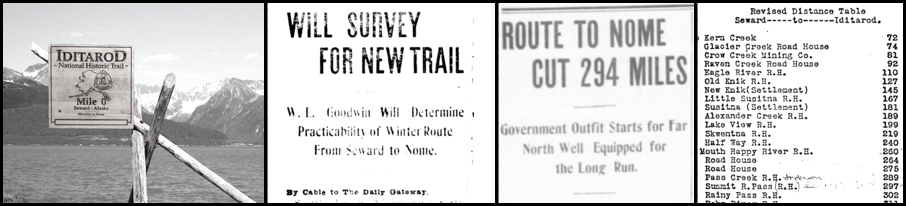
The first issue of Alaskan History Magazine for 2026, Volume 5, Number 1, will feature a lengthy excerpt from Colonel Walter Goodwin’s 1908 report on the route which would become the Iditarod Trail. Goodwin was the Superintendent of the Alaska Road Commission’s Nome District when the Commission (ARC) directed him to lead an overland reconnaissance from Seward to Nome to assess the feasibility of a winter trail across the territory for winter mail service. The stated goal was to provide a shorter, more direct overland winter route to Nome than the existing 1,300-mile route from Valdez through Fairbanks and down the Yukon River. There were networks of seasonal trails throughout the area, and there were two important winter trails radiating from McGrath to Nenana and to Bethel, but there was no direct route between the Cook Inlet region and the increasing activity in the Innoko-Kuskokwim gold mining district and the established mining areas around Nome. In the winter of 1908, the Alaska Road Commission dispatched Goodwin and a crew of three men with dog teams to scout a winter route. Goodwin’s report was the first official documentation of what would become one of the most famous trails in the world.
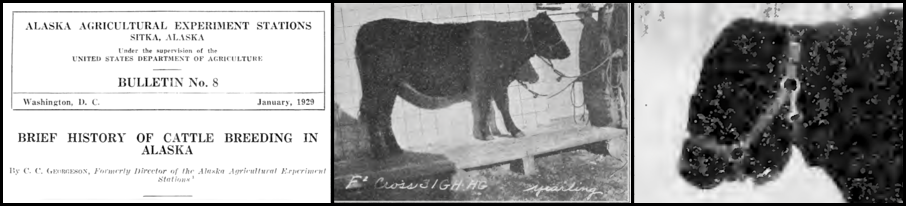
The history of cattle breeding in Alaska was the subject of a report written by C. C. Georgeson, Director of the Alaska Agricultural Experiment Stations, in 1929. He wrote about the Russians maintaining “a considerable number” of cattle at Kalsin Bay, on Kodiak Island, and noted later developments after the purchase of Alaska:
“A few head of cattle of the dairy type were introduced with the establishment of salmon canneries at various points along the coasts. Some of the descendants of these animals remained in the country. At Kodiak, Sitka, Kenai, and other places where Americans had settled, a few head of cattle were kept for the supply of milk. More cattle were introduced into the country with the development of new settlements and camps. Dairies sprang up in the towns to meet the local demands for milk. These cattle, however, were maintained, excepting for the small amount of pasturage available during the summer, on feed which had to be imported from Seattle for the purpose. This is the situation even today, but it does not show that cattle can not be supported by locally produced feed.”
Georgeson’s report details the livestock situation in Alaska in 1898, with updates on the situation at the time of his 1929 report, including consumption figures for beef and dairy products in 1925, providing an interesting overview of how cattle played an important role in the early days of the territory.
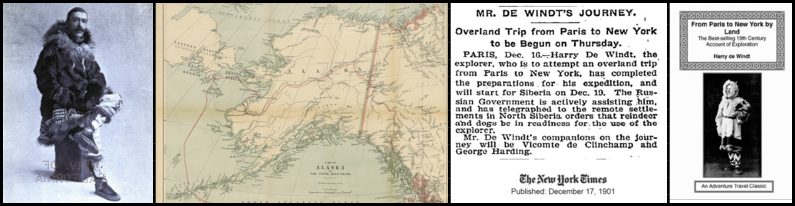
Explorer and writer Harry de Windt and his friend George Harding had attempted to travel around the world by land in 1896, but in Siberia they ran into unforeseen life-threatening difficulties. Narrowly escaping disaster, de Windt nevertheless wrote a book about the adventure in 1898, titled Through the Gold-fields of Alaska to Bering Straits, and in December, 1901 he and Harding set out once again, this time traveling in reverse of the first trip. This issue excerpts a chapter from his subsequent 1903 book, From Paris to New York by Land. A brief passage:
“Cities on the American Yukon consist of perhaps a score or more of log huts, which Yankee push and enterprise have invested with the dignity of towns. Rampart City, for instance, which the Hannah reached on the sixth day in from the coast, consisted of only about thirty one-storied wooden dwellings, the erection of which had been due to the discovery of gold in the vicinity, although during the previous year (1901) the claims around had only produced £40,000. And yet even this tiny township could boast of two hotels, five or six saloons, electric light and two newspapers: the Alaska Forum and Rampart Sun. The circulation of these journals was not disclosed to the writer, who was, however, gravely interviewed by the editors of both publications. Just before leaving Rampart City news of the postponement of the coronation of his Majesty King Edward VII, on account of serious illness, reached us, and it was gratifying to note the respectful sympathy for the Queen of England displayed by the American inhabitants of this remote Alaskan settlement.”
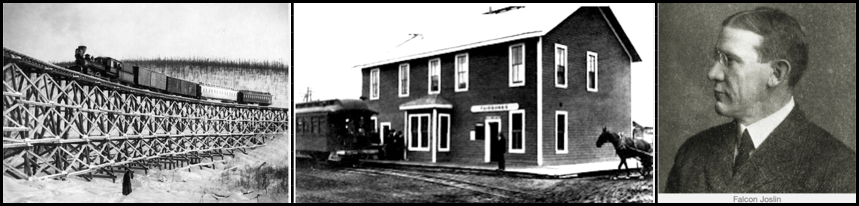
The history of Falcon Joslin and his visionary Tanana Valley Railway are included in this issue. The TVR was Joslin’s visionary dream, planned as a rail line reaching north and east to Circle City on the Yukon River, at that time the center of the Circle Mining District and the landing for steamboats heading upriver to the town of Eagle, or to Dawson City in the Yukon Territory, or downriver to Nenana, Ruby, Nulato, and St. Michael on Norton Sound, and the Bering Sea. When the Alaska Railroad was constructed and planning for the northern portion was under consideration, parts of Joslin’s Tanana Valley Railway were incorporated.
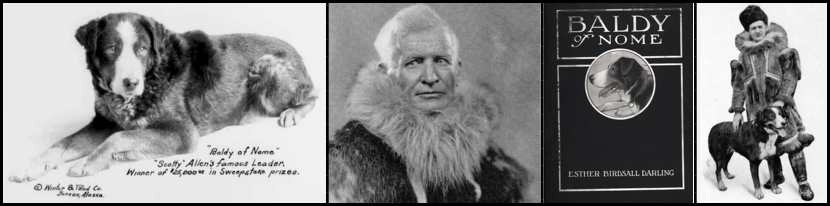
On the cover of this issue is a photograph of two well-known champions of the historic All Alaska Sweepstakes race, and inside this issue is the story of one of the most famous dogs in literature, Baldy of Nome. He was Scotty Allan’s famous lead dog in the All Alaska Sweepstakes; and a profile of Scotty, written for a major American magazine in 1921 by one of Alaska’s most beloved writers, is reprinted in full with a larger biography of the intrepid Scotsman’s life in Alaska, Washington, and California.
“A wonderful publication outlining the richness of Alaska’s history with excellent production values, NO ADVERTISING and well researched stories with links to source materials for further reading. There are delightful stories that even 50 years of living here had not brought to my attention. Very highly recommended!” ~Amazon review
“The purpose of history has ever been to enlighten, to make clearer, to create greater understanding and appreciation.” ~Writing Alaska’s History, Vol. 1, Alaska Historical Commission, 1974
“Good information source. Lots of references if reader wishes to dig further into details. The entire series of publications are interesting, light reads.” ~Verified Amazon purchaser
“An excellent collection of well-researched articles on the history of Alaska, always interesting, always saved for reading and enjoying again later! ~Subscriber
“It’s always exciting to see this magazine in my mailbox!” ~Subscriber













 Northern Light Media