
I assembled the following photos relating to Iditarod Trail history for the BLM Alaska Idita-Chat on January 20. As it turned out, circumstances changed and I only posted a few of the descriptions, and none of the photos, so I thought I would share the collection here. The photos are in more or less chronological order.

Before there was an Iditarod Trail there were many shorter trails used by the Native peoples of the land.
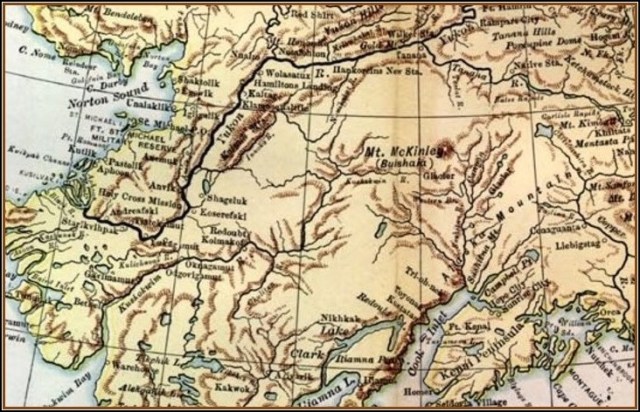
The Iditarod Trail was officially scouted in 1908.
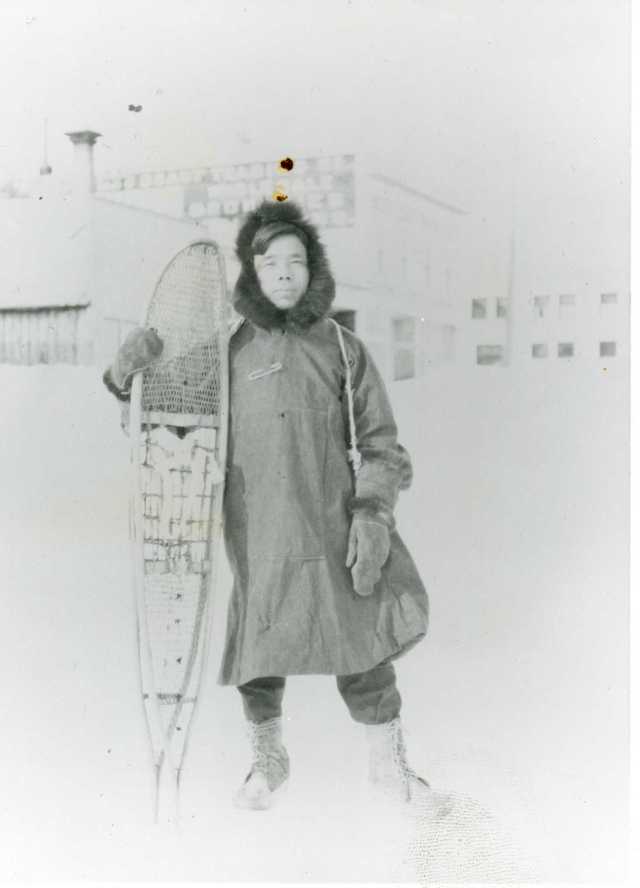
Jujiro Wada, an early musher often credited with helping to blaze the Iditarod Trail, in 1909.

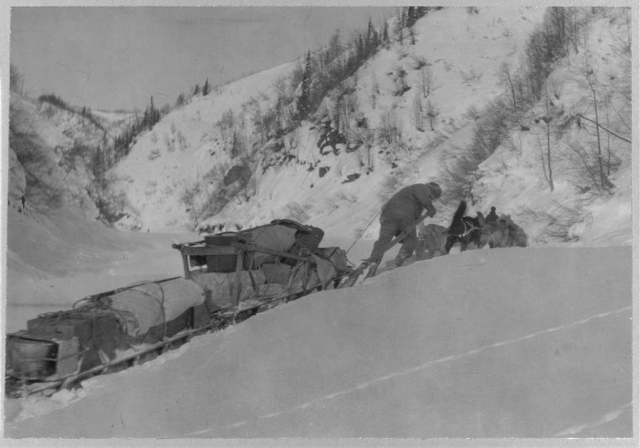
A prospector helps his dogs handle a heavy load with the aid of a gee pole.

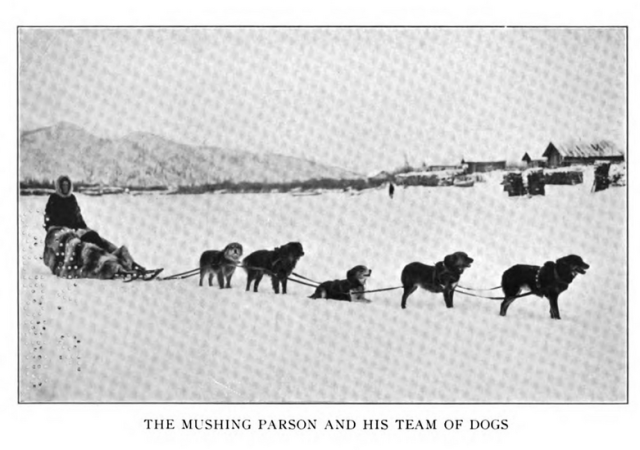

S. Hall Young crossing Crow Creek Pass on the Iditarod Trail, 1913.
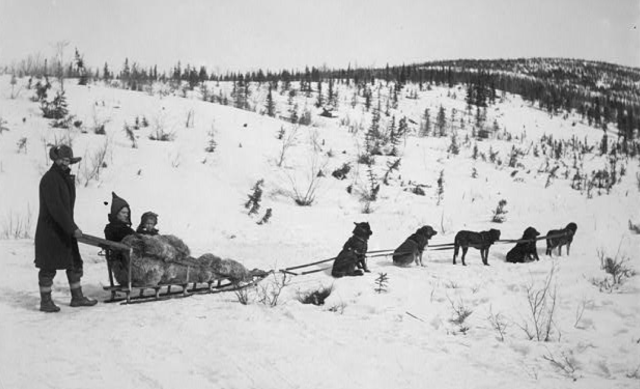
A dogteam on the trail in early Alaska, circa 1914.
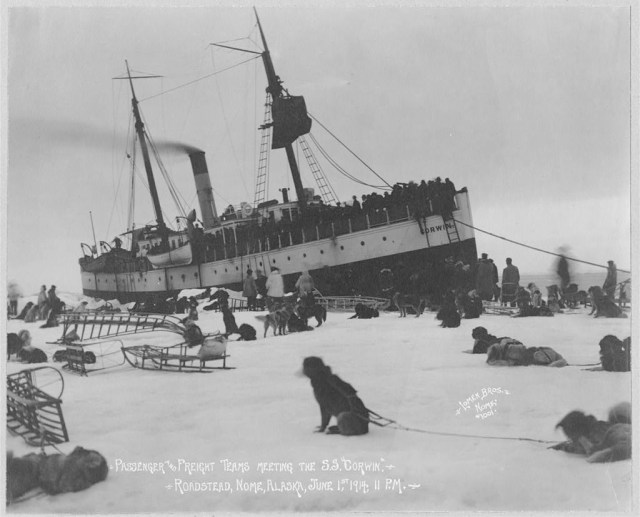
Unloading passengers and freight from the S.S. Corwin at Nome in 1914.
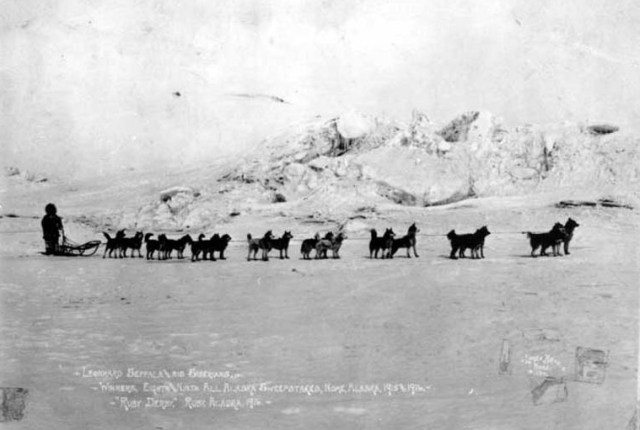
In 1925, Leonhard Seppala and many other mushers carried diphtheria serum to Nome on the northern part of the Iditarod Trail.

In the 1925 Serum Run, Balto led Gunnar Kaasen’s team the final 53 miles to Nome on the Iditarod Trail.

A statue was erected in New York’s Central Park to honor all of the Serum Run dogs.
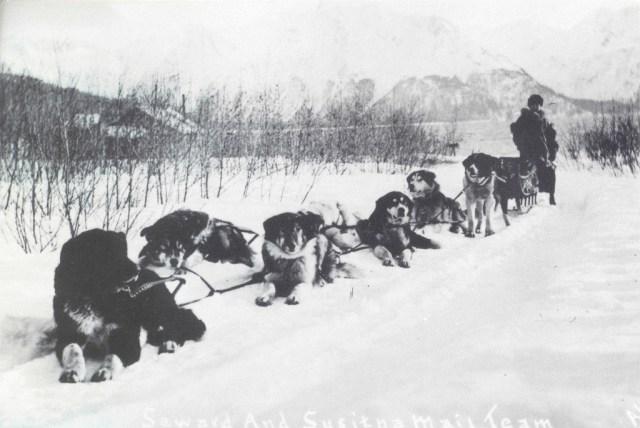
The historic Iditarod Trail was the main trail that carried mail from Seward to Nome. This is the Seward and Susitna Mail Team, circa 1913.
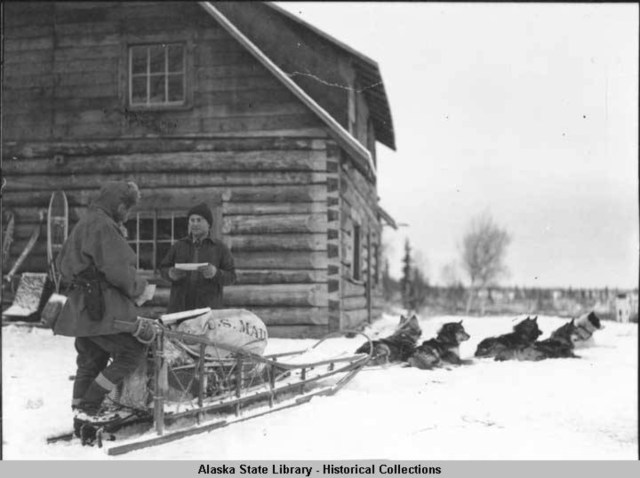
On average, dog teams pulled sleds containing between 500 – 700 pounds of mail.
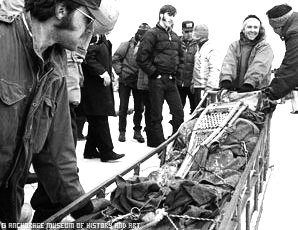
The first Iditarod Trail Sled Dog Race was in 1973, and 37 mushers participated in the race from Anchorage to Nome. In this photo Howard Farley of Nome readies his big freight sled at the start.

The northern lights over sleeping dog teams on the Iditarod Trail, in a photo by Tom Jamgochian during the 2015 Northern Lights 300 race from Big Lake to Finger Lake and return.













 Northern Light Media